
Desserts
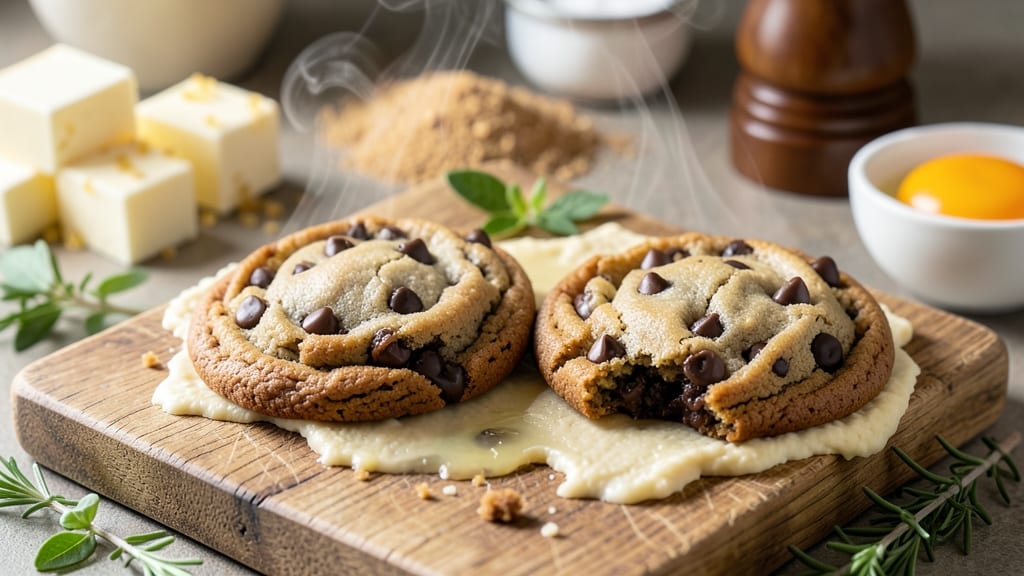
This chewy chocolate chip cookie recipe without baking soda delivers the perfect texture—soft centers, crisp edges, and melty chocolate—using a clever vinegar trick instead. The secret lies in brown sugar and cornstarch, which create that signature chew without relying on leavening agents.
I’ve tested this recipe dozens of times, and it never fails to impress, even with picky eaters. The dough comes together in just 10 minutes, with a 30-minute chill to develop flavor and prevent spreading.
Vinegar reacts with baking powder to lift the cookies naturally, while butter and eggs bind everything into a rich, tender dough. The key is baking at 350°F for 12–14 minutes—hot pans and a parchment-lined sheet ensure clean edges and even browning.
What you’ll end up with is a batch of cookies that’s foolproof, restaurant-quality, and packed with that classic chocolate chip goodness. The vinegar adds a subtle tang that balances the sweetness, while cornstarch keeps the texture perfectly chewy.
These cookies stay soft for days, making them ideal for baking ahead or gifting. Optional upgrades include flaky sea salt, toasted nuts, or white chocolate chips—customize to your taste. Here’s how to make them perfectly every time.
Ingredients for chewy chocolate chip cookie recipe without baking soda
Twelve ingredients transform into restaurant-quality chewy cookies with a vinegar-lifted secret.
| Ingredient | Amount | Notes |
|---|---|---|
| Unsalted Butter 🧈 | 1 cup | Cold, cubed for even baking |
| Light Brown Sugar 🍚 | 1 ½ cups | Packed firmly for accuracy |
| Granulated Sugar 🍚 | ½ cup | Standard white sugar |
| Large Eggs 🥚 | 2 whole | Room temperature for blending |
| White Vinegar 🍶 | 1 tbsp | Pure, not apple cider |
| Vanilla Extract 🌿 | 1 tsp | Pure vanilla preferred |
| All-Purpose Flour 🌾 | 2 ½ cups | Sifted, spooned accurately |
| Cornstarch 🌾 | ½ cup | Key for chewy texture |
| Diamond Crystal Kosher Salt 🧂 | 1 tsp | Adjust to taste |
| Baking Powder 🌶️ | 1 tsp | Aluminum-free preferred |
| Semisweet Chocolate Chips 🍫 | 2 cups | Enjoy Life brand for allergies |
| Flaky Sea Salt 🧂 | 2 tbsp | Optional finishing touch |
The butter quality here is non-negotiable—Plugrá or Land O’Lakes unsalted are my go-tos, but any high-fat, cold-pressed butter works. Brown sugar should be packed firmly in the cup to avoid under-sweetening. For chocolate chips, Enjoy Life brand eliminates allergen concerns, though classic Nestlé chips work perfectly fine. The cornstarch is the game-changer: it creates that signature chew without baking soda. Always sift your flour and cornstarch together for even distribution in the dough.
No white vinegar? Apple cider vinegar at half the amount works in a pinch, though the flavor profile shifts slightly. Short on cornstarch? Arrowroot powder at the same quantity functions identically. For chocolate chip alternatives, try chopped dark chocolate (60% cocoa) or white chocolate chips—just reduce the quantity by 10% to prevent overloading. The baking powder must be fresh: if it's over 6 months old, toss it and replace. For gluten-free adaptations, swap the all-purpose flour for a 1:1 gluten-free blend like Bob's Red Mill.
Store dough in an airtight container with parchment between layers for up to 3 days—it actually improves as it rests. Baked cookies keep in a sealed container at room temperature for 5 days or frozen for 3 months. For gift-giving, bake and freeze fully cooled cookies on a tray, then transfer to a bag. Reheat at 300°F for 3-5 minutes to restore chewiness. The vinegar's tang mellows over time, so freshly baked cookies have the most pronounced flavor.
Why You'll Love This Recipe
- No-Fuss Mixing: I swear by the creamy butter-egg combo—just cream, toss in sugars, and fold in chocolate. The white vinegar does the magic without baking soda, so no extra steps or measuring headaches.
- Chewy Magic: That caramelized brown sugar and melted chocolate? It’s the kind of chew you can’t stop thinking about—soft edges, crispy centers, and a buttery richness that hits just right.
- Weeknight Hero: These bake in 12 minutes and stay fresh for days. Perfect for teacher gifts, last-minute dessert, or when you’re too tired to do anything else.
- Budget Win: Butter and sugar stretch further than you’d think, and the vinegar trick cuts costs without sacrificing flavor. Plus, they freeze like a dream for future cravings.
Step-by-step instructions for vinegar-lifted chewy cookies
Master this technique and you'll achieve bakery-style chewiness without baking soda—just precise chemistry.
Cream Butter and Sugars to Peak Volume
In a stand mixer fitted with the paddle attachment, beat the 1 cup unsalted butter (cold, cubed) with the 1.5 cups light brown sugar and 0.5 cup granulated sugar on medium speed for 3-4 minutes. You're looking for a pale, fluffy texture that nearly doubles in volume—the mixture should leave clean streaks when the paddle lifts. This aeration creates the signature chewiness.
I like to press the paddle against the bowl occasionally to ensure the butter incorporates fully. If the mixture feels grainy, let it beat another 30 seconds—this ensures even distribution of the sugars. The reason we use both brown and white sugar here is that the brown sugar adds moisture while the white sugar helps create structure through its finer crystals.
Incorporate Eggs and Acidic Leavening
Add the 2 whole large eggs one at a time, mixing on low speed for 30 seconds after each addition until fully combined. Then add the 1 tbsp white vinegar and 1 tsp vanilla extract, mixing just until smooth. The vinegar reacts with the baking powder later to create lift without the metallic aftertaste of baking soda.
This is where the magic happens—the vinegar creates a gentle chemical reaction with the baking powder when heat is applied, producing carbon dioxide for rise while maintaining that classic cookie texture. Don't overmix here; you're just combining ingredients, not developing gluten. The mixture should be thick but pourable.
Combine Dry Ingredients for Texture Control
In a separate bowl, whisk together the 2.5 cups all-purpose flour, 0.5 cup cornstarch, 1 tsp baking powder, and 1 tsp diamond crystal kosher salt. The cornstarch is crucial here—it absorbs moisture and creates that signature chewy texture we're after. Gradually add this dry mixture to the wet ingredients, mixing on low speed just until combined.
I use a silicone spatula to gently fold in the 2 cups semisweet chocolate chips by hand, ensuring even distribution. Overmixing at this stage develops gluten, which would make the cookies tough. The dough should be soft but manageable—if it feels too sticky, chill it for 10 minutes before proceeding. This dough is thicker than traditional cookie dough due to the cornstarch and vinegar combination.
Chill for Optimal Spread and Flavor Development
Cover the dough with plastic wrap and refrigerate for at least 2 hours, preferably overnight. This chilling step is non-negotiable—it allows the flour to fully hydrate, prevents excessive spreading, and lets the vinegar fully react with the baking powder for maximum lift. The dough should be cold but still pliable when you remove it from the fridge.
I find that chilling overnight actually improves the flavor—it gives the vinegar time to mellow and allows the chocolate chips to soften slightly, creating pockets of melty goodness in each bite. If you're short on time, at least 1 hour in the fridge will work, but the longer it chills, the better the results.
Bake to Golden Perfection with Controlled Spread
Preheat your oven to 350°F and line two baking sheets with parchment paper. Scoop the chilled dough into 2-tablespoon portions (using a cookie scoop for consistency) and place them 3 inches apart on the prepared sheets. The dough will spread more than traditional cookies, so give them space.
Bake for 12-14 minutes until the edges are golden brown but the centers still look slightly underdone. They'll continue cooking on the hot pan after removal. The cookies should pull away from the parchment paper slightly at the edges but still be soft in the center. Immediately after baking, sprinkle each cookie with flaky sea salt while they're still warm for that classic salty-sweet contrast.
Pro Tips For Making Chewy Chocolate Chip Cookie Recipe Without Baking Soda
- CHILL THE DOUGH: I learned this the hard way—skipping the 30-minute fridge rest makes for flat, dense cookies. Let the dough sit covered in the fridge before baking; the cold butter firms up just enough to hold shape while keeping that signature chew.
- CREAM BUTTER LOW: Beat the butter and sugars on medium until light and fluffy—about 2-3 minutes. High speed just melts the butter too fast, and you’ll end up with a cakey texture instead of chewy. Slow and steady wins the crumb.
- MEASURE VINEGAR PRECISELY: That white vinegar isn’t just for acidity—it’s the baking soda stand-in. Use exactly 1 teaspoon (not "a splash") to mimic leavening without overdoing it. Too much, and your cookies spread like pancakes.
- UNDERBAKE 1 MINUTE: Pull cookies out when edges are just golden but centers still look soft—about 1 minute before the recipe says. They’ll firm up as they cool, staying chewy instead of dry. (Yes, even if you’re impatient like me.)
Creative variations of this dish
Global Twists
Transform these cookies into a Japanese-inspired matcha version by replacing 1 cup of chocolate chips with ¼ cup high-quality matcha powder (like Ippodo Tea) and 1 cup white chocolate chips. The matcha adds earthy depth while white chocolate keeps the sweetness balanced.
For a European twist, swap chocolate chips for chopped walnuts and dried cranberries, then dust with powdered sugar after baking. 🌏
Spice Infusions
Add ½ tsp cinnamon and ¼ tsp cayenne pepper to the dry ingredients for a Mexican-inspired "chocolate chip mole cookie"—the spices complement the chocolate beautifully. For a winter spice version, include ½ tsp pumpkin pie spice and fold in ½ cup chopped pecans for crunch.
Both variations work best when baked at 375°F for 11-12 minutes to intensify the flavors. 🌶️
Gourmet Upgrades
Elevate with dark chocolate-dipped cookies: After baking, let cookies cool completely, then dip half in melted 70% dark chocolate (like Ghirardelli) and sprinkle with crushed pistachios.
For a salted caramel twist, press a ½-inch caramel square (like Smucker's) into the center of each dough ball before baking. Both upgrades require 5 extra minutes of cooling time before serving. ✨
Dietary Adaptations
Make these nut-free by omitting chocolate chips and adding 1 cup dried cherries instead. For vegan cookies, replace butter with 1 cup vegan butter (like Miyoko's) and eggs with 2 flax eggs (2 tbsp ground flaxseed + 6 tbsp water).
Both adaptations maintain chewiness but require 1 extra minute of baking time. 🌱
Seasonal Swaps
In summer, replace chocolate chips with freeze-dried strawberries for a fruity twist—reduce baking time to 10-11 minutes to prevent burning. For fall, swap chocolate for chopped candied pecans and add ½ tsp nutmeg to the dry ingredients.
Winter calls for peppermint chocolate chips and a sprinkle of crushed candy cane after baking. 🍂
Texture Experiments
Create crunchy centers by pressing a ½-inch piece of almond butter into each dough ball before baking. For extra chewy cookies, fold in ¼ cup tahini with the wet ingredients—this adds richness and enhances texture. Both variations require 1 extra minute of baking to develop the desired consistency. 💫
Nutrition facts
Frequently asked questions
Why does this recipe use vinegar instead of baking soda?
The vinegar reacts with baking powder to create gentle lift—just like baking soda—but without the metallic aftertaste or risk of over-browning. The acid-base reaction produces carbon dioxide for rise while maintaining that perfect chewy texture. Plus, it keeps the cookies soft longer!
Can I make these cookies without cornstarch?
Yes, but they won't be as chewy! Replace the cornstarch with ½ cup extra flour—though you'll lose that signature tender bite. For best results, use arrowroot powder at the same quantity as a 1:1 substitute. The cornstarch is what absorbs moisture and creates that perfect texture.
How do I prevent my cookies from spreading too much?
Chill the dough for at least 2 hours (overnight is best) and use a cookie scoop to portion 2-tablespoon balls. Place them 3 inches apart on parchment-lined sheets. Bake on the middle rack at 350°F—hot pans can cause excessive spreading. The cornstarch also helps control spread!
What's the best way to store these cookies?
Keep baked cookies in an airtight container at room temperature for 5 days or freeze for 3 months. For freshness, store dough in the fridge for 3 days (covered with plastic wrap). To revive stale cookies, warm at 300°F for 3-5 minutes—they'll be soft and chewy again!
Can I use dark chocolate instead of semisweet chips?
Use 70% dark chocolate chunks or chips, but reduce the quantity by 10% since they're more intense. For extra richness, fold in ¼ cup chopped nuts (like walnuts or pecans) along with the chocolate. The higher cocoa content adds depth without overpowering the sweetness.