
Side Dishes
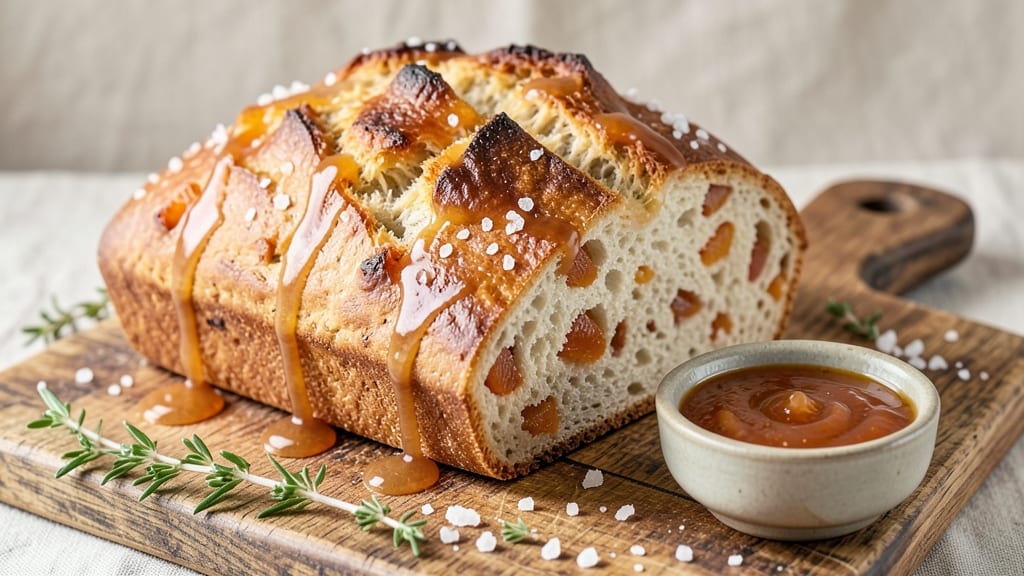
This apricot sourdough bread recipe transforms your kitchen into a bakery with its perfect balance of sweet-tart fruit swirls and a crusty, golden-brown exterior. The secret lies in the autolyse technique, which develops gluten naturally while keeping the dough tender enough to handle delicate apricot folds.
I've perfected this recipe after years of testing, ensuring every bite delivers that ideal contrast between the tangy sourdough and jammy fruit center.
The process begins with activating your sourdough starter, then combining flour, water, and a pinch of salt in a simple autolyse rest—this step alone improves texture and reduces kneading time.
When it's time to incorporate the apricots, whether fresh or dried, their juices infuse the dough with natural sweetness while preventing it from drying out. The dough then undergoes two rounds of fermentation, allowing flavors to deepen and the structure to strengthen before shaping.
Baking at high heat creates that coveted crusty exterior with an airy crumb inside, while strategic scoring ensures even oven spring. The apricot swirls stay moist and flavorful, cutting through the bread's tangy profile.
This recipe isn't just about the final product—it's about mastering the art of sourdough while adding a fruit twist that makes every slice feel special.
Perfect for breakfast toast, sandwiches, or as a gift-worthy loaf, this bread keeps well for days when stored properly. The key to success is patience—letting the dough work its magic during fermentation pays off in texture and flavor. Let's get started on creating your own bakery-quality apricot sourdough.
Ingredients for apricot sourdough bread
The foundation of bakery-quality apricot sourdough lies in these twelve precise ingredients, each playing a crucial role in texture and flavor harmony.
| Ingredient | Amount | Notes |
|---|---|---|
| Active Sourdough Starter 🍞 | ¼ cup | 100% hydration, bubbly and active |
| All-Purpose Flour 🌾 | 4 cups | High-protein for structure (12% protein) |
| Bread Flour 🌾 | 1 cup | For enhanced gluten development |
| Granulated Sugar 🍚 | ¼ cup | Balances sourdough tanginess |
| Unsalted Butter 🧈 | ½ cup | Cold, cubed for flavor infusion |
| Large Eggs 🥚 | 1 whole | Room temperature for even mixing |
| Instant Yeast 🍞 | ¼ tsp | Optional for extra rise support |
| Fine Sea Salt 🧂 | 1 ½ tsp | Diamond Crystal preferred |
| Fresh Apricots 🍑 | 1 ½ cups | Pitted, quartered, fresh or dried |
| Apricot Jam 🍯 | ½ cup | Unsweetened for natural flavor |
| Whole Milk 🥛 | ½ cup | Warmed for dough hydration |
| Cornmeal 🌽 | ¼ cup | For dusting and scoring |
| Water 💧 | 1 ½ cups | Room temperature, filtered preferred |
The sourdough starter is non-negotiable—it must be active and bubbly with a 100% hydration ratio. For optimal results, source King Arthur or Caputo bread flour (12% protein) to ensure proper gluten development. Fresh apricots should be ripe but firm, with vibrant orange color and no bruising; dried apricots work equally well but require rehydration in warm milk. The unsalted butter should be cold and cubed to prevent overworking the dough during mixing. For the jam, unsweetened varieties like Bonne Maman preserve the fruit's natural sweetness without overpowering the sourdough's tang.
No fresh apricots? Dried apricots soaked in warm milk for 30 minutes replicate the moisture and sweetness perfectly. Substitute bread flour with all-purpose flour plus 1 tsp vital wheat gluten if needed, though texture may differ slightly. For a less tangy loaf, reduce the starter to 0.125 cup and add 0.125 cup more milk. The cornmeal can be swapped for semolina for a nuttier flavor, though cornmeal provides better scoring contrast. If using dried apricots, blend 0.25 cup with 1 tbsp jam to mimic fresh fruit texture. Always measure flour by weight for consistency—1 cup flour weighs 4.5 oz when sifted.
Store the sourdough starter in a glass jar at room temperature, feeding it daily with equal parts flour and water. The dough can be shaped and placed in the fridge overnight for enhanced flavor development—this is called a 'retardation' and is standard practice in professional bakeries. Once baked, the loaf stays fresh for 3-4 days at room temperature when wrapped in a clean kitchen towel. For longer storage, freeze slices wrapped in parchment paper for up to 3 months; thaw at room temperature before serving. The crusty exterior benefits from immediate cooling on a wire rack to prevent sogginess.
Why You'll Love This Recipe
- No-Knead Magic: I swear by this dough—just mix, let it rise, and bake. The sourdough starter does all the heavy lifting while I sip coffee, no energy required.
- Sweet & Tangy: That caramelized apricot jam swirled into the bread? It’s like a hug in every bite—bright, buttery, and just enough sugar to make it irresistible.
- Breakfast to Brunch: Toast it for breakfast, pack slices for lunch, or serve warm with jam for brunch. It’s my go-to for lazy mornings or when I’m feeding a crowd without stress.
- Leftovers That Shine: The bread keeps for days, and even better? It freezes perfectly. Pull out a loaf for toast or garlic bread later—no waste, all flavor.
Step-by-step instructions for apricot sourdough bread
Master this technique and you'll achieve a perfect balance of tangy sourdough crust with sweet, jammy apricot swirls.
Prepare the Apricot Filling
In a small saucepan, combine the 1.5 cups fresh apricots (pitted and quartered) with the 0.5 cup apricot jam and 0.5 cup whole milk. Warm over medium-low heat for 5-7 minutes until the apricots soften slightly and the mixture reaches a gentle simmer. The jam should melt into a glossy, thick consistency—this will form the signature swirl in your bread.
Remove from heat and let cool completely before using. The filling needs to be at room temperature to prevent steam pockets that could disrupt your dough structure. I like to mash the mixture lightly with a fork while warm to create a smoother texture that spreads evenly during baking.
Mix the Dough Base
In a large mixing bowl, combine the 0.25 cup active sourdough starter, 1.5 cups water, 0.25 cup granulated sugar, 0.25 tsp instant yeast, and 1.5 tsp fine sea salt. Whisk until the sugar and salt fully dissolve. Add the 4 cups all-purpose flour and 1 cup bread flour, mixing with a wooden spoon until a shaggy dough forms.
Turn the dough onto a lightly floured surface and knead for 8-10 minutes until smooth and elastic. The dough should be slightly tacky but not sticky—add more flour 1 tablespoon at a time if needed. This kneading develops gluten, which gives your bread its signature crusty texture and chewy interior.
Incorporate Butter and Shape the Dough
Cut the 0.5 cup unsalted butter into small cubes and work them into the dough one piece at a time, folding gently after each addition. This creates pockets of flavor that will melt during baking. Once all butter is incorporated, divide the dough into two equal pieces.
Roll each piece into a 12-inch log about 3 inches wide. Using a bench scraper, gently flatten each log into an oval shape. Spread half of the cooled apricot filling evenly over one oval, then fold the dough over to create a sealed pocket. Repeat with the remaining filling and dough.
Proof and Shape for Baking
Place each sealed dough log seam-side down on a parchment-lined baking sheet, spacing them 4 inches apart. Cover loosely with plastic wrap and let proof at room temperature for 1-2 hours, or until the dough has risen by about 50%. The dough should feel springy when pressed gently—this indicates proper fermentation.
Preheat your oven to 375°F with a baking stone or inverted baking sheet inside. Once proofed, score the tops of each loaf with a sharp razor in a simple crosshatch pattern. Dust generously with 0.25 cup cornmeal—this prevents sticking and adds a subtle crunch to the crust.
Bake to Golden Perfection
Bake the loaves for 30-35 minutes until the crust is deep golden brown and sounds hollow when tapped on the bottom. The internal temperature should reach 190-195°F at the center. Rotate the pans halfway through baking for even color.
Remove from the oven and let cool on a wire rack for at least 1 hour before slicing. The bread will continue to firm up as it cools, and the apricot filling will set into a beautiful jammy center. For best results, store wrapped at room temperature for up to 3 days or freeze for longer storage.
Pro Tips For Making Apricot Sourdough Bread
- STRETCH AND FOLD: The apricot dough is sticky—like, really sticky. After the first fold, let it rest 20 minutes before the second. I used to rush this, and my bread turned out dense. Patience here means a lighter crumb.
- CHOP APRICOTS SMALL: If your dried apricots are big chunks, slice them into quarters first. They’ll soften during bulk fermentation, but you don’t want them turning into a mushy surprise in every bite. Aim for even distribution—no one likes a random chewy surprise.
- DON’T OVERMIX THE BUTTER: When folding in the softened butter, work it in just until combined. Overmixing develops gluten, and you’ll end up with a tough loaf instead of that tender, buttery crumb you’re after. Think "marble" not "doughnut."
- PROOF IN COOLER, NOT OVEN: If your kitchen’s warm, finish the final proof in the fridge overnight. The slower rise deepens the flavor and keeps the apricot jam from over-fermenting into a sad, gummy mess. Pull it out 1–2 hours before baking to let it warm up—no cold shock for the oven.
Wine and beer pairings for apricot sourdough bread
White Wine Pairings
For this sweet-tart sourdough, I reach for a crisp Viognier from California—its floral notes and subtle honeyed undertones mirror the apricot's natural sweetness while cutting through the bread's tangy crust.
A Riesling with slight sweetness, like a Dr. Loosen Blue Slate, also works beautifully, especially if your apricots lean more tart. Both wines balance the bread's complexity without overpowering its rustic charm. 🍷
Light Beer Options
A Belgian witbier like Hoegaarden brings refreshing citrus and coriander notes that complement the apricot's jammy depth. The effervescence cleanses your palate between bites of crusty bread.
For a hoppier option, try a German Helles lager—its malty sweetness and light body make it a perfect match for the bread's buttery richness. Avoid heavy stouts or IPAs that could compete with the fruit's delicate flavor. 🍺
Red Wine Surprise
Don't overlook Pinot Noir—its bright acidity and red fruit notes create an unexpected but harmonious pairing. Look for a Willamette Valley example with subtle earthiness to contrast the apricot's sweetness. A Gamay from Beaujolais also shines, especially if your bread has a pronounced crust.
Both reds provide enough structure to stand up to the sourdough's tang while enhancing the fruit's flavors. 🍇
Non-Alcoholic Choices
For a refreshing non-alcoholic option, try sparkling apple cider—its crisp acidity and subtle sweetness echo the bread's fruit filling. A ginger beer with a hint of spice adds warmth that complements the crust's caramelized notes.
For something more substantial, sparkling water with a splash of apricot nectar lets the bread's flavors shine without competition. 🍏
Seasonal Adaptations
In summer, a rosé with its crisp acidity and berry notes pairs perfectly with the apricot's juiciness. For fall, switch to a dry Riesling or Chardonnay with toasty oak undertones that contrast the fruit's brightness.
Winter calls for a warmer white like Gewürztraminer, whose lychee and spice notes add depth to the bread's buttery richness. 🍂
Nutrition facts
Frequently asked questions
Can I use dried apricots instead of fresh?
Yes! Soak 0.5 cup dried apricots in 0.5 cup warm milk for 30 minutes before using. This mimics fresh fruit's moisture and sweetness. For texture, blend them lightly with 1 tbsp apricot jam to create a smoother filling. The bread will have slightly deeper color and concentrated flavor.
Why did my sourdough not rise properly?
Common causes include: inactive starter (must be bubbly), too much flour (weakens gluten), or cold environment (slow fermentation). Ensure your starter is at peak activity (doubled in 4-6 hours) and proofing occurs in a 75-80°F space. For extra rise, add 0.25 tsp instant yeast to the dough.
How do I store leftover apricot sourdough?
Wrap cooled loaves in a clean kitchen towel and store at room temperature for 3-4 days—this preserves crust crispness. For longer storage, slice and freeze in airtight containers for up to 3 months. Thaw slices at room temperature for 1 hour before toasting. Avoid plastic bags to prevent sogginess.
Can I make this without butter?
Yes! Replace the 0.5 cup butter with 0.4 cup olive oil or 0.5 cup extra milk for moisture. The bread will be less rich but still flavorful. For a vegan version, use 0.5 cup coconut oil (solid at room temp) or 0.5 cup vegan butter. The texture will be slightly denser but still delicious.
What's the best way to reheat slices?
Toast slices in a 375°F oven for 3-5 minutes until golden and crisp. For microwave reheating, wrap slices in a damp paper towel and heat for 10-15 seconds—this restores moisture without drying. Avoid toasters for thick slices to prevent burning.