
Side Dishes
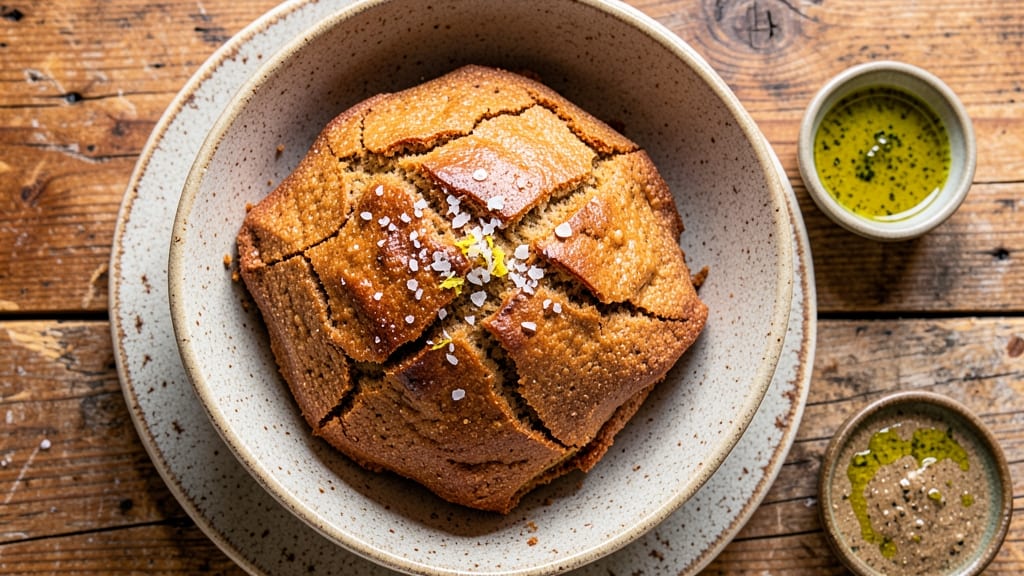
This almond flour unleavened bread delivers a nutty, dense loaf with no yeast or rising required—perfect for gluten-free diets or traditional flatbread adaptations. The secret lies in proper hydration and binding techniques that create a sturdy yet tender crumb, inspired by both ancient baking methods and modern nutritional needs.
Unlike traditional breads, this recipe skips yeast entirely, relying instead on almond flour's natural structure and a few key ingredients to hold everything together.
The beauty of this recipe is its versatility—bake it as a dense loaf, shape it into flatbreads, or even create crispy crackers. The almond flour provides a rich, slightly sweet flavor while keeping the bread naturally gluten-free and high in protein.
With just five core ingredients and 30 minutes of active time, you'll achieve a loaf that's sturdy enough for sandwiches or hearty enough to stand alone as a side.
What makes this recipe work is the careful balance of hydration and binding agents. Almond flour absorbs moisture differently than wheat flour, so we use a combination of eggs (or flax eggs for vegan versions) and a touch of psyllium husk to mimic the structure of gluten.
The result is a loaf that's dense yet satisfying, with a subtle nutty flavor that pairs beautifully with soups, stews, or as a base for open-faced sandwiches.
For those with dietary restrictions, this recipe shines—it's naturally gluten-free, grain-free, and can be made vegan with simple substitutions. The baking method is flexible too: you can bake it in a loaf pan for a traditional shape or press it into a skillet for flatbreads.
Whether you're adapting traditional unleavened breads or creating something entirely new, this recipe delivers restaurant-quality results with minimal effort.
Ingredients for almond flour unleavened bread
Five core ingredients transform into a sturdy, nutty loaf without yeast or rising.
| Ingredient | Amount | Notes |
|---|---|---|
| Almond Flour 🌰 | 2 ½ cups | Finely ground, blanched preferred |
| Ground Flaxseed 🌾 | 2 tbsp | For flax eggs, mix with water |
| Water 💧 | 0.6 cup | Room temperature for best binding |
| Psyllium Husk Powder 🌿 | 1 tbsp | Key for gluten-free structure |
| Sea Salt 🧂 | ½ tsp | Fine grain preferred |
| Extra-Virgin Olive Oil 🫒 | 0.3 cup | For moisture and richness |
| Apple Cider Vinegar 🍎 | 1 tbsp | Activates psyllium husk |
Almond flour is the foundation—Bob's Red Mill or Anthony's Goods brands yield the finest texture. Look for blanched almond flour, which has a smoother consistency than skin-on varieties. The flaxseed needs to be freshly ground; pre-mixed flaxseed meal from health food stores works best. Psyllium husk is non-negotiable for structure—Now Foods sells it in bulk. For olive oil, California Avocado Ranch cold-pressed varieties add subtle fruit notes that complement the almond flavor.
No flaxseed? Chia seeds ground into a powder work at the same ratio. Short on almond flour? Cashew flour can substitute at 1:1, though texture will differ slightly. Vinegar can be swapped for lemon juice at equal amounts. The psyllium husk must be powdered—whole husks won't activate properly. For extra richness, add 1 tbsp tahini to the wet ingredients, though it alters the flavor profile. The recipe calls for room-temperature water, but warm water (not hot) speeds up hydration by 10 minutes without compromising texture.
Mix the dry ingredients first, then add wet components gradually to avoid overmixing. The dough will be thick and sticky—don't panic. For a loaf pan version, grease thoroughly with olive oil. Bake immediately or refrigerate for up to 24 hours for easier handling. Store wrapped at room temperature for 3 days or freeze for 3 months. The bread improves with age, developing deeper nutty flavors over time. For flatbreads, press the dough to 1/4-inch thickness before baking.
Why You'll Love This Recipe
- No Mixer Needed: Honestly, this bread comes together with just a fork and a bowl—no standing mixer or fancy tools. The psyllium husk does all the heavy lifting, binding everything with just a splash of water and a pinch of salt.
- Nutty Crunch Delight: That first bite? Rich, toasty almond flavor with a satisfying chew, thanks to the flaxseed and psyllium. It’s not dry or crumbly—it’s got structure, like a cross between a cracker and a slice of artisanal bread.
- Meal Prep MVP: Between us, this keeps for days in the fridge or freezer, and it’s perfect for packing lunches. Toast a slice, spread with avocado, or use it to scoop up soups—it’s my go-to for busy mornings.
- Budget-Friendly Staple: Almond flour might seem pricey, but a little goes a long way here. The flaxseed and psyllium stretch it further, and you won’t waste leftovers—it’s great for dipping, snacking, or even crumbling into salads. (Yes, even on a Tuesday night.)
Step-by-step instructions for almond flour unleavened bread
This method delivers a dense, nutty loaf with perfect structure—no yeast, no rising, just pure almond flour technique.
Combine Wet Ingredients for Optimal Binding
In a medium bowl, whisk together the 0.6 cup water with the 2 tbsp ground flaxseed and 1 tbsp apple cider vinegar until fully dissolved. The mixture should thicken slightly as the flaxseeds form a gel-like consistency—this acts as our egg substitute. Let it sit for 5 minutes while you prepare the dry ingredients. This resting period ensures maximum binding capacity for our gluten-free dough.
In a separate small bowl, mix the 1 tbsp psyllium husk powder with the 0.3 cup extra-virgin olive oil until it forms a smooth paste. Psyllium husk is our secret weapon here—it creates the structural integrity that gluten would normally provide. The oil adds moisture and richness that prevents the bread from becoming dry. Combine these two mixtures in the same bowl and stir vigorously for 1 minute until completely homogeneous.
Gradually Incorporate Almond Flour for Perfect Texture
Add the 2.5 cups almond flour to the wet mixture in three increments, stirring vigorously after each addition. Begin with 1 cup, then 1 cup, and finish with the remaining 0.5 cup. This gradual approach prevents gluten formation while ensuring even distribution of the binding agents throughout the dough. The texture should resemble thick, sticky wet sand—neither too dry nor too soupy.
After the final addition, stir in the 0.5 tsp sea salt and continue mixing for another 2 minutes until the dough comes together. You'll notice it's quite dense and sticky—this is normal for almond flour bread. The dough should hold its shape when pressed gently but still feel moist to the touch. If it appears too dry, add 1 teaspoon of water at a time until you reach this ideal consistency.
Shape and Prepare for Baking
Line a 9x5-inch loaf pan with parchment paper, allowing the ends to extend slightly over the edges for easy removal. Transfer the dough to the prepared pan and press it down firmly with a wet spatula, making sure to distribute it evenly. The dough will be quite dense, so you'll need to apply steady pressure—this creates the characteristic dense, moist crumb of almond flour bread.
Cover the pan tightly with plastic wrap and refrigerate for 30 minutes. This chilling period allows the psyllium husk to fully activate and the dough to firm up slightly, making it easier to handle. When you remove it from the refrigerator, the dough should hold its shape when gently pressed but still feel slightly tacky. This is the perfect consistency for baking.
Bake at Low Heat for Even Cooking
Preheat your oven to 350°F and place a baking sheet on the middle rack to catch any potential drips. Remove the chilled dough from the refrigerator and carefully transfer it to the preheated oven. Bake for 45-50 minutes until the top is deep golden brown and the internal temperature reaches 200°F when measured with an instant-read thermometer.
The bread should spring back slightly when pressed gently with a finger—this indicates proper doneness. If the top browns too quickly before the interior is fully cooked, loosely cover the pan with aluminum foil. The bread will continue cooking slightly after removal from the oven, so it's better to err on the side of underbaking by a few minutes. Let the bread cool in the pan for 10 minutes before removing it to a wire rack to cool completely.
Rest and Slice for Maximum Flavor Development
While the bread cools, prepare a clean cutting board. Using a sharp serrated knife, slice the bread into ¼-inch thick pieces. Almond flour bread is best enjoyed fresh from the oven when it's at its most moist, but it will keep well at room temperature for 3 days wrapped in a clean kitchen towel. For longer storage, slice the cooled bread and freeze between parchment paper for up to 3 months.
The final product should have a dense, moist crumb with a slightly crisp exterior and a rich, nutty flavor from the almond flour. Each slice should hold its shape well without crumbling excessively. This bread works beautifully as a base for sandwiches, toasted with butter, or served alongside soups and salads. The absence of gluten means it has a unique texture—expect a more compact, cake-like quality rather than the light, airy texture of traditional bread.
Pro Tips For Making Almond Flour Unleavened Bread
- Mix the Psyllium Last: I learned this the hard way—adding psyllium husk powder too early turns your dough into a sticky mess. Wait until you’ve got the almond flour and flaxseed mixed with water before stirring in the psyllium. It needs to hydrate fast, so toss it in just before shaping.
- Use Warm Water for Flax: Cold water makes flaxseed gel sluggish, and your dough will feel dry. Heat your water to about 110°F (just warm to the touch) before mixing it with ground flax—this guarantees a smooth, cohesive dough. No thermometer? Boil water, let it sit 30 seconds, then mix.
- Press Firmly, Don’t Pack: Almond flour bread needs gentle pressure, not a sledgehammer. Press the dough into your pan just enough to fill it—too much force makes it dense. Use your palm, not your fist, and avoid overcompressing the edges. It’ll hold together without falling apart.
- Bake Until Internal Temp Hits 200°F: The crust might look done at 190°F, but the center can stay undercooked. Use an instant-read thermometer—200°F guarantees it’s fully set without drying out. If you don’t have one, bake 5 minutes longer than the recipe says and check for a clean pull at the edges.
Creative variations of this almond flour unleavened bread
Sweet Cinnamon Loaf
Transform your almond flour bread into a dessert-loaf by adding 1 tbsp cinnamon and 2 tbsp brown sugar to the dry ingredients. For extra indulgence, fold in ½ cup chopped walnuts or dark chocolate chunks.
Bake in a greased 8x4-inch loaf pan at 325°F for 40 minutes until the top is golden. Brush with a simple glaze of powdered sugar mixed with milk while warm. 🍂
Herbed Flatbreads
Skip the loaf pan and press the dough into ¼-inch thick rounds on a parchment-lined baking sheet. Brush with olive oil and sprinkle with 1 tsp dried rosemary, 1 tsp dried thyme, and ½ tsp garlic powder.
Bake at 375°F for 12-15 minutes until golden and crisp. These flatbreads pair perfectly with dips like hummus or baba ganoush. ✨
Seed-Enhanced Protein Bread
Boost nutrition by adding ¼ cup chia seeds, ¼ cup pumpkin seeds, and 2 tbsp hemp seeds to the dry ingredients. The seeds add crunch and extra protein while keeping the bread gluten-free.
Press into a loaf pan and bake as directed. Store in an airtight container for up to 5 days—the seeds stay fresh and crunchy. 🌱
Savory Garlic-Herb Version
For a savory twist, mix 1 tbsp dried oregano, 1 tbsp dried basil, and 2 minced garlic cloves into the wet ingredients. Top with 1 tbsp grated Parmesan cheese (or nutritional yeast for vegan) before baking.
This version works beautifully as a base for bruschetta or as a side to roasted vegetables. 🧄
Cracker-Style Bites
Roll the dough into ½-inch thick logs and slice into ¼-inch thick rounds. Arrange on a parchment-lined baking sheet and bake at 350°F for 10-12 minutes until golden and crisp.
These crackers stay crunchy for 5 days in an airtight container and pair well with cheese platters or soups. 🥖
Vegan Egg Substitute
Replace the flax eggs with 2 tbsp ground chia seeds + 6 tbsp water (mixed and rested for 10 minutes). For added richness, stir in 2 tbsp tahini with the wet ingredients.
The texture remains dense but slightly more tender, perfect for vegan diets. Store-bought chia seeds work, but freshly ground yield better results. 💚
Nutrition facts
Frequently asked questions
Why does this almond flour bread need psyllium husk?
Psyllium husk acts as a gluten substitute, creating the structural integrity that traditional bread relies on. Without it, the bread would crumble and lack the proper binding. The husk absorbs liquid and expands when mixed with water, forming a gel-like network that holds the bread together during baking. Think of it as the secret ingredient that makes gluten-free baking possible!
Can I make this recipe without eggs?
The recipe uses flax eggs (ground flaxseed + water) as a vegan substitute. For even more binding power, try chia seeds at the same ratio. If you prefer no flax or chia, you can use 2 tbsp ground psyllium husk + 1 tbsp water mixed into the wet ingredients—this creates a similar binding effect. The texture will be slightly denser but still delicious.
How do I prevent the bread from crumbling when slicing?
Let the bread cool completely in the pan for 10 minutes before removing it. Then, chill it in the refrigerator for 30 minutes to firm up the structure. When slicing, use a sharp serrated knife and cut at a 45-degree angle for cleaner slices. If it still crumbles, try pressing the dough slightly more firmly into the pan during shaping. Patience is key—don't slice too soon!
What's the best way to store this bread?
Wrap the cooled loaf tightly in a clean kitchen towel or beeswax wrap, then store at room temperature for up to 3 days. For longer storage, slice the bread and freeze between parchment paper for up to 3 months. The nutty flavors actually deepen over time, making it taste even better after a day or two!
Can I use this dough for flatbreads instead of a loaf?
Yes! Press the dough into ¼-inch thick rounds on a parchment-lined baking sheet. Brush with olive oil and sprinkle with herbs or seeds. Bake at 375°F for 12-15 minutes until golden and crisp. These flatbreads work perfectly as wraps, dipping bread, or even as a pizza crust base. The same dough transforms beautifully into different shapes!