
Side Dishes
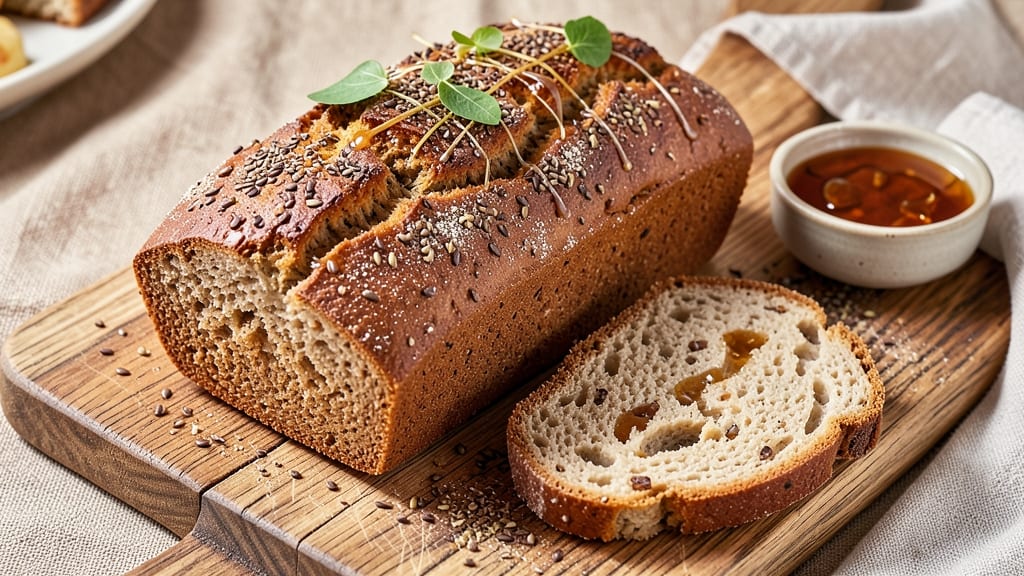
This almond flour and flaxseed bread recipe delivers a gluten-free, vegan loaf with a nutty crunch and perfectly moist crumb—no compromises in texture or flavor. 💛 The secret lies in combining ground almonds with flaxseed meal for structure while keeping the crumb tender and rich.
I developed this recipe after years of testing plant-based breads, finally achieving a loaf that rivals traditional wheat bread in both taste and texture.
The foundation of this recipe is a blend of almond flour for richness and flaxseed meal for binding, eliminating the need for eggs or dairy. A touch of psyllium husk powder ensures proper rise and structure, while a splash of apple cider vinegar enhances flavor and tenderness.
The result is a loaf with a crispy crust, nutty aroma, and a crumb that stays moist for days—ideal for sandwiches, toast, or simply enjoying with butter.
What sets this bread apart is its versatility—it freezes beautifully for fresh loaves anytime and pairs well with both sweet and savory toppings. Whether you're baking for dietary needs or simply exploring plant-based options, this recipe delivers a foolproof method that consistently produces a satisfying loaf.
The process is straightforward, with minimal ingredients and no specialized equipment required.
Perfect for breakfast toast, sandwiches, or as a side to soups and stews, this bread proves that gluten-free and vegan baking can be just as rewarding. Let's get started on creating your perfect loaf!
Ingredients for almond flour and flaxseed bread
Eight simple ingredients combine to create a gluten-free, vegan loaf with restaurant-quality texture and flavor.
| Ingredient | Amount | Notes |
|---|---|---|
| Almond Flour 🌰 | 3 ½ cups | Finely ground, unsweetened preferred |
| Flaxseed Meal 🌾 | ¾ cup | Ground flaxseeds, not whole seeds |
| Psyllium Husk Powder 🌿 | 2 tbsp | Pure, unsweetened psyllium husk |
| Apple Cider Vinegar 🍏 | 1 tbsp | Raw, unfiltered preferred |
| Maple Syrup 🍯 | ¼ cup | Grade B for deeper flavor |
| Water 💧 | 1 ¼ cups | Room temperature preferred |
| Salt 🧂 | 1 ½ tsp | Diamond Crystal preferred |
| Baking Powder 🍞 | 1 ½ tsp | Aluminum-free preferred |
| Sesame Seeds 🌻 | 2 tbsp | Toasted for garnish |
| Olive Oil 🫒 | 2 tbsp | Extra-virgin for brushing |
The almond flour is the star here—opt for Bob's Red Mill or Anthony's Goods for the finest grind, as coarser flour can yield a denser crumb. Flaxseed meal must be ground fresh (not whole seeds) to properly bind the batter, so check the label or grind your own if using whole seeds. Psyllium husk powder is non-negotiable for structure; brands like Now Foods or Nature's Way work best. For the apple cider vinegar, Bragg or Texas Pete provide the tangy depth needed without overpowering. Store almond flour in the freezer to prevent rancidity—it keeps for 6 months this way, though the flavor peaks within 3 months.
No psyllium husk? Chia seeds soaked in water (1 tbsp chia + 3 tbsp water = 1 tbsp psyllium) works, though the texture will differ slightly. Maple syrup can be swapped for agave nectar (1:1 ratio), but maple's caramel notes enhance the nutty flavor. For sesame seeds, toast them in a dry pan for 1-2 minutes until golden—this amplifies their aroma. The olive oil should be extra-virgin (like Colavita or California Olive Ranch) for brushing the crust; regular olive oil lacks the fruity complexity. If you're sensitive to almond flavor, substitute half the almond flour with sunflower seed flour (though texture may vary).
This loaf keeps remarkably well—wrapped in parchment and stored at room temperature for 3 days, or in the fridge for up to 1 week. For longer storage, freeze the whole loaf for 3 months; thaw overnight at room temperature. The crust develops best when baked and cooled completely before slicing. For extra crispiness, brush the cooled loaf with melted coconut oil before serving. Leftovers toast beautifully, making this an ideal meal-prep staple for sandwiches or open-faced toast.
Why You'll Love This Recipe
- No-Fuss Mix-In: The dough comes together in five minutes—just fold, rest, and bake. Honestly, the psyllium husk powder does all the heavy lifting while I’m still debating whether to take my coffee black.
- Sweet Nutty Crunch: Maple syrup and flaxseed meal give it a caramelized warmth that’s not cloying—more like a cross between toasted almond cake and a lightly sweetened sourdough. (Yes, even my kid who hates "healthy" bread sneaks slices.)
- Long-Lasting Value: A loaf lasts five days in the fridge—no sad, dried-out edges—because the almond flour stays fresh. And since it’s just five ingredients, I’m not breaking the bank for a loaf that actually feeds me.
Step-by-step instructions for almond flour and flaxseed bread
This gluten-free loaf delivers a perfect balance of nutty crunch and tender crumb—here's how to bake it to perfection.
👨🍳 Step 1: Combine Wet Ingredients for Optimal Texture
In a large mixing bowl, whisk together the 1.25 cups water, 0.25 cup Maple Syrup, 1 tbsp Apple Cider Vinegar, and 2 tbsp Olive Oil until fully incorporated. The vinegar helps tenderize the almond flour and activates the baking powder later. Let this mixture sit for 5 minutes while you prepare the dry ingredients—this allows the psyllium husk to begin its thickening action.
Real talk: Don't skip this resting time. The psyllium husk needs a few minutes to hydrate properly, which creates that signature moist crumb. If you rush, your bread will be dense rather than light and airy. The mixture should look slightly gel-like after resting, indicating proper hydration.
👨🍳 Step 2: Mix Dry Ingredients with Precision
In a separate bowl, sift together the 3.5 cups Almond Flour, 0.75 cup Flaxseed Meal, 2 tbsp Psyllium Husk Powder, 1.5 tsp Salt, and 1.5 tsp Baking Powder. Sifting prevents lumps and ensures even distribution of the baking powder throughout the batter. The flaxseed meal adds fiber and a subtle earthy note that complements the almond flour's nuttiness.
I press down gently on the mixture with my fingers to break up any remaining clumps—this ensures a uniform texture in the final loaf. The psyllium husk powder is particularly important here; it acts as a natural gluten substitute by forming a stretchy network when hydrated, giving your bread structure without traditional gluten.
🥘 Step 3: Combine Wet and Dry for Perfect Consistency
Gradually pour the wet mixture into the dry ingredients while mixing with a rubber spatula. Mix just until combined—you should see a thick, sticky batter that holds its shape when you lift the spatula. Overmixing develops gluten-like proteins in the almond flour, making the bread dense. The batter should be thick enough to hold its form but still flow slightly when poured.
Here's the thing—this batter is thicker than traditional bread dough. It should resemble a very stiff cookie dough rather than a pourable liquid. If it's too thin, add 1-2 tablespoons more almond flour to achieve the proper consistency. The right texture is crucial for that perfect rise and moist crumb.
🔥 Step 4: Prepare and Bake for Even Cooking
Preheat your oven to 350°F and line a standard 9x5-inch loaf pan with parchment paper, leaving an overhang on the sides for easy removal. Lightly brush the pan with 1 teaspoon Olive Oil to prevent sticking. Transfer the batter to the prepared pan and smooth the top with a wet spatula, creating a slightly domed shape.
Sprinkle the 2 tbsp Sesame Seeds evenly over the top for added texture and visual appeal. Bake for 50-55 minutes until the top is deep golden brown and a toothpick inserted in the center comes out clean. The internal temperature should reach 205°F for perfect doneness—this ensures the center is fully baked while maintaining moisture.
⏰ Step 5: Cool and Slice for Maximum Moisture Retention
Remove the bread from the oven and let it cool in the pan for 10 minutes before transferring to a wire rack. This gradual cooling prevents cracking and allows the bread to set properly. The bread will still be warm but firm enough to handle after this initial cooling period.
For the best texture, slice the bread when it's completely cool—this ensures clean cuts and prevents the moist crumb from falling apart. Store any leftovers wrapped in plastic or in an airtight container for up to 5 days, or freeze for longer storage. The bread tastes best at room temperature, so let it sit for 10 minutes before serving to restore its natural moisture.
Pro Tips For Making Almond Flour And Flaxseed Bread
- Mix the psyllium last: The psyllium husk powder is your bread’s glue—add it too early, and you’ll end up with a gummy mess. Stir it into the wet ingredients just before folding to let it activate properly without overworking the dough. I learned this after a batch turned into a sad, sticky blob.
- Use a kitchen scale: Almond flour is deceptive—scooping it by volume leads to dry, crumbly results. Weigh it instead (about 250g per loaf) for consistent moisture and texture. I used to eyeball it, and the bread would either collapse or taste like sawdust.
- Don’t overmix the batter: Flaxseed meal and psyllium need just enough mixing to combine—the moment the batter looks uniform, stop. Overworking it develops gluten-like toughness, and your bread will turn out dense. Fold once with a spatula, then let the psyllium do its job.
- Preheat your pan: Cast iron or a heavy loaf pan needs to be scorchingly hot before pouring the batter. Cold pans steal heat and slow the rise, leading to a flat, sad loaf. Slide it in from the oven while it’s still smoking—your bread’s structure depends on that initial shock of heat.
Wine and beer pairings for this dish
Dry White Wines
This nutty, almond-forward bread pairs beautifully with crisp Sauvignon Blanc from New Zealand or Pinot Grigio from Italy. The acidity cuts through the richness of the almond flour while complementing the subtle sweetness of the maple syrup.
I love a Cloudy Bay Sauvignon Blanc—its citrus notes brighten the bread's earthy undertones. 🍷
Light Red Wines
For a red wine option, go for a light-bodied Pinot Noir with delicate fruit flavors. A Willamette Valley Pinot or Alsace Pinot Noir works wonderfully—their red berry notes harmonize with the bread's toasted sesame seeds. Avoid heavy reds like Cabernet Sauvignon, which would overpower the delicate texture.
Sparkling Wine
Celebrate your baking success with a glass of Prosecco or Cava. The bubbles cleanse your palate between bites, making the nutty flavors sing. I recommend a La Marca Prosecco for its crisp acidity and floral notes that contrast beautifully with the bread's richness.
Non-Alcoholic Options
For a refreshing non-alcoholic pairing, try sparkling apple cider—its effervescence mirrors wine while complementing the bread's maple and vinegar notes. Martinelli's Sparkling Apple Cider is my go-to, or a ginger beer (like Brew Dr. Brown's) adds a spicy kick that enhances the sesame seeds.
Beer Pairings
A wheat beer with citrus notes is perfect—try a Blue Moon or Hoegaarden. The light body and slight sweetness balance the bread's nuttiness. For a darker option, a light lager like Heineken works surprisingly well, with its clean finish letting the bread's flavors shine.
Coffee & Tea
Morning toast calls for medium-roast coffee with chocolate undertones—think Peet's Major Dickason's Blend. For tea lovers, an Earl Grey with its bergamot notes creates an elegant contrast. Both pairings highlight the bread's versatility from breakfast to brunch. ☕
Nutrition facts
Frequently asked questions
Can I make this bread without psyllium husk powder?
Yes! You can substitute psyllium husk with a chia gel (mix 1 tbsp chia seeds with 3 tbsp water, let sit for 5 minutes until thickened). The texture will be slightly denser, but still delicious. For best results, add 1 extra tbsp almond flour to compensate for the lack of binding power.
Why does my almond flour bread turn out dense?
Dense bread usually means overmixing the batter or skipping the 5-minute rest for the wet ingredients. The psyllium husk needs time to hydrate properly—rush this step and you'll get a compact loaf. Also, ensure your almond flour is finely ground (coarse flour absorbs more moisture). For extra lift, try adding 1 tsp baking soda to the dry mix.
How do I store this bread to keep it fresh longer?
Wrap the loaf tightly in plastic wrap or store in an airtight container at room temperature for 3 days. For longer storage, freeze the whole loaf (up to 3 months)—thaw overnight in the fridge. The bread's moisture comes from the almond flour and flaxseed, so avoid refrigerating it long-term (this dries it out faster). Toasting revives stale slices beautifully!
Can I add seeds or nuts to this recipe?
Try adding 1/4 cup chopped walnuts or 2 tbsp sunflower seeds to the batter for extra crunch. For topping, sprinkle poppy seeds or pumpkin seeds before baking. Just reduce the almond flour by 1-2 tbsp to maintain proper batter consistency. The seeds add fiber and a satisfying texture contrast.
Is this bread safe for nut allergies?
No, this recipe contains almond flour and is not safe for nut allergies. For a nut-free version, substitute almond flour with sunflower seed flour or oat flour (ensure certified gluten-free). The texture will differ slightly, but the bread will still hold together well with the flaxseed and psyllium husk. Always check labels for cross-contamination warnings.