
Side Dishes
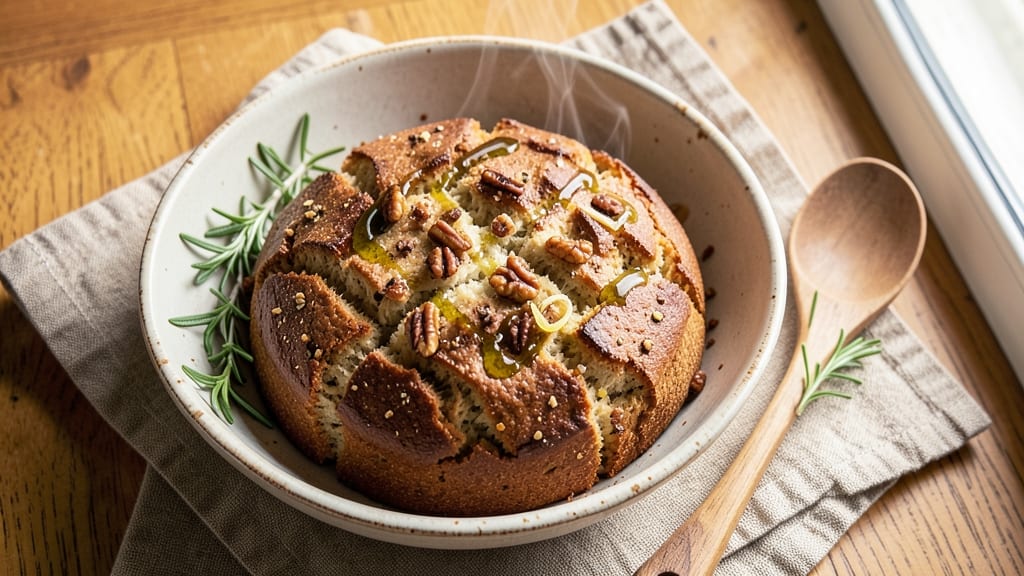
This acorn flour bread recipe transforms a nutrient-rich flour into a loaf with earthy depth and subtle nuttiness that sets it apart from traditional bread.
The key lies in balancing hydration and fermentation to create a crumb that’s both tender and hearty—perfect for pairing with soups or enjoying on its own. Acorn flour, made from ground acorns, brings a unique mineral richness that elevates every bite while adding a surprising depth of flavor.
What makes this recipe stand out is its foolproof technique for home bakers, even those new to artisan bread-making. We’ll focus on precise hydration ratios and a gentle fermentation process to develop flavor without overproofing.
The result? A loaf with a crisp crust and an open, airy crumb that’s impossible to resist. No special equipment is needed—just patience and attention to detail.
The beauty of acorn flour lies in its nutritional benefits, packed with protein, fiber, and essential minerals like calcium and magnesium. But don’t let its earthy profile intimidate you—this bread is surprisingly versatile.
Whether you’re serving it warm with butter or toasting slices for breakfast, its nutty undertones add a sophisticated touch to any meal. The recipe also includes tips for adjusting texture if your kitchen’s humidity varies.
Ready to bake? We’ll walk you through mixing, kneading, proofing, and baking step by step, ensuring your loaf turns out golden and aromatic every time.
The process is simpler than you think, and the reward—a loaf that tastes like a cross between sourdough and a rustic seed bread—is well worth the effort. Let’s get started.
Ingredients for acorn flour bread
Earthy acorn flour meets nutty seeds for a bread that's both hearty and sophisticated.
| Ingredient | Amount | Notes |
|---|---|---|
| Acorn Flour 🌾 | 2 ½ cups | Finely ground, organic preferred |
| Warm Water 💧 | 1 ½ cups | Filtered or spring water |
| Active Dry Yeast 🍞 | ¼ tsp | Instant yeast works too |
| Sugar 🍚 | ½ tsp | White or coconut sugar |
| Salt 🧂 | 1 tsp | Diamond Crystal preferred |
| Extra-Virgin Olive Oil 🫒 | ¼ cup | For dough elasticity |
| Ground Flaxseed 🌰 | ½ cup | For omega-3 richness |
| Sunflower Seeds 🌻 | ¼ cup | Toasted for crunch |
| Pumpkin Seeds 🎃 | ¼ cup | Pepitas work too |
| Ground Flaxseed Egg Replacer 🥚 | ¼ cup | Mix 1 tbsp flax + 3 tbsp water |
| Apple Cider Vinegar 🍎 | 1 tbsp | For tangy depth |
| Sesame Seeds 🌾 | 1 tbsp | For topping crunch |
| Vegan Butter 🧈 | 2 tbsp | For crust brushing |
Acorn flour is the star here—look for organic, finely ground varieties at health food stores like Whole Foods or Sprouts. The coarser the grind, the denser your bread will be, so sift it well. If you can't find acorn flour, buckwheat flour is a decent substitute (though flavor will differ). For the seeds, Trader Joe's has great bulk bins—just toast them for 5 minutes at 350°F to bring out their nuttiness. The flaxseed egg replacer is a game-changer for binding without eggs, and the apple cider vinegar adds just enough tang to balance the earthy flour.
No acorn flour? Substitute with half all-purpose flour and half whole wheat—it won't be identical, but it'll still taste great. Running out of seeds? Chia seeds or walnuts work in a pinch, though texture will vary. The yeast is non-negotiable for that airy crumb, but if you're in a rush, instant yeast cuts fermentation time by 20%. For the vinegar, lemon juice works too, though it'll give a slightly different tang. And if you're worried about the dough being too sticky, add 1 tbsp more flour during kneading—acorn flour absorbs more moisture than wheat flour.
This dough keeps beautifully for 24 hours in the fridge if you want to proof it overnight—just bring it to room temp before baking. For the seeds, store them in an airtight container in a cool, dark place to preserve their crunch for up to 6 months. The baked loaf stays fresh for 3-4 days at room temperature, or you can freeze slices for up to 3 months. I like to wrap the whole loaf in parchment paper before freezing—thaws perfectly and keeps that crisp crust. Toast slices straight from the freezer for a quick breakfast.
Why You'll Love This Recipe
- Five-Ingredient Magic: I swear by this recipe—just acorn flour, warm water, yeast, sugar, and salt. That’s it. No fancy mixers or last-minute grocery runs, just a bowl, a little patience, and a loaf that tastes like you slaved over it.
- Nutty Earthy Crunch: The acorn flour gives this bread a toasty, almost caramelized depth you won’t find in regular bread. Honestly, it’s like biting into a warm, chewy hug—naturally sweet with a hint of that woodsy goodness that sticks with you.
- Breakfast to Dinner Fix: This loaf is my go-to for toast in the morning, but it’s also the star of a rustic charcuterie board at night. Between us, it’s the only bread I bake that actually does everything—no sad, stale ends here.
- Zero-Waste Goldmine: Between us, acorn flour is affordable, and this recipe stretches it perfectly. Plus, leftovers? They toast up even better the next day. I’ll be real: I’ve had this bread last me a week, and it’s still the best part of my lunch.
Step-by-step instructions for acorn flour bread
This seed-enriched loaf delivers nutty depth and satisfying texture—here's how to bake it perfectly.
Activate the Yeast and Prepare the Dough Base
In a small bowl, combine the 1.5 cups warm water (about 105°F—too hot and you'll kill the yeast) with the 0.25 tsp active dry yeast and 0.5 tsp sugar. Let it sit for 5-7 minutes until frothy—this confirms your yeast is alive and ready to work. If it doesn't foam, start over with fresh yeast.
In a large mixing bowl, whisk together the 2.5 cups acorn flour, 1 tsp salt, and 0.5 cup ground flaxseed. Acorn flour absorbs moisture differently than wheat flour, so we're pre-mixing everything to ensure even hydration. Add the yeast mixture and 0.25 cup extra-virgin olive oil to the dry ingredients, then stir vigorously until a shaggy dough forms. The acorn flour will create a denser dough than wheat-based breads, so don't be surprised if it feels thicker initially.
Develop the Dough with Flaxseed Egg Replacer
In a separate small bowl, prepare the ground flaxseed egg replacer by mixing 1 tbsp ground flaxseed with 3 tbsp water (this makes the 0.25 cup total). Let it sit for 5 minutes until it thickens into a gel-like consistency—this will replace the binding properties of eggs in traditional bread recipes. Stir this flax "egg" into your dough along with the 1 tbsp apple cider vinegar. The vinegar adds tang and helps activate the gluten-like proteins in the acorn flour.
Wet your hands and knead the dough on a lightly floured surface for 5-7 minutes. You'll notice it's stickier than wheat dough, so work quickly but gently. The dough should become smoother and more elastic as you knead. If it's too sticky to handle, wet your hands again rather than adding more flour—acorn flour needs moisture to develop properly. Once smooth, place the dough in a lightly oiled bowl, cover with a damp towel, and let it rise in a warm place for 1-1.5 hours or until doubled in size. The warm environment helps the yeast work efficiently with the dense acorn flour.
Add Seed Mixture and Shape the Loaf
In a food processor, pulse together the 0.25 cup sunflower seeds, 0.25 cup pumpkin seeds, and 1 tbsp sesame seeds until finely chopped but not powdered. This creates a seed paste that will distribute evenly throughout the dough. Transfer this mixture to your risen dough and gently fold it in using a spatula or your hands. The seeds add crunch, protein, and beautiful flecks throughout each slice.
Turn the dough out onto a lightly floured surface and shape it into a 9x5-inch loaf pan form. Press gently but firmly—acorn flour dough benefits from this compression as it bakes. Brush the top with a little extra-virgin olive oil and sprinkle with additional sesame seeds for extra crunch. Cover loosely with plastic wrap and let it rise for another 30-45 minutes while you preheat your oven to 375°F. This final rise ensures a good oven spring when it bakes.
Bake to Golden Perfection
Place your shaped loaf in the center rack of your preheated oven and bake for 45-55 minutes. The bread is done when it reaches an internal temperature of 205-210°F and sounds hollow when tapped on the bottom. You'll notice the crust develops a deep golden color with crackly texture—this is where the acorn flour's natural oils caramelize beautifully. If the top browns too quickly, tent with foil after 30 minutes to prevent over-browning while allowing the center to cook through.
When the bread is fully baked, remove it from the oven and immediately brush the top with melted vegan butter using a pastry brush. This step adds moisture and enhances the nutty flavors. Let the bread cool in the pan for 10 minutes, then transfer to a wire rack to cool completely. The bread will continue to firm up as it cools, making it easier to slice. For the best texture, slice when completely cool—this prevents the dense acorn flour structure from becoming gummy.
Store and Enjoy Your Seed-Enriched Loaf
Once completely cooled, store your acorn flour bread in an airtight container at room temperature for up to 3 days, or freeze for up to 3 months. The seeds and acorn flour make this bread dense and moist, so it doesn't dry out quickly like traditional wheat bread. When ready to serve, slice with a serrated knife—acorn flour bread has a slightly denser crumb that benefits from a sharp blade. The flavor profile delivers earthy acorn notes, nutty depth from the seeds, and a satisfying chew that makes every bite worth savoring.
Pro Tips For Making Acorn Flour Bread
- Mix the Dough Slowly: Acorn flour absorbs water like a sponge—don’t dump it all in at once. Stir in the warm water gradually while mixing, or you’ll end up with a gummy, unworkable mess. I learned this after kneading a sticky, glue-like disaster the first time.
- Proof the Yeast First: Skip the guesswork—activate the yeast in warm water with sugar before adding the acorn flour. If it doesn’t foam in 5–10 minutes, your bread will taste flat. Trust me, that extra step saves you from a dense, sad loaf later.
- Don’t Over-Knead: Acorn flour is delicate—knead just until the dough pulls away from the bowl, about 5–7 minutes. Overwork it, and you’ll turn the gluten into a tough, chewy nightmare. Less is more here; the bread’s nutty flavor shines when it’s handled gently.
- Use a Dutch Oven: Bake the bread in a preheated Dutch oven for the first 20 minutes to trap steam and create a crisp crust. Without one, the loaf flattens like a pancake. (Yes, even if you’re lazy—just grab one from your cabinet.)
Perfect pairings for this acorn flour bread
Soup Pairings
This earthy bread pairs beautifully with creamy butternut squash soup—the sweetness of the squash complements the acorn flour's nutty depth. I like to serve it with a drizzle of maple syrup and a sprinkle of toasted pecans for extra crunch.
The bread's dense texture soaks up the soup perfectly without falling apart. 🍲
For a heartier option, try lentil and mushroom soup—the umami flavors of the mushrooms and lentils create a delicious contrast with the bread's subtle sweetness. The seeds in the bread add a satisfying texture that balances the soup's creaminess.
I often add a pinch of smoked paprika to the soup to enhance the pairing.
Cheese Boards
Create a vegan cheese board featuring this bread as the perfect base. Pair it with aged cashew cheese, walnut-based brie, and marinated olives. The bread's nutty flavor holds up well against the tangy olives and creamy cashew cheese.
Add some dried apricots and honey-roasted nuts for a sweet contrast. 🧀
For a classic cheese board, try sharp cheddar, blue cheese, and goat cheese with a drizzle of fig jam. The bread's earthy notes cut through the richness of the cheese, creating a balanced bite.
I like to add cured meats like prosciutto or salami for a savory touch that pairs wonderfully with the bread's texture.
Breakfast Pairings
Toast slices of this bread and top with avocado mash, hemp seeds, and a sprinkle of sea salt. The bread's dense texture holds up well to the creamy avocado, making it a hearty breakfast option. Add a poached egg or tofu scramble for extra protein. 🥑
For a sweet breakfast, spread almond butter and sliced banana on toasted bread. The natural sweetness of the banana pairs perfectly with the nutty flavors of the acorn flour. A drizzle of honey or maple syrup adds a touch of sweetness that enhances the bread's earthy notes.
Dinner Pairings
Serve this bread alongside roasted vegetables like sweet potatoes, carrots, and brussels sprouts. The bread's nutty flavor complements the natural sweetness of the vegetables, while the seeds add a satisfying crunch. Drizzle everything with tahini dressing for a cohesive meal. 🥕
For a meat lover's option, pair the bread with grilled steak or roasted chicken. The bread's earthy depth stands up to the rich flavors of the meat, making it a perfect side.
Add a red wine reduction to the meat for an extra layer of flavor that pairs beautifully with the bread.
Nutrition facts
Frequently asked questions
Why does acorn flour bread taste different from regular bread?
Acorn flour brings a distinct earthy, nutty flavor with subtle sweetness that sets it apart from wheat-based breads. The natural oils in acorn flour caramelize during baking, adding depth, while the seeds contribute a satisfying crunch. This bread tastes like a cross between sourdough and seed bread—richer and more complex than standard loaves.
Can I make this bread without a loaf pan?
Shape the dough into a freeform boule or batard instead. For best results, bake on a parchment-lined baking sheet at 375°F for 40-45 minutes, rotating halfway. Brush with vegan butter after baking for a crisp exterior. The texture will be slightly denser without the pan's constraint, but still delicious.
What if my dough feels too sticky?
Acorn flour absorbs moisture differently than wheat flour, so stickiness is normal. Wet your hands instead of adding extra flour—this prevents drying out the dough. If needed, dust your surface with 1-2 tablespoons of acorn flour while kneading. The dough should be smooth but not dry; it'll firm up during proofing and baking.
How do I store leftovers to keep them fresh?
Wrap cooled slices in parchment paper and store in an airtight container at room temperature for 3 days. For longer storage, freeze slices for up to 3 months. Toast straight from frozen for a quick breakfast—no thawing needed! The dense acorn flour structure prevents drying better than wheat bread.
Can I substitute acorn flour with other flours?
For a similar texture, use a 50/50 blend of buckwheat and whole wheat flour. If you must use all-purpose flour, expect a lighter crumb and milder flavor. The recipe's nutty depth will diminish, but it'll still bake successfully. For best results, stick with acorn flour—its unique properties create this bread's signature character.