
Side Dishes
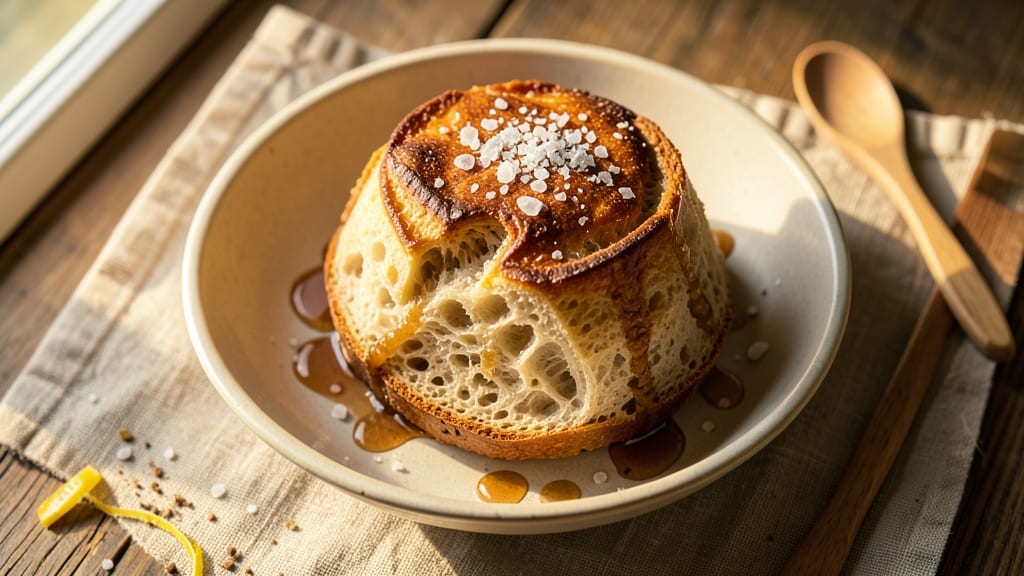
This airy whole wheat bread recipe transforms dense whole grain loaves into light, fluffy perfection with a tender crumb and golden crust. The secret lies in a strategic blend of whole wheat flour and all-purpose flour, combined with proper yeast activation and gentle kneading to develop gluten without overworking.
I've perfected this recipe through years of baking experiments, ensuring every slice stays moist for days.
What sets this recipe apart is the use of vital wheat gluten, which strengthens the structure while maintaining that airy texture whole wheat bread often lacks. The dough is allowed to rise twice—once to develop flavor, and again after shaping to achieve that signature lightness.
This method guarantees a bread that's both nutritious and satisfying, with a restaurant-quality texture you'd never expect from whole wheat.
By the time you pull this loaf from the oven, you'll have a warm, fragrant bread with a crisp exterior and soft, airy interior that practically melts in your mouth.
The flavor is rich and nutty from the whole wheat, but the texture is surprisingly light—proof that healthy baking can be just as delicious as traditional white bread. Perfect for sandwiches, toast, or serving alongside soups.
Whether you're baking for a family meal or meal prepping for the week, this recipe delivers consistent results every time. The dough is forgiving enough for beginners but refined enough to impress seasoned bakers. Let's get started on creating your perfect loaf of airy whole wheat bread.
Ingredients for airy whole wheat bread
Eight simple ingredients transform whole wheat into light, fluffy perfection you'll never believe.
| Ingredient | Amount | Notes |
|---|---|---|
| All-Purpose Flour 🌾 | 3 cups | For structure and lightness |
| Whole Wheat Flour 🌾 | 2 cups | Unbleached preferred |
| Vital Wheat Gluten 🌾 | ½ cup | Essential for airy texture |
| Active Dry Yeast 🍞 | 2 ¼ tsp | Ensure freshness |
| Granulated Sugar 🍚 | 1 tbsp | Feeds yeast activation |
| Salt 🧂 | 1 ½ tsp | Diamond Crystal preferred |
| Unsalted Butter 🧈 | ½ cup | Cold, cubed for texture |
| Large Eggs 🥚 | 2 whole | Room temperature preferred |
| Warm Water 💧 | 1 ¼ cups | 110°F for yeast activation |
| Olive Oil 🫒 | 1 tbsp | For dough softness |
| Honey 🍯 | 1 tbsp | Enhances flavor |
The flours are the foundation—King Arthur whole wheat and all-purpose blend for that signature lightness. Bob's Red Mill vital wheat gluten is my go-to for strengthening the structure without heaviness. Yeast matters: grab Fresh & Easy brand if you're near Trader Joe's, or use active dry yeast from the bulk section. The butter should be cold when you add it—soft enough to mix but firm enough to create pockets in the dough. For the eggs, room temperature is key—they'll mix in more evenly and help create that tender crumb.
No honey? Maple syrup works one-to-one. Short on eggs? Flax eggs (1 tbsp ground flaxseed + 3 tbsp water = 1 egg) keep this vegan-friendly. The olive oil can be swapped for avocado oil if you prefer. For the yeast, if your water isn't exactly 110°F, no worries—just make sure it's warm to the touch (like bathwater). The whole wheat flour can vary by brand, so if your loaf turns out slightly denser, try adding 1 extra tbsp of vital wheat gluten next time. And if you're baking at high altitude, reduce the yeast by 1/4 tsp.
Store the dough in an airtight container in the fridge for up to 24 hours if you need to slow the rise. For the finished loaf, wrap tightly in plastic or foil and keep at room temperature for 3 days, or freeze for 3 months. I like to slice it thin and toast—the first slice is always the best. If you make extra, freeze half the loaf right after baking. It reheats beautifully in a 350°F oven for 10 minutes to restore that fresh-baked warmth.
Why You'll Love This Recipe
- No-Knead Magic: Mixing takes five minutes—just toss the flours, yeast, and a touch of sugar, then let the dough rise while you sip coffee. The vital wheat gluten does the heavy lifting, so you skip the arm workout.
- Nutty Crust, Soft Core: That blend of whole wheat and all-purpose gives it a satisfying chew without tasting dense. Honestly? It’s the kind of bread where the first slice disappears faster than you can say "second helping."
- Meal Prep MVP: Bake a loaf on Sunday, and it’s perfect for sandwiches, toast, or charcuterie boards all week. Between us, it’s my go-to for lunches—no sad desk leftovers here.
- Budget-Boosting Secret: Whole wheat flour stretches further with the all-purpose, and a single batch feeds four for days. Plus, the yeast does all the work, so you’re not sacrificing flavor for savings. Win-win.
Step-by-step instructions for airy whole wheat bread
Let's create bread so light it'll surprise you—whole wheat without the dense texture.
Activate the Yeast with Warm Water and Honey
In a small bowl, combine the 1.25 cups warm water (about 110°F) with the 1 tbsp granulated sugar and 1 tbsp honey. Stir until the sugar and honey dissolve completely. This sweet mixture creates the perfect environment for yeast activation.
Sprinkle the 2.25 tsp active dry yeast over the water and let it sit for 5-10 minutes until it becomes foamy. You'll see tiny bubbles forming on the surface—this tells you the yeast is alive and ready to work. If it doesn't foam, your yeast might be old, and you'll need to start over with fresh yeast.
Mix the Wet and Dry Ingredients Separately
In a large mixing bowl, whisk together the 3 cups all-purpose flour, 2 cups whole wheat flour, and 0.5 cup vital wheat gluten. This combination gives your bread both structure and that light, airy quality. Add the 1.5 tsp salt and mix thoroughly to distribute it evenly.
In a separate medium bowl, combine the 2 whole large eggs, 0.5 cup cold unsalted butter (cut into small cubes), and 1 tbsp olive oil. Mix lightly with a fork until the butter softens slightly but doesn't melt completely. The cold butter will create pockets of air in the dough, contributing to that light texture.
Combine and Knead the Dough
Create a well in the center of your dry ingredients and pour in the yeast mixture and wet ingredients. Using a wooden spoon or dough whisk, gently mix everything together until a shaggy dough forms. Be careful not to overmix at this stage—you want to preserve as much air as possible in the dough.
Transfer the dough to a lightly floured surface and begin kneading for about 8-10 minutes. You're looking for a smooth, elastic dough that springs back when poked. The vital wheat gluten is what gives this bread its lift, so kneading is crucial to develop the gluten strands properly. If the dough feels too sticky, add flour 1 tablespoon at a time until it's just manageable.
First Rise - Let the Dough Rest and Expand
Lightly grease a large mixing bowl with olive oil and place the dough inside. Cover the bowl with a clean kitchen towel or plastic wrap and let it rise in a warm place for 1-1.5 hours, or until it has roughly doubled in size. The warmth helps the yeast work efficiently, and you'll see the dough puff up noticeably as it ferments.
Here's the thing—don't rush this step. The first rise allows the gluten to relax and the dough to develop flavor. You'll know it's ready when you poke the dough gently and it springs back slowly, leaving a slight indentation. This is your signal that the dough is ready for shaping.
Shape, Proof, and Bake for Perfect Rise
Punch down the risen dough to release any air bubbles, then divide it into 8 equal portions (about 4 ounces each). Roll each portion into a smooth ball, seam-side down, and place them in a greased 9x13-inch baking pan. Cover the pan with a towel and let the dough proof for another 30-45 minutes until it rises about 1 inch above the pan.
Preheat your oven to 375°F and place a baking sheet on the lower rack to catch any drips. Brush the tops of the dough balls with a little olive oil or melted butter for a golden finish. Bake for 25-30 minutes until the bread is golden brown and sounds hollow when tapped on the bottom. The internal temperature should reach 190-200°F.
Cool and Enjoy Your Light Whole Wheat Bread
Remove the bread from the oven and let it cool on a wire rack for at least 15 minutes before slicing. This resting period allows the steam to escape and the crumb to set, preventing a gummy texture. The bread should have a beautiful golden crust with an open, airy crumb inside—proof that all your effort paid off.
Slice the bread into thick pieces and serve warm. The combination of whole wheat and vital wheat gluten creates a bread that's surprisingly light and fluffy, perfect for sandwiches, toast, or serving alongside soups. Store leftovers in an airtight container for up to 3 days or freeze for longer storage.
Pro Tips For Making Airy Whole Wheat Bread
- Mix the Gluten First: Whole wheat flour can be a handful—literally. Before adding any liquids, whisk the vital wheat gluten into the all-purpose flour first. This ensures even distribution and prevents dense pockets later. I learned this after my first batch turned out like a brick.
- Bloom the Yeast Warm: Skip the fridge and use warm water (around 110°F) to activate the yeast with the sugar. Let it sit for 5-10 minutes until frothy—if it’s sluggish, your dough will be too. Cold water kills it; hot water cooks it. Test the water with your finger: it should feel like a warm bath, not a sauna.
- Don’t Over-Knead: Whole wheat dough is stubborn. Once the gluten develops (about 8-10 minutes by hand or 4-5 minutes in a mixer), stop. Overworking it makes the bread tough. Look for a smooth, slightly tacky dough that springs back slowly when poked—no need to go for gold.
- Use a Banneton or Bowl: If you don’t have a banneton, line a bowl with a floured towel instead of greasing it. The towel creates a nonstick surface and prevents the dough from sticking to the sides while it proofs. I used to skip this and ended up with a doughy mess every time—now it’s foolproof.
Flavor customization for this recipe
Sweet Variations
Add 1 tbsp cinnamon and ½ cup raisins to the dough for a sweet twist. The warmth of the cinnamon pairs beautifully with the nutty whole wheat, while the raisins add natural sweetness.
Brush the baked loaf with a mix of 2 tbsp melted butter and 1 tbsp honey after baking for extra richness. 🍯
For a breakfast-friendly version, mix in 1 tsp vanilla extract with the wet ingredients and fold in ½ cup chopped walnuts or pecans. This creates a bread perfect for French toast or toast with jam.
I like to add a pinch of cardamom for an exotic touch—it’s subtle but adds depth.
Herb & Cheese Enhancements
Infuse your dough with fresh herbs like 1 tbsp chopped rosemary or thyme for a savory profile. Fold in ½ cup shredded Gruyère cheese during the final kneading stage to create pockets of melted goodness. The cheese adds a nutty, slightly tangy flavor that complements the whole wheat beautifully. 🧀
For a garlic and herb loaf, mix 1 tbsp minced garlic and 1 tbsp chopped parsley into the wet ingredients. This version is perfect for dipping in olive oil or pairing with soups. If you love cheese, try adding ½ cup crumbled feta for a briny contrast.
Spiced & Savory Twists
Transform your bread into a savory masterpiece by adding 1 tsp smoked paprika and ½ tsp onion powder to the dry ingredients. For extra depth, fold in ¼ cup sun-dried tomatoes during the final kneading. This variation shines when toasted and rubbed with garlic butter. 🌶️
Create a sun-dried tomato and basil version by mixing ¼ cup chopped sun-dried tomatoes and 1 tbsp chopped fresh basil into the dough. The tomatoes add a tangy sweetness, while the basil brightens the whole wheat flavor.
Brush the baked loaf with olive oil and sprinkle with flaky sea salt for a restaurant-worthy finish.
Seeded & Nutty Add-Ins
Boost nutrition and texture with ¼ cup chia seeds or flaxseeds. These seeds add a satisfying crunch and extra fiber. For a heartier loaf, fold in ½ cup chopped walnuts or almonds during the final kneading stage.
The nuts not only enhance flavor but also create beautiful contrast in the crumb. 🌰
For a pumpkin spice variation, mix 1 tsp pumpkin pie spice into the dry ingredients and fold in ½ cup pumpkin puree to the wet ingredients.
This creates a bread that’s perfect for fall—great with butter or as a side to roasted chicken. The pumpkin adds moisture, balancing the whole wheat’s density.
Nutrition facts
Frequently asked questions
Why does this recipe use both all-purpose and whole wheat flour?
Pure whole wheat flour creates dense bread because its proteins don't develop gluten as efficiently. The 3:2 ratio of all-purpose to whole wheat balances nutrition with texture—giving you the benefits of whole grains while maintaining that light, airy crumb. The vital wheat gluten further strengthens the structure without heaviness.
Can I make this bread without vital wheat gluten?
You can try, but expect a denser result. Vital wheat gluten is the secret to that signature lightness in whole wheat bread. If you're avoiding gluten, use 1 extra cup all-purpose flour and add 1 tbsp xanthan gum to mimic the binding properties. The texture won't be identical, but it'll still be better than pure whole wheat.
How do I know when the dough is properly kneaded?
The dough should be smooth, elastic, and spring back slowly when poked with your finger. Perform the "windowpane test"—stretch a small piece of dough thin enough to see light through it (about 1/8-inch thick). If it tears instead of stretching, knead 2-3 more minutes. Over-kneading makes bread tough, so aim for 8-10 minutes total.
Why did my bread turn out dense instead of airy?
Common causes include: over-kneading (breaking gluten strands), skipping the second rise, or using expired yeast. Double-check your yeast—it should foam within 5-10 minutes in warm water. Also ensure your oven is properly preheated (375°F) and the bread rises 1 inch above the pan before baking. A steam pan (adding boiling water to the oven) can also help create a lighter crust.
Can I make this in a stand mixer?
Use the dough hook attachment and mix on low speed (2) for 3-4 minutes after combining ingredients, then increase to medium (4-5) for 5-6 minutes total. Avoid high speed—it develops too much gluten too quickly. Let the dough rest 10 minutes after mixing before shaping to relax the gluten.