
Desserts
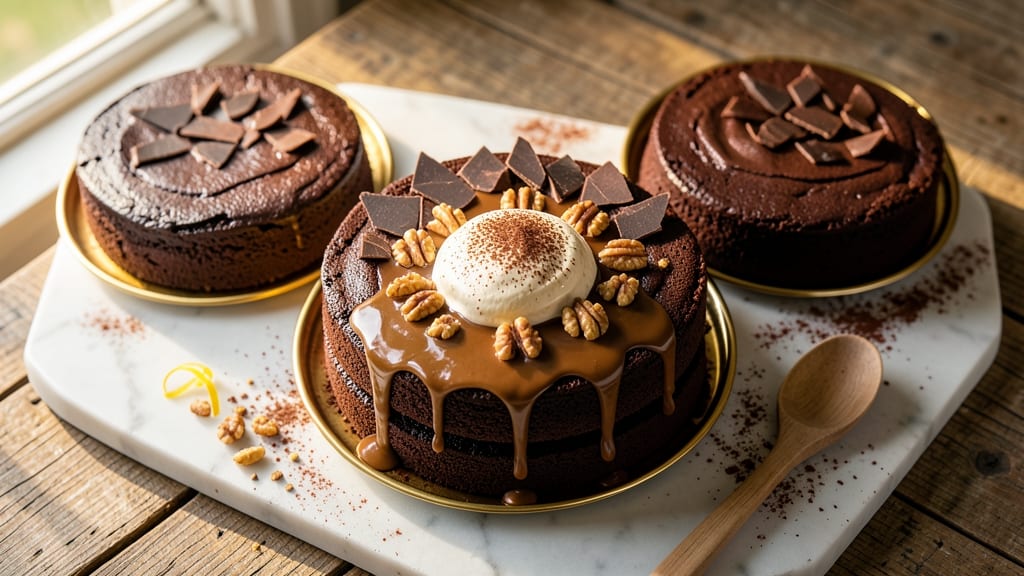
The café latte German chocolate cake transforms a classic dessert into an aromatic, coffee-infused masterpiece with velvety layers and swirls of rich ganache.
This recipe combines the best of both worlds—German chocolate cake's signature coconut-pecan flavor meets the warm, creamy essence of a café latte, creating a dessert that's both nostalgic and sophisticated. The secret lies in the coffee-infused frosting and ganache, which add depth without overpowering the cake's natural sweetness.
What sets this cake apart is its moist, tender crumb that stays fresh for days, thanks to a simple but effective technique: mixing sour cream into the batter.
The layers are generously filled with a coffee-infused ganache that swirls beautifully, while the latte-flavored frosting ties everything together with a smooth, velvety finish. It’s the kind of dessert that feels indulgent yet balanced—perfect for coffee lovers who crave something more than just a slice of cake.
Baking this cake is straightforward, with a one-bowl method that minimizes cleanup and ensures consistent results. The cake bakes in 350°F for 25-30 minutes, yielding perfectly golden layers that hold their shape while remaining tender.
The ganache and frosting come together in minutes, so you won’t spend hours in the kitchen—just enough time to enjoy the process and the aroma filling your home.
Serve this café latte German chocolate cake warm with a dusting of cocoa powder or a dollop of whipped cream for an extra touch of elegance. It’s ideal for celebrations, coffee-themed gatherings, or simply treating yourself to a dessert that feels like a hug in every bite. Let’s get baking!
Ingredients for cafe latte german chocolate cake
Eighteen ingredients blend coffee and German chocolate into layers of velvety perfection.
| Ingredient | Amount | Notes |
|---|---|---|
| All-Purpose Flour 🌾 | 3 cups | Sifted for light texture |
| Granulated Sugar 🍚 | 2 ½ cups | Divided for batter and frosting |
| Unsalted Butter 🧈 | 1 ½ cups | Room temperature, salted substitute |
| Large Eggs 🥚 | 4 whole | Room temperature, separated |
| Sour Cream 🥛 | 1 cup | Full-fat for moisture retention |
| Instant Espresso Powder ☕ | 2 tbsp | High-quality for coffee depth |
| Vanilla Extract 🌿 | 2 tsp | Pure Madagascar preferred |
| Baking Powder 🧂 | 1 ½ tsp | Aluminum-free for stability |
| Salt 🧂 | ½ tsp | Fine sea salt preferred |
| Shredded Coconut 🥥 | 1 ½ cups | Sweetened, unsweetened works |
| Chopped Pecans 🌰 | 1 ½ cups | Toasted for enhanced flavor |
| Heavy Cream 🥛 | 1 ½ cups | Cold for stable ganache |
| Dark Chocolate Chips 🍫 | 1 ½ cups | 70% cocoa or higher |
| Powdered Sugar 🍚 | 3 cups | For smooth frosting |
| Milk 🥛 | ½ cup | Whole milk for creaminess |
The instant espresso powder is non-negotiable for authentic café latte flavor—Starbucks or Peet’s brands deliver consistent quality. For the chocolate, Ghirardelli or Guittard 70% cocoa chips ensure rich, complex flavor without bitterness. Pecans should be toasted lightly before chopping (5 minutes at 350°F) to deepen their nutty notes. The sour cream is critical for moisture; full-fat works best—low-fat versions yield drier layers. Butter matters too: Plugrá or Land O’Lakes cultured adds subtle tang that enhances the coffee notes.
No instant espresso? Strong brewed coffee reduced by half works, though texture may vary slightly. Substitute pecans with walnuts or hazelnuts, but toast them first. For a lighter frosting, swap half the powdered sugar for confectioners’ sugar. The cake layers can be baked a day ahead and stored at room temperature (covered tightly), making assembly easier. If you lack a kitchen scale, use the spoon-and-level method for measuring flour—packing it compresses the crumb.
Assembled cake keeps 3 days at room temperature when wrapped in plastic, but flavors peak within 24 hours. For longer storage, freeze fully assembled layers (2 months)—thaw at room temperature before serving. The ganache thickens as it cools; if too firm, reheat in 10-second bursts in the microwave. Always dust with cocoa powder before serving to highlight the coffee-chocolate marriage.
Why You'll Love This Recipe
- No Mixer Needed: I swear by this recipe when my mixer’s on the fritz—just cream the butter and sugar by hand until it’s light and fluffy. The sour cream keeps the batter silky without overworking it, so even if you’re in a hurry, the texture still turns out rich and tender.
- Espresso Kiss: That first bite? Like a warm café latte in cake form. The instant espresso powder in the batter gives it a subtle, earthy depth, while the cocoa layers in like a secret hug. Honestly, it’s the kind of flavor that makes you close your eyes and take a second slice.
- Double-Duty Dessert: This cake is my go-to for birthdays and lazy Sundays. The coffee-infused frosting pairs perfectly with whipped cream or a scoop of vanilla ice cream—no fancy plating required. Between us, I’ve even served it as a breakfast cake with a dollop of Nutella. (Yes, even on a Tuesday.)
- Budget-Friendly Luxe: You’d never guess how affordable this is. The sour cream adds richness without breaking the bank, and the butter-to-sugar ratio means every bite tastes indulgent. A single cake feeds a crowd, and leftovers? They disappear faster than my willpower when it’s still warm.
Step-by-step instructions for café latte German chocolate cake
Master the technique for perfectly moist layers and rich coffee ganache swirls.
Prepare the Coffee-Infused Batter
Preheat your oven to 350°F and grease three 9-inch round cake pans, lining the bottoms with parchment paper. In a medium bowl, whisk together the 3 cups all-purpose flour, 1.5 tsp baking powder, and 0.5 tsp salt. Sift the mixture to remove any lumps—this ensures a light, airy texture. Set aside.
In a large mixing bowl, cream the 1.5 cups unsalted butter and 1.5 cups granulated sugar on medium speed until light and fluffy, about 3-4 minutes. The mixture should nearly double in volume and become pale. Add the 4 whole large eggs, one at a time, mixing well after each addition. This gradual incorporation prevents curdling and ensures a smooth batter.
In a separate small bowl, combine the 2 tbsp instant espresso powder, 2 tsp vanilla extract, and 1 cup sour cream. Whisk until the espresso powder is fully dissolved—this prevents graininess in the final cake. Gradually add the dry ingredients to the butter mixture, alternating with the espresso-sour cream mixture. Begin and end with the dry ingredients to ensure even distribution. Mix on low speed until just combined, being careful not to overmix. The batter should be thick but pourable.
Fold in Nuts and Coconut for Texture
Gently fold in the 1.5 cups chopped pecans and 1.5 cups shredded coconut using a spatula. Avoid overmixing—this preserves the air pockets created during creaming. The nuts and coconut should be evenly distributed throughout the batter. Divide the batter evenly among the prepared cake pans, spreading it out to create level tops. This ensures even baking and consistent texture in each slice.
Bake for 25-30 minutes, or until a toothpick inserted into the center comes out clean. Rotate the pans halfway through baking for even browning. The edges should be golden, but the tops should remain slightly domed. Let the cakes cool in the pans for 10 minutes before transferring to a wire rack to cool completely. This gradual cooling prevents cracking and maintains moisture.
Create the Coffee Ganache Swirls
While the cakes cool, prepare the ganache. In a medium saucepan, combine the 1.5 cups heavy cream and 1.5 cups dark chocolate chips. Heat over medium-low, stirring gently until the chocolate melts completely and the mixture reaches 110°F. Remove from heat and let it cool slightly for 5 minutes. The ganache should thicken but remain pourable—this consistency is perfect for swirling.
Once the cakes are completely cool, place one layer on a serving plate. Spread a thin layer of the ganache over the top, leaving a ½-inch border around the edges. This prevents the ganache from seeping out during assembly. Place the second cake layer on top, then repeat the process with another layer of ganache. Finally, top with the third cake layer. The ganache should cover the entire surface, creating a seamless swirl effect when sliced.
Frost and Finish with Coffee Dust
In a large bowl, beat the 3 cups powdered sugar and 0.5 cup milk with an electric mixer until smooth and glossy. This mixture should be thick enough to spread evenly over the cake but still pipeable for decorative touches. Spread the frosting over the top and sides of the cake, using a spatula to create smooth, even layers. For a professional finish, use a bench scraper to create clean edges.
To add the final touch, dust the top of the cake with a light layer of instant espresso powder using a fine-mesh sieve. This enhances the café latte flavor and adds a striking visual contrast to the rich chocolate frosting. Let the cake rest at room temperature for 30 minutes before slicing to allow the frosting to set. Each slice should reveal a perfect swirl of ganache, moist crumb, and a hint of coffee aroma.
Pro Tips For Making Cafe Latte German Chocolate Cake
- MELT THE BUTTER SLOWLY: I learned this the hard way—dumping cold butter straight into the batter makes for a lumpy, uneven texture. Instead, microwave the butter in 10-second bursts until it’s just melted but not greasy (about 45 seconds total), then stir it into the warm sugar. The butter will emulsify better, and your cake will have that silky, fudgy richness German chocolate cake is known for.
- WHISK EGGS AT ROOM TEMP: Cold eggs from the fridge mix like rocks in this batter, and they won’t incorporate as smoothly. Pop those eggs out 30 minutes before you start—just set them in a warm (not hot) bowl of water if you’re in a rush. The batter will be lighter, and the cake will rise more evenly. Trust me, your future self will notice the difference.
- DON’T OVERMIX THE BATTER: This is where most people mess up—whipping the batter until it’s smooth as glue. The second you see flour streaks disappear, stop. Overmixing develops the gluten, and your cake will turn out dense instead of tender. Give it 10-12 strokes max after adding the flour, and resist the urge to "fix" any lumps. A few tiny streaks? That’s fine.
- USE FULL-FAT SOUR CREAM: I was skeptical until I tried it—light or low-fat sour cream just doesn’t cut it here. The fat content in full-fat (20% or higher) keeps the cake moist for days, especially with all that coffee and chocolate in the filling. If you’re out of sour cream, a mix of Greek yogurt and a splash of milk works, but the texture won’t be identical. Don’t skip this.
Troubleshooting this recipe
Dry or Dense Layers
If your cake turns out dry or dense, the issue is usually overmixing or insufficient moisture. I’ve found that sour cream is non-negotiable for moisture—never substitute with yogurt or buttermilk, as they alter the texture.
Also, ensure your butter is room temperature (68°F) before creaming; cold butter won’t incorporate properly, leading to a compact crumb. For extra insurance, brush the cooled layers with 2 tbsp simple syrup before assembling. 💧
Ganache Too Thin or Thick
A runny ganache means your cream was too hot when mixed with chocolate, while a thick, grainy one likely cooled too quickly. I recommend heating the cream to just under boiling (200°F) and melting chocolate chips over a double boiler (not direct heat) to maintain control.
If your ganache thickens too fast, whisk in 1 tsp heavy cream to restore pourability. For a smoother finish, strain the melted chocolate through a fine-mesh sieve before combining with cream. ✨
Cracked Cake Layers
Cracks typically appear when cakes cool too quickly or are removed from pans prematurely. Always let layers cool in pans for 10-15 minutes before transferring to a wire rack. If cracks form, don’t panic—simply fill them with leftover ganache before frosting.
For extra stability, chill the assembled cake in the fridge for 30 minutes before slicing to prevent further separation. A humidifier near your cooling rack also helps maintain moisture during the cooling process. 🌡️
Frosting Too Runny
Powdered sugar frosting can become too thin if overmixed or if the milk is added too quickly. Beat the powdered sugar and milk on low speed for 2-3 minutes to incorporate gradually, then increase to medium for 3-4 minutes until glossy.
If it’s still too thin, add 1 tbsp more powdered sugar and mix until smooth. For a stiffer frosting, chill the bowl in the fridge for 10 minutes before beating. A piping bag with a star tip helps create texture if the frosting is too thin to spread evenly. 🎂
Espresso Flavor Too Strong
If the coffee taste overpowers the chocolate, you’ve likely used too much espresso powder. The 2 tbsp called for in the recipe is ideal—any more risks bitterness. For a milder flavor, reduce to 1.5 tbsp or use 1 tbsp instant espresso + 1 tbsp brewed coffee reduced by half.
Balance the flavor by adding ½ tsp vanilla bean paste to the batter. If the frosting tastes too sharp, whisk in 1 tsp honey to soften the edges. 🍫
Pecans or Coconut Sinking
Nuts and coconut can sink if the batter isn’t thick enough or if they’re added too late. Fold them in last using a spatula in a gentle "J" motion to preserve air pockets. For extra buoyancy, toss the pecans in 1 tbsp flour before folding.
If they still sink, reduce the batter’s liquid slightly (by 1 tbsp) to increase density. Toasting the pecans first (5 minutes at 350°F) also enhances their flavor and texture. 🌰
Nutrition facts
Frequently asked questions
Can I make this cake without instant espresso powder?
Yes! For a milder coffee flavor, substitute with 1 tbsp instant espresso + 1 tbsp strong brewed coffee reduced by half. If you prefer no coffee at all, replace the espresso with 2 tbsp cocoa powder and add ½ tsp vanilla bean paste to maintain depth. The cake will still taste rich and chocolate-forward, just without the latte twist.
How do I store leftovers to keep them fresh?
Wrap the cake tightly in plastic wrap and store at room temperature for up to 3 days. For longer storage, freeze the fully assembled cake (without dusting) for 2 months. Thaw overnight in the fridge before serving. To refresh stale layers, brush with 1 tbsp simple syrup before rewrapping. The ganache stays stable when frozen, but the frosting may soften slightly.
What’s the best way to serve this cake?
Serve warm with a dollop of whipped cream and a sprinkle of cocoa powder for a café-style presentation. Pair it with a hot café latte or chilled vanilla bean ice cream to enhance the coffee-chocolate experience. For a festive touch, garnish with toasted pecans or a dusting of powdered sugar. Cut into 12 equal wedges for easy sharing at gatherings.
Can I make this cake in a different pan size?
Yes, but adjust baking times accordingly. For 8-inch pans, bake for 20-25 minutes (use 2 layers instead of 3). For 10-inch pans, bake for 30-35 minutes (reduce batter by 25%). Always use the same number of layers as pans—this keeps the structure balanced. If using non-round pans, level the batter with a spatula for even baking.
Why does my ganache turn grainy?
Grainy ganache usually means the chocolate wasn’t melted smoothly or the cream cooled too quickly. To fix it, strain the melted chocolate through a fine-mesh sieve before combining with cream. For future batches, heat the cream to 200°F (just under boiling) and melt chocolate over double boiler heat. If graininess appears, whisk in 1 tsp heavy cream to restore smoothness.