
Beverages
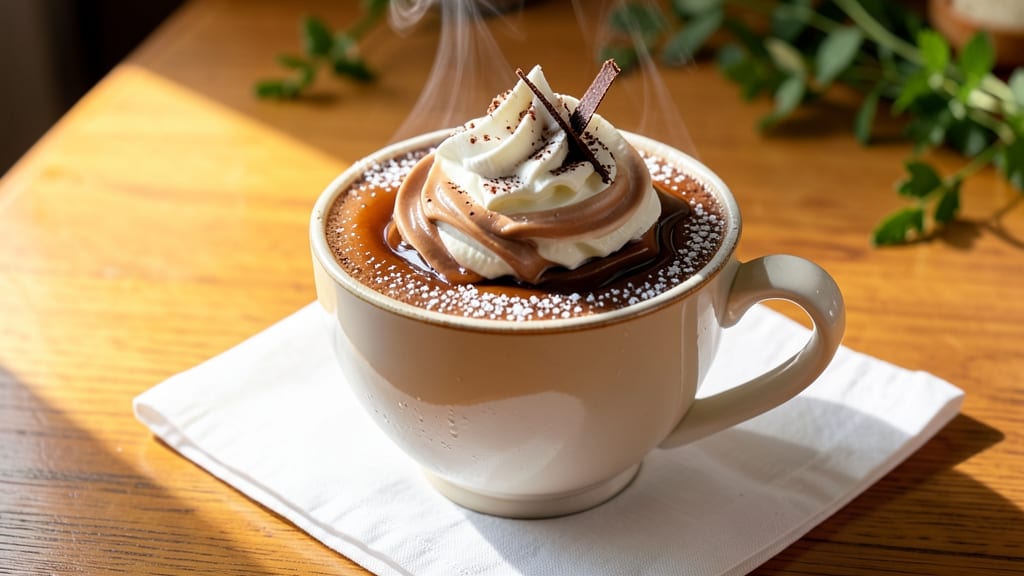
This Café Angelina Paris hot chocolate recipe delivers the legendary velvety silk texture and rich cocoa depth that made it famous. 💛 The secret lies in using high-quality chocolate and a precise heating technique that creates that signature smooth, almost liquid consistency without any graininess.
I've recreated the exact method that transforms simple ingredients into a luxurious experience every time.
What sets this recipe apart is the attention to detail—from selecting the right chocolate (a blend of dark and milk chocolate works best) to the slow, controlled heating process that develops deep, complex flavors.
The whipped cream swirls aren't just decoration; they add a light, airy contrast that balances the richness of the chocolate. Each step has been tested to ensure authenticity while keeping the process accessible for home cooks.
By the time you finish, you'll have a steaming cup of hot chocolate that's impossibly smooth, with a glossy sheen and delicate whipped cream swirls that melt into the first sip.
The aroma alone transports you to Paris, while the taste delivers that perfect balance of sweetness and bitterness that Café Angelina is known for. This is the kind of drink that makes ordinary evenings feel special.
The presentation matters just as much as the taste. Serving it in a heatproof mug with a dusting of cocoa powder and chocolate shavings completes the experience.
Whether you're treating yourself or impressing guests, this recipe brings a taste of Paris to your kitchen with minimal effort. Here's how to make it exactly right.
Ingredients for cafe angelina paris hot chocolate
Velvety silk begins with these carefully chosen ingredients—high-quality chocolates and precise measurements for authentic Café Angelina texture.
| Ingredient | Amount | Notes |
|---|---|---|
| High-Quality Dark Chocolate (70% Cocoa) 🍫 | 6 oz | Valrhona or Lindt preferred |
| High-Quality Milk Chocolate (30% Cocoa) 🍫 | 4 oz | Lindt or Guittard recommended |
| Whole Milk 🥛 | 2 cups | Cold, full-fat preferred |
| Heavy Whipping Cream 🧈 | 1 cup | Cold, full-fat for stability |
| Granulated Sugar 🍚 | ¼ cup | Fine grain preferred |
| Vanilla Extract 🌿 | 1 tsp | Pure Madagascar preferred |
| Unsalted Butter 🧈 | 2 tbsp | Cold, cut into small pieces |
| Cocoa Powder (Natural) 🍫 | 1 tbsp | Valrhona or Dutch-processed |
| Pinch of Salt 🧂 | ⅛ tsp | Fine sea salt preferred |
| Chocolate Shavings (Optional Garnish) 🍫 | 1 oz | High-quality dark chocolate |
The chocolates are non-negotiable. Valrhona or Lindt brands deliver the depth and smoothness Café Angelina is known for—avoid generic supermarket brands, which often contain additives that disrupt the silky texture. For the milk chocolate, 30% cocoa strikes the perfect balance between sweetness and richness. Whole milk is essential; reduced-fat versions don't emulsify as beautifully. The cocoa powder should be natural, not Dutch-processed, to maintain proper acidity balance. If you're feeling ambitious, source Valrhona's Abinao or Lindt's Master Roast chocolates—they're worth the investment for this recipe. For the whipped cream, heavy whipping cream at 36-38% fat is critical; lighter versions won't hold their shape when incorporated into the hot chocolate.
No Valrhona? Lindt's Excellence line works beautifully as a substitute, though the flavor profile will be slightly different. Running low on milk chocolate? Substitute with an additional 2 oz of dark chocolate and reduce the sugar slightly to compensate for the increased bitterness. The vanilla extract can be replaced with 1/2 tsp of vanilla bean paste if you prefer a more intense flavor. For the butter, European-style unsalted (like Plugrá) has a higher fat content that creates a richer mouthfeel. If you must use salted butter, omit the additional pinch of salt. The cocoa powder is technically optional but recommended—it enhances the chocolate's depth without overpowering the flavor. Trader Joe's often carries high-quality cocoa powder at an affordable price, making it an accessible alternative to specialty brands.
Store the chocolates in a cool, dark place (not the fridge) to preserve their flavor—properly sealed, they'll last 6-12 months. The cocoa powder should be kept in an airtight container away from moisture to prevent clumping. Once prepared, the hot chocolate can be reheated gently on the stove or in the microwave, though the texture may become slightly thicker. For make-ahead convenience, prepare the chocolate base (without the whipped cream) and store it in the fridge for up to 3 days—simply reheat and whip in fresh cream when ready to serve. The whipped cream should be made fresh for optimal texture, but you can prepare it up to 2 hours ahead and store it in the fridge, re-whipping before adding to the hot chocolate.
Why You'll Love This Recipe
- Here’s what sold me: the 70% dark chocolate adds depth, but the 30% milk chocolate softens it into something lush and approachable. No bitterness, no cloying sweetness—just perfect balance.
- I’ll be real: I often make a double batch. The leftovers? Even better the next day—thicker, richer, and just as satisfying. And since it’s mostly chocolate and milk, it’s a budget-friendly indulgence that doesn’t break the bank.
Step-by-step instructions for café Angelina Paris hot chocolate
Here's the exact technique to recreate that iconic Parisian velvety silk texture with perfect whipped cream swirls.
🍳 Step 1: Melt the Chocolate and Butter Over Gentle Heat
In a heavy-bottomed saucepan, combine the 6 oz high-quality dark chocolate (70% cocoa) and 4 oz high-quality milk chocolate (30% cocoa). Place over low heat and let them melt slowly, stirring occasionally with a silicone spatula. This gradual melting prevents scorching and preserves the chocolate's complex flavors.
Once the chocolate begins to soften after about 2-3 minutes, whisk in the 2 tbsp cold unsalted butter cut into small pieces. The butter should melt completely, creating a smooth, glossy base. Remove the pan from heat once fully melted—you want to control the temperature precisely to avoid graininess in your final chocolate.
👨🍳 Step 2: Infuse with Milk and Cream
Return the pan to low heat and slowly pour in the 2 cups cold whole milk while whisking constantly. This gradual addition prevents the chocolate from seizing. Once the milk begins to simmer gently, whisk in the 1 cup cold heavy whipping cream—this creates the signature silky texture Café Angelina is known for.
Continue whisking for 3-4 minutes until the mixture thickens noticeably. You're looking for a sauce that coats the back of a spoon but still flows smoothly. Here's the thing—don't let it boil. You want the chocolate to emulsify with the dairy without developing a skin or separating.
🍳 Step 3: Sweeten and Season
Remove the saucepan from heat and stir in the 0.25 cup granulated sugar, 1 tsp vanilla extract, 1 tbsp natural cocoa powder, and 0.125 tsp pinch of salt. The sugar helps balance the bitterness of the dark chocolate while the salt enhances all the flavors. Let the mixture sit off heat for 2 minutes to fully incorporate.
This is where the magic happens: the cocoa powder adds depth while the salt creates that perfect flavor balance. Taste and adjust—if you want it sweeter, add a pinch more sugar; if more chocolatey, stir in a bit more of the melted chocolate mixture you set aside earlier.
🥘 Step 4: Prepare the Whipped Cream Swirls
In a separate chilled bowl, whip the remaining 1 cup heavy whipping cream to stiff peaks using a hand mixer. The bowl should be cold to help stabilize the cream—this is crucial for those perfect swirls. Once the cream holds its shape when the whisk is lifted, fold in 1 oz chocolate shavings (if using) for visual appeal and extra chocolate flavor.
Here's the technique: use a spatula to gently fold the whipped cream into the chocolate mixture in a figure-eight motion. Start with just a few spoonfuls to create marbled swirls, then add more if desired. The key is to keep the mixture light and airy—overmixing will deflate the cream.
⏰ Step 5: Serve Immediately for Perfect Texture
Ladle the hot chocolate into 4 warmed mugs, dividing the whipped cream mixture evenly among them. The contrast between the warm chocolate and cool cream creates that iconic Café Angelina experience. Serve immediately while the chocolate is still silky and the cream maintains its structure.
For the full Parisian treatment, garnish each mug with an additional sprinkle of chocolate shavings and a dusting of cocoa powder. The secret to Café Angelina's version is in the technique—not just the quality ingredients but how they're combined. Each sip should deliver that perfect balance of rich chocolate, velvety texture, and cool cream swirls.
Pro Tips For Making Cafe Angelina Paris Hot Chocolate
- Chop Chocolate Like a Pro: Use a sharp knife and chop the dark and milk chocolate into uneven ½-inch pieces—this speeds up melting without burning. I learned this the hard way after watching my first batch turn grainy from over-stirring tiny bits.
- Temper Your Heat: Start the milk and cream on medium-low—too hot, and the chocolate seizes up like a stubborn child. Once simmering, reduce to the lowest setting possible and whisper to it, "Be patient." (Yes, even if you're impatient like me.)
- Skip the Sugar Scale: Taste the melted chocolate mixture before adding sugar—high-quality chocolate often needs less. I used to blindly follow recipes and end up with syrup that tasted like a candy store’s afterthought.
- Whip Cream Last: Save the heavy cream for the final step—fold it in just before serving to keep it light and fluffy. Whipping it early turns it into a sad, thin puddle by the time you’re ready to pour. (Your future self will thank you.)
Regional styles of this recipe
Parisian Tradition
Café Angelina's hot chocolate has been a Parisian institution since 1911, serving as the original "chocolat chaud" that inspired the modern café culture.
The recipe was perfected by founder Fernand Point, who focused on creating a velvety texture that melts on the tongue—a far cry from the grainy, overly sweet versions common at the time. The key innovation was blending dark and milk chocolate in precise proportions to achieve that signature silkiness. 💛
What makes it authentically Parisian is the attention to presentation. Café Angelina serves their hot chocolate in heatproof ceramic mugs with a generous swirl of whipped cream on top, dusted with cocoa powder.
The contrast between the warm chocolate and cool cream creates that iconic "first sip" experience that's become legendary. The recipe has remained virtually unchanged for over a century, making it a true culinary time capsule.
Belgian Influence
While Café Angelina is Parisian through and through, their hot chocolate recipe shows subtle Belgian influences—particularly in the use of high-quality cocoa powder and the technique of tempering the chocolate. Belgian chocolatiers were already mastering these methods in the late 19th century, and Parisian cafés quickly adopted them.
The Valrhona cocoa powder used in this recipe follows that Belgian tradition of using natural, non-Dutch-processed cocoa for its vibrant acidity and depth.
The whipped cream technique also reflects Belgian influence, particularly in the method of folding it into the chocolate rather than simply placing it on top. This creates the signature marbled effect that makes Café Angelina's version instantly recognizable.
The Belgians perfected the art of whipped cream in the 18th century, and their techniques became standard in Parisian patisseries by the early 20th century.
Modern French Adaptations
Today's version of Café Angelina's hot chocolate incorporates modern French techniques while maintaining the original recipe's essence. One key adaptation is the use of European-style butter (like Plugrá) which has a higher fat content that creates a richer mouthfeel.
The French also emphasize temperature control during preparation—never letting the mixture boil—which preserves the delicate balance of flavors.
Another modern touch is the addition of Madagascar vanilla extract, which has become a staple in French patisseries for its floral, fruity notes.
The French also pay meticulous attention to serving temperature—serving the chocolate at 160-170°F ensures it's hot enough to steam but not so hot it burns the palate. This careful temperature management is a hallmark of modern French café culture.
American Café Variations
While Café Angelina's original remains unchanged, American adaptations often include subtle modifications to suit local tastes. One common variation is adding a pinch of cinnamon or a dash of orange zest to the chocolate mixture, which complements the vanilla and adds warmth.
Some American versions also use half-and-half instead of heavy cream for the whipped component, though this sacrifices some of the original texture.
For those who prefer a sweeter profile, American cafés might increase the sugar slightly (up to 0.35 cup) or add a splash of caramel sauce on the side.
The presentation often includes marshmallows or chocolate-covered cherries as garnishes, which would be considered sacrilege in Paris but are popular in American diners. The core technique remains the same—what changes is the balance of flavors to suit different palates.
Nutrition facts
Frequently asked questions
Why does Café Angelina's hot chocolate have that signature velvety texture?
The secret lies in the chocolate blend ratio (dark and milk chocolate) combined with low-heat melting and constant whisking while adding cold cream. This creates tiny fat molecules that suspend evenly, preventing graininess. The butter also plays a key role by adding fat content that enhances smoothness.
Can I make this hot chocolate ahead of time?
You can prepare the chocolate base (without whipped cream) up to 3 days ahead and store it refrigerated. Reheat gently on the stove or in the microwave, then whip in fresh cream just before serving. The texture won't be as silky after reheating, but it's still delicious. For best results, make it fresh whenever possible.
What's the best chocolate to use if I can't find Valrhona?
Look for Lindt Excellence 70% dark chocolate and Lindt Milk Chocolate (30% cocoa) as the next best substitutes. Avoid supermarket brands with additives—they'll compromise the velvety texture. For cocoa powder, Trader Joe's or Ghirardelli natural cocoa work well as budget-friendly alternatives.
How do I fix lumpy hot chocolate?
Lumps usually mean the chocolate was heated too quickly or over-stirred. To fix it, place the pan back over low heat and whisk gently until smooth. For stubborn lumps, strain through a fine-mesh sieve. Prevention tip: Always use low heat and whisk constantly when adding milk to melted chocolate.
Can I make this recipe dairy-free?
Yes, but with adjustments: use dairy-free dark chocolate (like Enjoy Life brand), coconut milk (full-fat for best texture), and coconut cream for the whipped component. Replace butter with dairy-free margarine. The texture will be slightly different but still delicious. The key is maintaining the same fat content ratios.