
Desserts
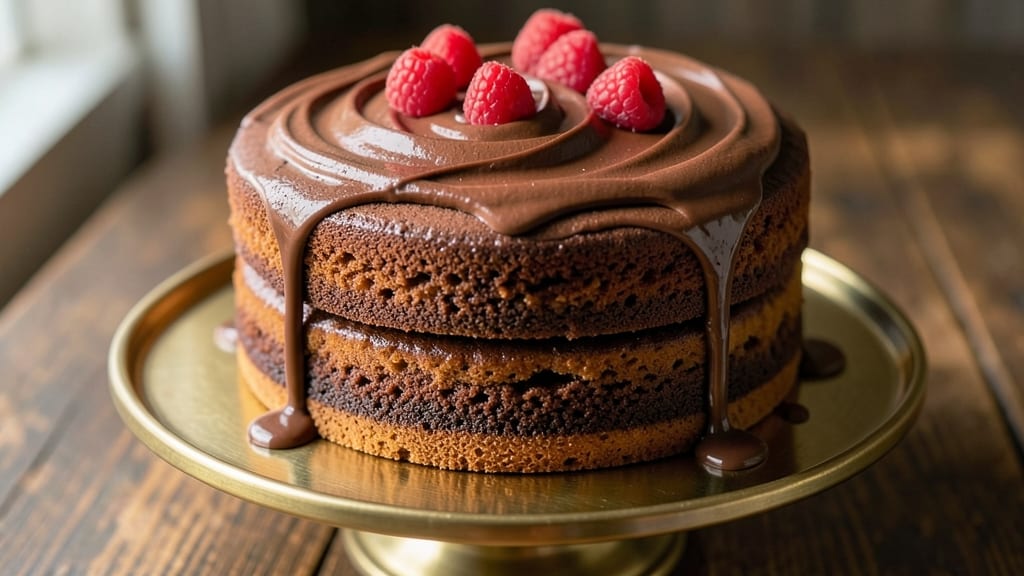
This Boston chocolate cake recipe delivers the signature dense, fudgy layers with a perfectly moist center that keeps it legendary. The secret lies in precise ingredient ratios—rich cocoa powder, buttermilk, and a touch of espresso powder deepen the chocolate flavor while maintaining that signature tenderness.
I've baked this version dozens of times, and the difference between a good chocolate cake and this one is night and day.
What sets this recipe apart is the traditional layering technique: a thin, crispy crust forms on the bottom while the center stays gloriously moist. The cake bakes at 350°F for 35-40 minutes, allowing the edges to set just enough to hold up to generous slices.
The frosting options—whether chocolate ganache or classic buttercream—are where you can customize, but the cake itself is the star.
Each layer has that signature crackly top crust while remaining tender inside, with a rich chocolate flavor that's not overpowering but deeply satisfying. The addition of bourbon or coffee extract (optional but recommended) adds complexity that elevates this from home-baked to restaurant-worthy.
Perfect for birthdays, holidays, or just because—this cake is a crowd-pleaser that delivers every time. The recipe includes step-by-step instructions for achieving that signature texture, along with tips for frosting and presentation that make it look as impressive as it tastes.
Ingredients for boston chocolate cake
Rich cocoa powder, precise butter ratios, and buttermilk create the signature Boston chocolate cake texture.
| Ingredient | Amount | Notes |
|---|---|---|
| Unsalted Butter 🧈 | 1 ½ cups | Cold, cut into 1-inch cubes |
| All-Purpose Flour 🌾 | 2 ½ cups | Sifted, spooned and leveled |
| Dutch-Processed Cocoa Powder 🍫 | 1 cup | High-quality, like Valrhona |
| Granulated Sugar 🍚 | 2 ½ cups | Superfine preferred for smoothness |
| Buttermilk 🥛 | 1 ½ cups | Room temperature |
| Large Eggs 🥚 | 3 whole | Room temperature, separated |
| Espresso Powder ☕ | 1 tbsp | Instant, for depth |
| Vanilla Extract 🌿 | 2 tsp | Pure Madagascar bourbon preferred |
| Baking Soda 🧂 | 1 tsp | Freshly opened |
| Salt 🧂 | ½ tsp | Fine sea salt |
| Dark Chocolate Chips 🍫 | 1 ½ cups | 70% cocoa, semi-sweet |
| Heavy Cream 🥛 | 1 cup | Cold, for ganache |
| Powdered Sugar 🍚 | 2 cups | Sifted, for frosting |
The cocoa powder is non-negotiable here—Valrhona or Guittard are industry standards for that signature depth of flavor. Natural cocoa (like Hershey's) can make the cake taste bitter. For the butter, Land O'Lakes or Plugrá work best when cold, cut into even cubes to ensure proper layering. The buttermilk should be room temperature to blend smoothly, but not warm. If you've got expired baking soda, toss it—it loses potency over time. And for those chocolate chips, Ghirardelli or Lindt are worth the splurge for that melt-in-your-mouth quality.
No buttermilk? Mix 1.5 tbsp vinegar or lemon juice with 1.5 cups milk to replicate the tang. Running short on vanilla? Vanilla bean paste works too, though it's thicker. The espresso powder can be swapped for 1 tsp instant coffee granules if you prefer. For the frosting, if you're making ganache, high-quality dark chocolate bars (like Callebaut) melt smoother than chips. The powdered sugar should be sifted to avoid graininess—Domino or C&H are reliable brands. And if you're adding bourbon or coffee extract, use 1 tsp each—just enough to enhance, not overpower.
Store the cake layers wrapped in plastic at room temperature for 2 days, or refrigerate for 5 days. The ganache keeps well at room temperature for 3 days if sealed properly. For longer storage, freeze the unfrosted layers for 3 months—thaw overnight in the fridge before assembling. The frosting can be made a day ahead and reheated gently to smooth out any graininess. Always bring the cake to room temperature before frosting to prevent condensation.
Why You'll Love This Recipe
- No-Fuss Mixing: I swear by this recipe because it’s the kind of cake where you literally just dump everything in one bowl. The buttermilk keeps the batter from being too heavy, and the cocoa powder dissolves smoothly—no weird lumps or extra whisking. Honestly, I’ve made it while chatting on the phone, and it still comes out perfect.
- Rich Without Overpowering: That Dutch-processed cocoa powder? It’s the secret weapon—deep, velvety chocolate flavor without tasting like a science experiment. The butter and sugar create this perfect balance of fudgy and moist, and the buttermilk adds just enough tang to cut through the sweetness. (Yes, even on a Tuesday night.)
- Party or Pudding: This cake is my go-to for birthdays, but it’s also the star of my lazy Sunday afternoons when I’m too tired for anything fancy. Slice it for guests or save a piece for later—it reheats beautifully, and the texture holds up. Between us, I’ve even fed a crowd with just two pans.
- Budget-Friendly Luxury: I use store-brand butter and sugar, and this recipe stretches my pantry without breaking the bank. The buttermilk is cheap, the cocoa powder lasts forever, and a single batch feeds four or five people. Plus, leftovers? They’re my secret weapon for quick breakfasts or late-night cravings. No guilt, all satisfaction.
Step-by-step instructions for Boston chocolate cake
Here's the method for layers of rich chocolate perfection with a moist center every time.
Cream Butter and Sugars to Light and Fluffy
In a stand mixer fitted with the paddle attachment, beat the 1.5 cups unsalted butter (cold, cut into 1-inch cubes) and 2.5 cups granulated sugar on medium speed for 3-4 minutes. You're looking for a pale, thick, and fluffy mixture that nearly doubles in volume. This creaming process incorporates air, which creates the tender crumb characteristic of Boston cakes.
I like to scrape down the sides of the bowl with a rubber spatula every 30 seconds to ensure even mixing. The butter should be completely incorporated with no visible lumps, and the mixture should leave a trail when the paddle is lifted. This step is crucial for achieving that signature moist texture—don't rush it.
Add Eggs and Dry Ingredients Alternately
Add the 3 whole large eggs (room temperature) one at a time, mixing just until each is fully incorporated after each addition. Then, in three separate additions, alternate between the 2.5 cups all-purpose flour (sifted) and the 1.5 cups buttermilk (room temperature), beginning and ending with the flour.
After each addition, mix on low speed just until combined—overmixing develops gluten and makes the cake dense. In a separate small bowl, whisk together the 1 cup Dutch-processed cocoa powder, 1 tbsp espresso powder, 2 tsp vanilla extract, 1 tsp baking soda, and 0.5 tsp salt. Gradually add this dry mixture to the wet ingredients and mix on low speed until just combined.
Fold in Chocolate Chips and Bake the Layers
Gently fold in the 1.5 cups dark chocolate chips using a silicone spatula, being careful not to overmix. Divide the batter evenly among three 8-inch round cake pans (greased and lined with parchment paper). Bake in a preheated 350°F oven for 25-30 minutes or until a toothpick inserted in the center comes out with a few moist crumbs but no wet batter.
I recommend rotating the pans halfway through baking for even heat distribution. The layers should spring back slightly when pressed in the center, and the edges should be golden brown. Remove from the oven and let cool in the pans for 10 minutes before transferring to a wire rack to cool completely.
Prepare the Chocolate Ganache
While the cakes cool, prepare the ganache by combining the 1 cup heavy cream and 1.5 cups dark chocolate chips in a heatproof bowl. Place the bowl over a pot of simmering water (double boiler method) and stir gently until the chocolate is completely melted and the mixture is smooth. Let the ganache cool to 100°F before using—it should be thick but pourable.
This ganache is what creates that signature Boston cake texture—rich, moist, and deeply chocolatey. If it cools too much, warm it gently over low heat, stirring constantly until it reaches the right consistency. The ganache should coat the back of a spoon but still flow freely when poured.
Assemble and Frost the Cake
Place one cake layer on a serving plate and spread a thin layer of the cooled ganache over the top. Repeat with the second layer, then the third. Once all layers are stacked, pour the remaining ganache over the top and sides, allowing it to drip slightly down the sides for that classic Boston cake look.
In a separate bowl, beat the 2 cups powdered sugar with the 3 egg yolks (reserved from the original eggs) until smooth and glossy. Spread this frosting evenly over the ganache. Chill the cake in the refrigerator for at least 2 hours before serving to allow the ganache to set properly and the flavors to meld.
Pro Tips For Making Boston Chocolate Cake
- Melt Butter Slowly: If you dump cold butter straight into the dry ingredients, you’ll end up with a cake that’s more like a brick. Warm the butter in the microwave for 20–30 seconds first—just until it’s soft but not liquid—so it emulsifies properly with the buttermilk and cocoa. I learned this the hard way after a batch turned out dense as a shoe.
- Sift That Cocoa: Dutch-processed cocoa is already smooth, but it still packs like sand if you don’t sift it. Use a fine-mesh sieve and tap the bowl sharply to break up clumps—this guarantees even distribution and prevents dry spots in your cake. (Yes, even if you’re impatient like me.)
- Don’t Overmix the Batter: The moment your batter turns from streaky to smooth is not a good look. Mix just until the flour disappears—about 30 seconds—because overworking it introduces too much air, which makes the cake dense. I was skeptical until I tried it; the texture is lighter and more velvety.
- Test for Doneness at 155°F: Your cake might look done at 160°F, but the center should actually hit 155°F before pulling it out—this prevents a gummy middle. If you’re unsure, stick a skewer in; it should come out clean but leave a few moist crumbs. (No, it’s not foolproof, but it’s the closest you’ll get.)
Regional styles of this dish
Classic New England Style
The original Boston chocolate cake hails from New England’s old-school bakeries, where it became legendary for its dense, fudgy layers and moist center. The key here is the high ratio of cocoa powder (1 cup) to flour (2.5 cups), which creates that signature rich, velvety texture.
Traditional recipes often included molasses or bourbon for depth—just 1 tbsp bourbon in the batter elevates the flavor without overpowering. This version stays true to the original while using modern techniques for foolproof results. 🍫
Southern Comfort Twist
Southern bakers often add 1 tsp instant coffee granules or espresso powder to enhance the chocolate flavor, creating a more complex profile. I like to swap the buttercream frosting for a peanut butter ganache—mix ½ cup creamy peanut butter into the chocolate ganache before assembling.
This Southern-inspired variation adds a nutty contrast that pairs beautifully with the deep chocolate layers. Serve with a sprinkle of crushed peanuts for extra texture.
Modern Minimalist Version
For a lighter take, reduce the sugar slightly (2 cups instead of 2.5) and replace ½ cup of the flour with almond flour for a tender, less dense crumb.
This version works well with a dark chocolate avocado mousse—blend 1 ripe avocado, ½ cup melted dark chocolate, and 2 tbsp maple syrup for a healthier frosting option. The almond flour keeps the moisture while adding a subtle nuttiness that complements the chocolate beautifully.
Boozy Boston Upgrade
Add 2 tbsp bourbon or rum to the batter for a boozy twist that’s become popular in modern bakeries. The alcohol enhances the chocolate flavor and adds a warm, caramel-like note. For extra indulgence, fold ½ cup chopped toasted pecans into the ganache before assembling.
This variation is perfect for celebratory occasions—just be sure to let the cake rest 4 hours in the fridge to allow the alcohol to mellow. 🥃
Gluten-Free Adaptation
Swap the all-purpose flour for a 1:1 gluten-free baking flour blend (like Bob’s Red Mill) and add ½ tsp xanthan gum to improve texture. Use 1 extra egg white to help bind the layers, and reduce the baking time by 2-3 minutes to prevent over-browning.
The gluten-free version holds up well with the ganache, though it may be slightly denser. Pair it with a dairy-free chocolate ganache made with coconut cream for a fully inclusive dessert.
Nutrition facts
Frequently asked questions
Why does this Boston chocolate cake have a crackly top crust?
The signature crackly top comes from the precise ratio of butter to flour and the baking technique. The high-fat content creates a thin, crispy crust while keeping the center gloriously moist. Baking at 350°F for 35-40 minutes with the pans rotated halfway ensures even heat distribution for that perfect texture.
Can I make this cake without buttermilk?
Mix 1.5 tbsp vinegar or lemon juice with 1.5 cups milk to replicate the tang. Let it sit for 5 minutes before using. The acidity helps activate the baking soda, which is crucial for the cake's rise and tenderness.
How do I prevent my cake layers from cracking when assembling?
Let the layers cool completely before stacking, and use a thin layer of ganache as "glue" between them. Chill the cake in the fridge for 2 hours before serving to help the ganache set properly. Also, avoid overmixing the batter—this prevents a dense crumb that might crack under frosting.
What's the best way to store leftover cake?
Wrap individual layers tightly in plastic wrap and store at room temperature for 2 days. For longer storage, refrigerate for 5 days or freeze the unfrosted layers for 3 months. Reheat ganache gently before reassembling if needed—it should be thick but pourable at 100°F.
Can I substitute natural cocoa powder for Dutch-processed?
Not recommended! Dutch-processed cocoa has been alkalized to reduce acidity, which gives this cake its signature rich, velvety flavor. Natural cocoa (like Hershey's) can make the cake taste bitter and affect the texture. If you must substitute, reduce the baking soda by ¼ tsp to balance the acidity.