
Desserts
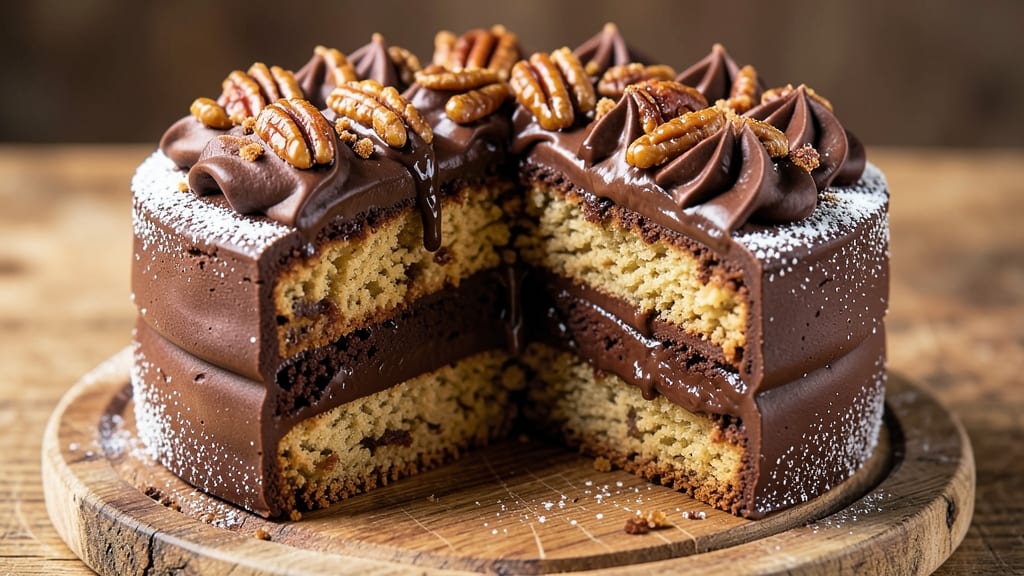
Bobby Flay's German chocolate cake recipe delivers the ultimate dessert experience—three moist layers of chocolate cake, rich brown sugar frosting, and a crunchy pecan-praline topping that's impossible to resist. 💛 This isn't your average cake; it's a showstopper that combines classic German chocolate flavors with professional baking techniques for restaurant-quality results at home.
The secret to this cake's success lies in its balanced texture: tender cake layers, velvety frosting, and a toasted pecan-praline topping that adds just the right amount of crunch.
Bobby Flay's signature approach focuses on precise measurements and careful layering to ensure each bite delivers perfect harmony of chocolate, nuts, and sweetness. The cake bakes up with a golden crust while staying moist inside, creating the ideal foundation for the decadent frosting.
What sets this recipe apart is the homemade pecan-praline topping, where toasted pecans and caramelized sugar create a sweet, crunchy contrast to the cake's richness. The frosting—made with brown sugar and coconut—ties everything together with its velvety texture and subtle tropical notes.
This cake isn't just delicious; it's a crowd-pleaser that will have everyone asking for seconds.
Perfect for special occasions or when you want to impress, this German chocolate cake comes together with careful layering and precise timing. The result is a dessert that looks as stunning as it tastes, with each component playing its part in creating an unforgettable flavor experience. Let's get baking!
Ingredients for bobby flay german chocolate cake
Twelve ingredients transform into Bobby Flay's legendary triple-layered cake with decadent praline topping.
| Ingredient | Amount | Notes |
|---|---|---|
| All-Purpose Flour 🌾 | 3 ½ cups | Sifted for light texture |
| Unsalted Butter 🧈 | 2 ¼ cups | Room temperature, European style preferred |
| Granulated Sugar 🍚 | 2 ½ cups | Superfine preferred for smooth batter |
| Dark Brown Sugar 🍬 | 1 ½ cups | Packed firmly for accuracy |
| Large Eggs 🥚 | 6 whole | Room temperature for even baking |
| Unsweetened Cocoa Powder 🍫 | ¾ cup | Dutch-processed for smoothness |
| Baking Powder 🧂 | 1 ½ tbsp | Freshly measured for lift |
| Salt 🧂 | 1 ½ tsp | Fine sea salt preferred |
| Vanilla Extract 🌿 | 2 tbsp | Pure Madagascar bourbon preferred |
| Hot Water 💧 | 1 ½ tbsp | For blooming cocoa powder |
| Pecans 🥜 | 3 cups | Chopped, toasted for praline topping |
| Light Brown Sugar 🍬 | 1 cup | Packed for praline topping |
| Heavy Cream 🥛 | 1 ½ cups | Cold for frosting stability |
| Powdered Sugar 🍚 | 4 cups | Sifted for smooth frosting |
| Shredded Coconut 🥥 | 1 cup | Sweetened, toasted lightly |
| Semisweet Chocolate Chips 🍫 | 1 ½ cups | High-quality for melting |
The butter and sugars are non-negotiable for this cake's signature richness. European-style butter has higher fat content, giving that velvety texture, and superfine sugar dissolves smoothly for no graininess. King Arthur or Bob's Red Mill flours are my go-tos for cake baking—they bake up lighter. For the cocoa, Valrhona or Guittard Dutch-processed is worth the splurge, but Hershey's Special Dark works in a pinch. Pecans should be raw, unsalted—toast them yourself for maximum flavor. Costco or specialty grocers often carry bulk pecans at better prices than the grocery store.
No European butter? Plugrá or Land O'Lakes Cultured Butter are solid substitutes—they just need to be truly room temperature. Running out of vanilla? Almond extract at half the amount gives a similar depth. For the praline topping, pecan halves instead of chopped add visual appeal, though they're pricier. The coconut can be swapped for toasted coconut flakes if shredded isn't available. Chocolate chips? Enjoy Life brand for allergy-friendly baking, or Ghirardelli squares for premium quality. Pro tip: Toast the pecans in the same pan you caramelize the sugar—cleanup is easier and flavors meld perfectly.
Butter and eggs should be at room temperature before mixing—30 minutes out of the fridge works. The cake layers keep beautifully for 3 days at room temperature wrapped in plastic, or 1 week refrigerated in airtight containers. For the praline topping, make it 2 days ahead—the flavors deepen as it sits. Frosting can be made 1 day ahead and stored in the fridge, then whipped back to fluffiness with a hand mixer. The entire cake assembles best 2 hours before serving to let the layers set, but it stays fresh for 5 days refrigerated with plastic wrap between layers.
Why You'll Love This Recipe
- No Mixer Needed: I swear by this recipe when I’m in a rush—just creaming butter and sugars with a wooden spoon until light and fluffy. The eggs fold right in, and the brown sugar’s deep caramel notes develop while baking, so you’re not stuck with dry layers.
- Rich Without Fuss: That dark brown sugar and butter combo? It’s pure decadence with zero effort. The cake stays moist for days (thanks to the eggs and butter), and the flavor is so bold it feels like a restaurant dessert—even when it’s straight from my kitchen.
- Party in a Box: Slice it for a crowd or pack it for potlucks—this cake travels well and disappears fast. Honestly, I’ve taken it to BBQs, holiday dinners, and even my book club, and no one’s ever questioned why it’s the star.
- Budget Luxury: You’re using pantry staples here—flour, butter, sugar—that stretch far. A single batch feeds six, and leftovers? They’re even better the next day, especially with a scoop of ice cream. My wallet and taste buds both win.
Step-by-step instructions for triple-layered German chocolate cake
Here's how to build Bobby Flay's legendary cake with perfect layers and that signature pecan-praline magic.
👨🍳 Step 1: Bloom the Cocoa and Cream the Butter
First, whisk together the 0.75 cup unsweetened cocoa powder and 1.5 tbsp hot water in a small bowl until completely dissolved. This creates a smooth, lump-free cocoa base that will blend seamlessly into the batter. Set aside to cool slightly.
In a stand mixer fitted with the paddle attachment, beat the 2.25 cups unsalted butter on medium speed until completely smooth and creamy—about 2-3 minutes. Gradually add the 2.5 cups granulated sugar and 1.5 cups dark brown sugar, mixing until light and fluffy. This creaming process incorporates air, which gives the cake its signature tender crumb. Scrape down the sides of the bowl as needed to ensure even mixing.
👨🍳 Step 2: Incorporate Eggs and Dry Ingredients
Add the 6 whole large eggs, one at a time, mixing on low speed after each addition until fully incorporated. Then add the 2 tbsp vanilla extract and the bloomed cocoa mixture, mixing until smooth. In a separate bowl, whisk together the 3.5 cups all-purpose flour, 1.5 tbsp baking powder, and 1.5 tsp salt. Gradually add the dry ingredients to the wet mixture on low speed, mixing just until combined—do not overmix.
Here's the thing—German chocolate cake batter should be thick but pourable. If it's too stiff, add 1-2 tablespoons of milk (though our recipe doesn't call for it, this is a pro tip). The batter should coat the back of a spoon but still flow smoothly when poured. Fold in the 1.5 cups semisweet chocolate chips by hand to distribute them evenly throughout the batter.
🔥 Step 3: Bake Three Perfect Layers
Preheat your oven to 350°F. Grease and flour three 9-inch round cake pans (or line with parchment circles). Divide the batter evenly among the pans. Tap each pan firmly on the counter to remove any air bubbles, then bake for 25-30 minutes, until a toothpick inserted in the center comes out clean. The edges should be golden brown but the centers should still look slightly underdone—they'll continue cooking as they cool.
I like to rotate the pans halfway through baking for even browning. Let the cakes cool in their pans for 10 minutes, then transfer to a wire rack to cool completely. This gradual cooling prevents cracking and ensures clean layers for assembly. Real talk: Don't skip this cooling step—warm layers will make your frosting melt before you even get to decorating.
🥘 Step 4: Make the Pecan-Praline Filling
In a medium saucepan, combine the 3 cups pecans and 1 cup light brown sugar. Cook over medium heat, stirring constantly, for 8-10 minutes until the mixture turns a deep golden brown and smells heavenly. This is your praline topping—don't rush it, or you'll miss that perfect caramelized flavor. Remove from heat and let cool completely before using.
While the praline cools, prepare the filling by melting the 1.5 cups heavy cream in a small saucepan over low heat until it just begins to simmer. Pour this hot cream over the 1.5 cups semisweet chocolate chips in a heatproof bowl, stirring until smooth. Let cool to room temperature before using—this creates a glossy, stable filling that won't melt your cake layers.
🍽️ Step 5: Assemble and Frost Like a Pro
Level the tops of your cooled cake layers if needed. Place the first layer on a cake stand or plate, then spread ½ cup of the chocolate cream evenly over the top. Sprinkle ⅓ of the pecan praline mixture over the cream, pressing gently to adhere. Add the second layer, repeat with another ½ cup cream and ⅓ praline, then top with the final layer.
For the frosting, beat the 4 cups powdered sugar with the 1.5 cups heavy cream until smooth and fluffy. Spread evenly over the entire cake, then press the remaining ⅓ of pecan praline onto the sides and top. Finally, toast the 1 cup shredded coconut in a dry skillet over medium heat for 2-3 minutes until golden, then sprinkle over the cake while still warm. Chill the cake for at least 2 hours before slicing—this ensures clean slices and lets all the flavors meld together beautifully.
Pro Tips For Making Bobby Flay German Chocolate Cake
- Melt Butter Slowly: I learned this the hard way—dumping cold butter into the brown sugar mixture makes the batter clump like a sad, lumpy mess. Instead, melt the butter just until it’s liquid but not golden (think 160°F), then let it cool for 5 minutes before mixing. Warm butter blends smoother and avoids that greasy, uneven texture in the final crumb.
- Use Room-Temp Eggs: Cold eggs? They’ll sink like stones in your batter, creating pockets of dense, gummy cake. Crack them into a bowl and let them sit for 30 minutes before mixing—just long enough to warm to about 70°F. This ensures a lighter, more even crumb, especially in a recipe where eggs are a structural backbone.
- Don’t Overmix the Batter: I used to beat this batter until it looked like it could stand on its own. Wrong move. German chocolate cake relies on tender layers, not toughness. Mix the wet and dry ingredients just until combined—lumps are fine, but stop as soon as the flour disappears. Overmixing = chewy, dense cake that’ll make you question your life choices.
- Bake Until Internal Temp Hits 205°F: Bobby’s recipe calls for a toothpick test, but here’s the real trick: pull the cake when the center reads 205°F. The residual heat will finish cooking it as it cools, giving you that signature moist, fudgy texture without a gummy core. (Yes, even if the toothpick has a few crumbs—it’s not a failure, it’s perfection.)
Regional styles of these flavors
German Roots
This cake traces its origins to Saxon Germany, where early versions featured simple ingredients like flour, sugar, and nuts. The first documented German chocolate cake appeared in the late 19th century in Texas, created by Samuel German—a German immigrant who worked for the Baker's Chocolate Company.
His dark cocoa powder gave the cake its signature depth. 🌍
Bobby Flay’s version elevates the classic with triple layers and a homemade pecan-praline topping, blending traditional German flavors with modern baking techniques. The cake’s rich brown sugar frosting and toasted coconut nod to its European heritage while the praline adds a Southern twist.
This fusion makes it a true American dessert icon.
Southern Influence
The pecan-praline topping is pure Southern charm, inspired by New Orleans pralines—a confection made with pecans, sugar, and cream. Bobby Flay’s adaptation caramelizes the nuts and sugar into a crunchy, sweet-salty contrast that balances the cake’s richness.
This technique was popularized in the 19th century by French settlers in Louisiana. 🥜
In the South, German chocolate cake became a holiday staple, often served at Thanksgiving and Christmas. Flay’s recipe keeps this tradition alive with its decadent layers and textural contrast, making it a crowd-pleaser for any occasion.
Modern Twists
While traditional German chocolate cake relies on store-bought frosting, Flay’s version features a homemade brown sugar-coconut frosting for extra depth. The toasted coconut adds a tropical note that complements the pecans, while the chocolate cream filling ties everything together.
This modern approach ensures every bite is luxurious and balanced. 💫
Another pro move? Using Dutch-processed cocoa (like Valrhona or Guittard) for a smoother, richer flavor. Flay’s technique also includes baking the cake layers slightly underdone so they stay moist—perfect for layering with frosting.
Regional Adaptations
In Texas, where German chocolate cake originated, bakers often add bourbon or coffee to the batter for extra depth. Flay’s version skips the alcohol but keeps the bold chocolate flavor intact. Meanwhile, in New England, some versions swap pecans for walnuts, reflecting local ingredient availability. 🗺️
For a lighter take, some modern bakers use almond flour in the batter or Greek yogurt to reduce sugar. Flay’s classic recipe, however, stays true to its roots with butter, sugar, and cocoa—the holy trinity of German chocolate cake.
Nutrition facts
Frequently asked questions
Can I make this cake without a stand mixer?
While a stand mixer makes creaming the butter and sugar easier, you can do it by hand using two large bowls and a sturdy wooden spoon. Work the butter and sugars together for about 5-7 minutes until light and fluffy—just keep at it until you see that signature pale color. For the frosting, use a hand mixer or whisk vigorously to combine the powdered sugar and cream.
Why does the recipe call for both granulated and brown sugar?
The combination creates the perfect balance of flavors and textures. Granulated sugar dissolves quickly for smoothness, while brown sugar adds moisture and a deep caramel note that's essential for German chocolate cake. The brown sugar also helps create that signature chewy texture in the cake layers. If you're short on brown sugar, you can substitute 1:1 granulated sugar, but the flavor won't be quite the same.
How do I fix cracked cake layers?
Cracking usually happens when cakes cool too quickly or are overmixed. To prevent it, always cool cakes in their pans for 10 minutes before transferring to a rack. If you already have cracks, don't worry—just fill them with extra frosting when assembling. For future bakes, try this: brush the cooled cake layers with simple syrup (equal parts sugar and water, heated until dissolved) before frosting to add moisture and help disguise any cracks.
Can I make this cake gluten-free?
You can adapt it with some modifications. Replace the all-purpose flour with a 1:1 gluten-free baking flour blend (like Bob's Red Mill 1-to-1) and add ½ teaspoon xanthan gum to help bind the cake. For the frosting, ensure your powdered sugar is gluten-free. Keep in mind the texture may be slightly denser, and you might need to adjust baking times. The praline topping remains gluten-free as long as you use certified gluten-free ingredients.
How far ahead can I make the praline topping?
Make the praline topping 2 days ahead for maximum flavor development. Store it in an airtight container at room temperature. The longer it sits, the more the caramelized flavors deepen, creating that perfect sweet-salty crunch. Just be sure to let it cool completely before using—hot praline will melt your cake layers! The frosting can be made 1 day ahead and stored in the fridge, then whipped back to fluffiness before assembling.