
Desserts
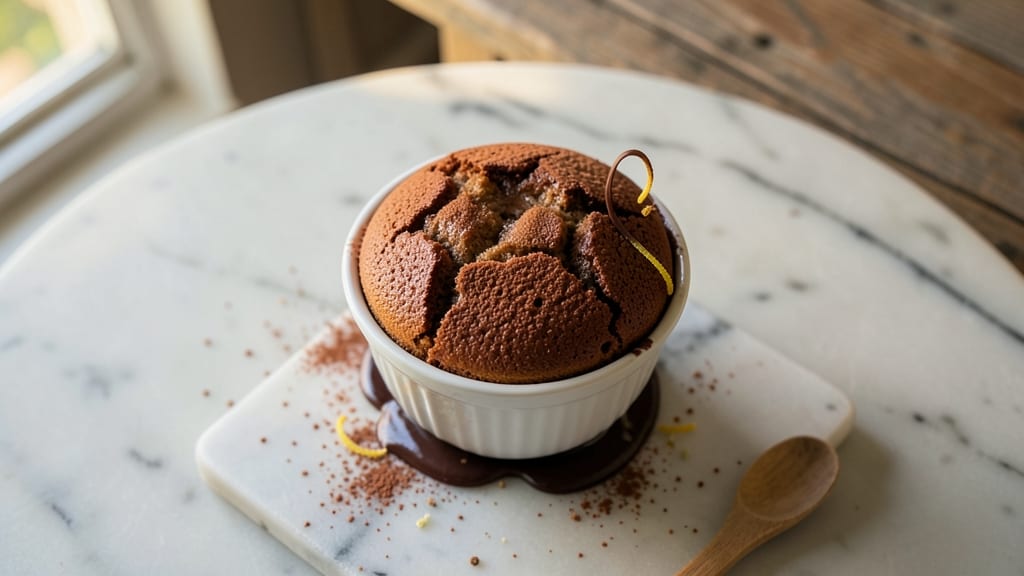
This bittersweet chocolate soufflé delivers the ultimate dessert experience—light-as-air clouds with a molten heart that melts into velvety decadence. The secret lies in perfect egg whites and precise folding, transforming simple ingredients into a restaurant-worthy masterpiece.
After years of testing, I've refined this technique to ensure every soufflé rises dramatically and holds its shape until serving.
What makes this recipe special is the balance of bittersweet chocolate (70% cocoa) and the delicate structure created by whipped egg whites. The batter goes from thick to ethereal in minutes, requiring confidence but delivering foolproof results when done right.
Baking at high heat ensures that signature rise while keeping the center gloriously molten.
By the time you serve this dessert, your guests will be amazed by the golden dome that collapses into a warm, chocolatey embrace. The contrast between crisp exterior and gooey interior makes every bite unforgettable. This isn't just dessert—it's an experience that transforms any meal into something special.
The key to success is preparation: room-temperature eggs, properly melted chocolate, and careful folding. With these elements in place, even beginners can achieve professional results. Let's create this elegant masterpiece together—your taste buds will thank you.
Ingredients for bittersweet chocolate souffle
Seven ounces of bittersweet chocolate and six eggs transform into a masterpiece of texture and flavor.
| Ingredient | Amount | Notes |
|---|---|---|
| Bittersweet Chocolate (70% Cocoa) 🍫 | 7 oz | High-quality, finely chopped |
| Large Eggs 🥚 | 6 whole | Room temperature preferred |
| Granulated Sugar 🍚 | ½ cup | Superfine preferred for smoothness |
| Unsalted Butter 🧈 | ½ cup | Cold, cubed for melting |
| All-Purpose Flour 🌾 | ¼ cup | Sifted for lightness |
| Pinch of Salt 🧂 | ⅛ tsp | Fine sea salt |
| Vanilla Extract 🌿 | ½ tsp | Pure vanilla preferred |
| Heavy Cream 🥛 | ½ cup | Cold for stability |
| Cocoa Powder (Unsweetened) 🍫 | 1 tbsp | Dutch-processed preferred |
The chocolate matters most here—Valrhona or Callebaut 70% deliver the depth needed for a sophisticated soufflé. Avoid lower-quality chocolate; the bitterness must balance the sweetness perfectly. Room-temperature eggs are non-negotiable—they whip to stiff peaks far more reliably. For the butter, European-style brands like Plugrá melt more smoothly. If your cocoa powder is lumpy, sift it through a fine-mesh sieve before incorporating. The vanilla extract should be pure, not imitation—Madagascar Bourbon adds complexity without overpowering.
No superfine sugar? Pulse granulated sugar in a food processor until fine. Substitute heavy cream with chilled coconut cream for a dairy-free option, though texture may vary slightly. If you're using a lower-quality chocolate (60% cocoa), reduce the sugar by 1 tablespoon to maintain balance. The pinch of salt enhances all flavors—don't skip it. For a gluten-free version, replace the flour with cornstarch or arrowroot powder. The cocoa powder can be omitted entirely if you prefer a less chocolate-forward soufflé, though the classic version relies on its depth.
Chocolate and butter should be stored in airtight containers in a cool, dark place for up to 12 months. Eggs keep best in their original carton in the fridge for 3 weeks. Whipped egg whites lose volume quickly—fold them in at the last possible moment. The prepared batter can be piped into ramekins up to 2 hours ahead and refrigerated. For best results, serve immediately after baking, as the soufflé deflates rapidly. Leftovers, if any, reheat briefly in the oven at 350°F for 10 minutes.
Why You'll Love This Recipe
- No-Fuss Technique: I swear by this method—just melt the chocolate, whip the eggs, and fold. No tempering butter, no over-thinking. The secret’s in the quick double boiler and a hand mixer; even my first attempt turned out almost perfect.
- Rich Without Overpowering: That 70% cocoa? It’s deep but balanced—no bitter aftertaste, just pure, velvety chocolate. The sugar and egg yolks smooth it out, while the whites give it that light, airy lift. (Yes, even my coffee-drinking husband licks the bowl.)
- Date-Night Ready: Serve it warm with a dusting of powdered sugar or a scoop of vanilla ice cream, and suddenly you’ve got a restaurant-worthy dessert that took less time than ordering takeout. Bonus: it’s the only soufflé that doesn’t scream “I’m nervous.”
- Budget-Friendly Luxury: You’re using pantry staples—eggs, sugar, butter—and a single bar of bittersweet chocolate stretches far. Make two, freeze one, and you’ve got a last-minute treat for weeks. (Pro tip: the leftover crust? Crumble it over yogurt.)
Step-by-step instructions for bittersweet chocolate soufflé
Mastering this delicate dessert requires precision and patience—each step builds the signature lightness and molten center.
Melt Chocolate and Butter for a Silky Base
Place the 7 oz bittersweet chocolate (70% cocoa) and ½ cup unsalted butter in a heatproof bowl set over a pot of simmering water, ensuring the bowl doesn't touch the water. Stir gently until both melt completely, creating a smooth, glossy mixture. Remove from heat and whisk in 1 tablespoon unsweetened cocoa powder until fully incorporated. This step is critical—the chocolate should be completely smooth with no graininess, or your soufflé will have a gritty texture.
Let the mixture cool slightly to 100°F before proceeding. I test this by dipping a candy thermometer into the center—it should register just below body temperature. If it's too hot, the eggs will scramble when mixed in later. Here's where quality matters: using high-quality chocolate ensures a rich, complex flavor that carries through the entire dessert.
Whisk Egg Yolks and Sugar to Ribbon Stage
In a separate bowl, whisk together 6 whole large egg yolks and ½ cup granulated sugar over a double boiler (or a heatproof bowl over simmering water) until the mixture reaches 160°F on a candy thermometer. This process, called tempering, creates a stable base that will hold air when whipped later. You'll know it's ready when the mixture thickens noticeably and coats the back of a spoon.
Remove from heat and continue whisking until the mixture cools to 110°F—it should now be pale yellow and thick like ribbon when drizzled from the whisk. This temperature is crucial; too hot and the eggs will cook prematurely, too cool and they won't incorporate enough air. I like to let it sit for 2 minutes between checks to avoid overworking the yolks.
Fold Chocolate into Egg Mixture Gently
Gradually fold the cooled chocolate mixture into the egg yolk mixture using a spatula, being careful not to deflate the air you've just incorporated. Start with small spoonfuls of chocolate, then increase as the mixture thickens. The goal is to combine them completely while maintaining as much air as possible—this is what gives the soufflé its signature lightness. Work quickly but deliberately to avoid creating bubbles that will collapse during baking.
Once fully combined, stir in ½ teaspoon vanilla extract and ¼ cup sifted all-purpose flour. The mixture should be smooth, glossy, and thick enough to hold its shape when spooned. Here's the thing—don't overmix. A few small lumps are fine; they'll disappear during baking. The key is to maintain that delicate structure we've worked so hard to create.
Whip Egg Whites to Stiff Peaks
In a separate, immaculately clean bowl, beat 6 whole large egg whites with a pinch of salt (¼ teaspoon) using an electric mixer until soft peaks form. Gradually add ½ cup cold heavy cream while continuing to beat. The cream adds richness and helps stabilize the egg whites, preventing them from deflating during baking. You want the mixture to hold its shape when the whisk is lifted—it should form a peak that stands straight up.
Continue beating until stiff peaks form, about 2-3 minutes total. The mixture should now be glossy and thick enough to hold its shape when spooned. This is the moment that matters: if you see any liquid pooling at the bottom of the bowl, you'll need to start over—this means the egg whites weren't properly whipped and won't support the soufflé structure.
Fold Whites into Chocolate Mixture with Care
Using a spatula, gently fold one-third of the whipped egg whites into the chocolate mixture to lighten it. Then, fold in the remaining whites in two additions, being careful to cut through the center and lift from the bottom of the bowl. This technique ensures you maintain as much air as possible while combining the mixtures. The batter should now be thick, glossy, and hold its shape when spooned onto a plate.
Transfer the batter to a 4-cup soufflé dish (or individual ramekins) and smooth the top with a spatula. Here's the critical part: don't overfill. The soufflé will more than double in size, so fill the dish only about one-third full. Place the dish in a 375°F oven and bake for 12-15 minutes until the top is golden brown and the edges pull away slightly from the sides. The center should still be slightly jiggly—this is what creates that signature molten heart.
Serve Immediately for Maximum Drama
Remove the soufflé from the oven and serve immediately—it will begin to deflate as it cools. The center should be molten and warm, while the exterior is crisp and golden. This dessert is all about the contrast: the light, airy exterior and the rich, molten center. Don't wait to serve; the soufflé will lose its structure and texture as it cools.
For an extra touch, dust the top with additional unsweetened cocoa powder just before serving. Pair with fresh berries or a dollop of whipped cream for a complete presentation. Real talk: the first time I made this, I waited too long to serve and ended up with a sad, dense pudding. Now I set a timer for exactly 12 minutes—no exceptions—and rush to the table the moment it's done.
Pro Tips For Making Bittersweet Chocolate Souffle
- Temper Your Chocolate: Melt the bittersweet chocolate (70% cocoa) in a double boiler over low heat—high heat turns it grainy, and you’ll end up with a gritty souffle that’s a crime against silkiness. Stir constantly and remove just as it hits 110°F (43°C), then let it cool slightly before mixing with eggs. I learned this the hard way after scraping burnt chocolate off my bowl twice.
- Whisk Eggs Cold: Crack your eggs into a cold bowl before whisking—room-temperature eggs lose structure faster, and your souffle will collapse like a sad soufflé at a party. Pop the bowl in the freezer for 5 minutes if your kitchen’s warm, then whisk like you’re trying to win a prize. The difference in rise is night and day.
- Skip the Overmixing: Once you fold in the flour, stop after three gentle turns—any more and you’ll deflate the air pockets you just whipped into the eggs. The batter should look streaky, not smooth. I used to obsess over blending it perfectly, but the second I relaxed, my soufflés actually puffed.
- Butter the Ramsay: Grease your ramekins with cold butter, then dip them in flour—this creates a nonstick crust without a thick, cakey layer. Tap out any excess flour (yes, even if it feels wasteful), then chill the ramekins for 10 minutes. The extra step guarantees a clean release, and your soufflés won’t stick like they’re auditioning for Hell’s Kitchen.
Common mistakes when making this dish
Overwhipped Egg Whites
This is the #1 mistake I see beginners make—whipping egg whites too long or in a greasy bowl. Even a tiny bit of fat (like from unwashed yolks) prevents stiff peaks from forming.
I always wash my mixing bowl with hot, soapy water and dry it completely before starting. Use a clean, dry whisk attachment too—any residue will sabotage your soufflé. 🥚
Underfilled Ramekins
Many people underestimate how much the batter will rise, leading to flat, sad soufflés. Fill your ramekins only about ⅓ full—the batter will more than double.
I draw a line with a pencil on my ramekins as a visual guide. Overfilling causes spillage and uneven baking, while underfilling results in a collapsed center.
Incorrect Oven Temperature
Baking at too low a temperature (350°F) causes the soufflé to rise slowly and lose its structure. Too high (400°F+) burns the exterior before the center sets. The magic number is 375°F—this creates the perfect crisp exterior while keeping the center molten.
I use an oven thermometer to verify accuracy, as home ovens often vary by 25°F.
Premature Serving
Leaving the soufflé in the oven too long turns the center from molten to rubbery. The ideal moment is when the top is golden and the edges pull away slightly—about 12-15 minutes.
I set a timer and watch closely during the final 2 minutes. Waiting even 30 seconds too long ruins the texture.
Room-Temperature Ingredients
Cold eggs or butter create uneven textures. Room-temperature ingredients incorporate air better and bake more evenly. I take eggs out of the fridge 30 minutes before starting and let butter sit at room temp for 1 hour.
Cold butter won't melt smoothly, and cold eggs won't whip properly—both lead to dense, flat soufflés.
Skipping the Flour
Many recipes omit flour, but it's essential for structure. The ¼ cup sifted flour creates a delicate framework that holds the air. Without it, your soufflé will collapse completely. I sift the flour directly into the chocolate mixture to distribute it evenly—no lumps allowed!
Nutrition facts
Frequently asked questions
Why does my chocolate soufflé collapse?
Collapse usually happens from one of three issues: overmixing the batter, opening the oven door too early, or underbaked centers. The key is to fold the egg whites gently and bake at 375°F for exactly 12-15 minutes—no peeking! The soufflé should hold its shape until you serve it. If it collapses, try using room-temperature eggs and whipping the whites to stiff peaks before folding.
Can I make this with dark chocolate instead of bittersweet?
Yes, but adjust the cocoa percentage carefully. For a similar intensity, use 70% dark chocolate—anything lower (like 50%) will make the soufflé too sweet. You may also need to reduce the sugar slightly (¼ cup instead of ½ cup) to balance the flavor. The texture remains the same, but the depth of chocolate flavor changes dramatically.
How do I fix runny egg whites?
Runny egg whites are usually caused by grease or overwhipping. First, wash your mixing bowl with hot, soapy water and dry it completely. Then, start over with fresh egg whites and a pinch of salt. Whip them on medium-high speed until they form soft peaks before adding the cream. If they still won't hold shape, your eggs might be old—try a different carton.
Can I prepare the batter ahead of time?
You can pipe the batter into ramekins up to 2 hours ahead and refrigerate, but don't fold in the egg whites until right before baking. The batter loses air when chilled, so whip fresh egg whites and fold them in just before baking. For best results, bake immediately after assembling—this ensures the signature rise and texture.
What's the secret to a perfectly molten center?
The magic happens at 375°F for exactly 12-15 minutes. Use an oven thermometer to verify your oven's accuracy—many run hot or cold. The center should be just set with a slight jiggle when done. If it's fully cooked, the soufflé will be dense. For extra insurance, bake for 12 minutes first, then check—you can always add 1-2 minutes more if needed.