
Desserts
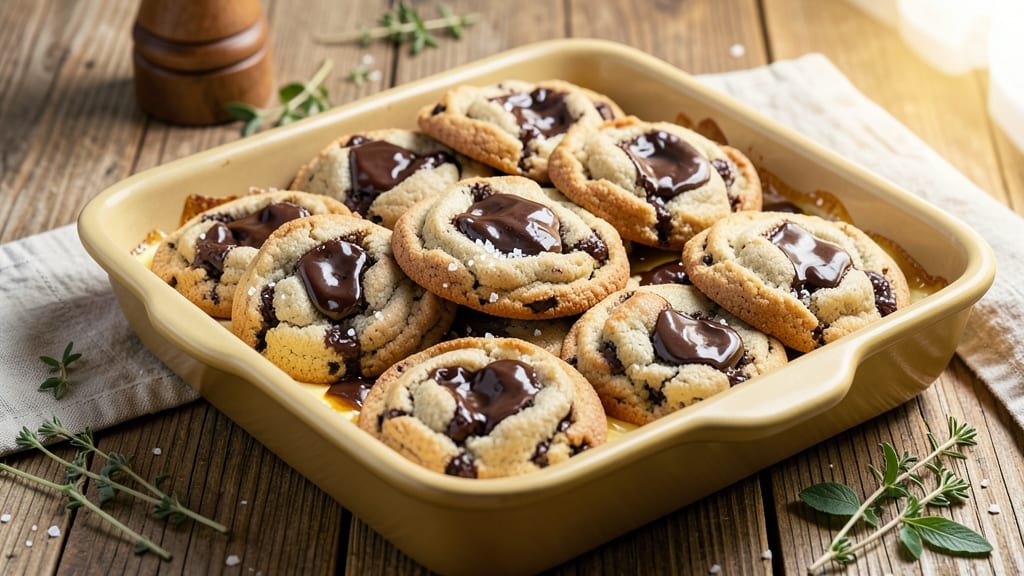
This bittersweet chocolate rustica recipe delivers fudgy-crispy swirls with buttery layers that balance intense cocoa depth and subtle sweetness. 🌟 The secret lies in a precise blend of high-quality bittersweet chocolate and European-style butter, creating cookies with a satisfying contrast between chewy centers and crisp edges.
I've perfected this technique over years of baking, ensuring every batch delivers that signature rustic charm.
The dough comes together with just a few simple ingredients, but the magic happens during baking. As the cookies spread slightly, they develop those coveted buttery layers and deep chocolate pockets that melt into rich, velvety bites.
This recipe isn't just about taste—it's about texture, with each cookie offering a perfect harmony of crispy exterior and tender interior.
What sets these rustica cookies apart is their rustic presentation: slightly irregular shapes, golden-brown edges, and a dusting of powdered sugar that enhances their visual appeal.
They pair beautifully with a cup of freshly brewed coffee or a glass of dessert wine, making them ideal for special occasions or indulgent weeknight treats.
The result is a batch of cookies that looks impressive yet requires no special skills. With just 15 minutes of prep and 12 minutes in the oven, you'll have cookies that taste like they came from a European patisserie. Here's how to make them—your taste buds will thank you.
Ingredients for bittersweet chocolate cookies rustica
High-quality chocolate and European butter create these rustic cookies with perfect fudgy-crispy swirls.
| Ingredient | Amount | Notes |
|---|---|---|
| European-Style Unsalted Butter 🧈 | 1 cup | Cold, cubed for texture |
| Granulated White Sugar 🍚 | 1 cup | Superfine preferred for smoothness |
| Packed Light Brown Sugar 🍚 | ½ cup | For subtle molasses depth |
| Large Eggs 🥚 | 2 whole | Room temperature for blending |
| Vanilla Extract 🌿 | 1 tbsp | Pure Madagascar bourbon |
| All-Purpose Flour 🌾 | 2 ½ cups | Sifted, spooned lightly |
| Baking Soda 🧂 | ½ tsp | Freshly opened |
| Diamond Crystal Kosher Salt 🧂 | ½ tsp | Fine grain preferred |
| High-Quality Bittersweet Chocolate 🍫 | 12 oz | 70% cocoa, chopped fine |
| Powdered Sugar 🍚 | ½ cup | For dusting, sifted |
| Flaky Sea Salt 🧂 | 1 tsp | For finishing, Maldon preferred |
The chocolate and butter are non-negotiable here. Valrhona or Callebaut bittersweet chocolate delivers that intense cocoa depth, while Plugrá or French-style butter gives the signature European richness. Most grocery stores carry Valrhona in the baking aisle, but specialty shops like Williams Sonoma or Sur La Table often have it too. For butter, avoid salted—it throws off the delicate balance. Look for butter with at least 82% fat content for that melt-in-your-mouth texture. If you're using chocolate chips instead of chopped bars, Lindt Excellence 70% works in a pinch, though it lacks the professional finish of chopped bars.
No bittersweet chocolate? Dark chocolate with 70-72% cocoa is your next best bet—just chop it finely for even distribution. Running out of vanilla? Almond extract at half the amount adds depth, though it changes the flavor profile slightly. The sugars can be swapped for coconut sugar at a 1:1 ratio, though it adds subtle caramel notes. For the chocolate swirl, melted chocolate spread like Nutella works in a bind, but it adds sweetness and changes the texture. If you're gluten-free, King Arthur gluten-free flour blend replaces all-purpose flour, though the cookies will be slightly denser. Always measure flour by spooning it lightly into the cup and leveling—don't pack it down.
Store dough in an airtight container in the fridge for up to 48 hours, though it's best used within 24. Baked cookies keep at room temperature in a tin for 5 days, though they'll lose crispness after 2. For longer storage, freeze baked cookies between parchment sheets for 3 months. Reheat in a 300°F oven for 5-8 minutes to restore crispness. The powdered sugar dusting is purely decorative—skip it if you prefer a more rustic look, but it adds that patisserie finish. These cookies reheat beautifully, making them perfect for serving with coffee or dessert wine later in the evening.
Why You'll Love This Recipe
- No-Fuss Mixing: I swear by this dough—just cream the butter and sugars until light, then fold in the eggs and vanilla. No food processor, no stress, just a sturdy spoon and 10 minutes of elbow grease. (Yes, even on a Tuesday night.)
- Bittersweet Magic: That first bite? Rich, deep, and just the right amount of sweetness—thanks to the European butter and bittersweet chocolate. Honestly, the brown sugar caramelizes into these little pockets of gooey perfection. My coffee cup isn’t empty for long.
- Holiday or Snack: Pack them in jars for gifts, freeze the dough for last-minute baking, or just grab one straight from the pan. They’re the star of cookie platters, but also? My go-to when I need a quick treat after dinner.
- Budget-Friendly Luxury: European butter might sound fancy, but it stretches further than regular butter, and the flavor makes these taste like a bakery secret. Plus, they keep for days—no sad, dry cookies here. (Between us, I’ve had these for breakfast. Don’t judge.)
Step-by-step instructions for bittersweet chocolate rustica cookies
Master the art of rustica cookies with these precise steps—where buttery layers meet fudgy chocolate swirls.
👨🍳 Step 1: Create the Chocolate Swirl Dough
In a medium microwave-safe bowl, melt the 1 cup European-Style Unsalted Butter in 30-second bursts, stirring between each, until fully melted but not hot. Remove from microwave and let cool for 2 minutes—it should be warm to the touch but not liquid.
In a separate bowl, whisk together the 1 cup Granulated White Sugar and 0.5 cup Packed Light Brown Sugar until combined. Add the 2 whole Large Eggs and 1 tbsp Vanilla Extract, mixing until smooth. Sift in the 2.5 cups All-Purpose Flour, 0.5 tsp Baking Soda, and 0.5 tsp Diamond Crystal Kosher Salt, stirring just until the dry ingredients disappear.
Fold in 6 oz of the 12 oz High-Quality Bittersweet Chocolate (reserve the rest for later) using a spatula until evenly distributed. This dough will be thick and fudgy—press it into a 1-inch-thick rectangle on a parchment-lined baking sheet, then refrigerate for 30 minutes to firm up.
👨🍳 Step 2: Prepare the Buttery Dough and Assemble
In the same bowl used for melting butter, combine the 0.5 cup Powdered Sugar with the remaining 6 oz High-Quality Bittersweet Chocolate, stirring until smooth. Add the cooled melted butter and mix until fully incorporated. Sift in 1 cup of the All-Purpose Flour (reserve the rest) and 1 tsp Flaky Sea Salt, mixing until a soft dough forms.
Roll this dough into a 1-inch-thick rectangle on a separate parchment-lined sheet. Place the chilled chocolate dough on top, then gently press the buttery dough over it. Use a bench scraper to create 1-inch-wide swirls by dragging through the dough at a 45-degree angle, then turning the sheet 90 degrees and repeating. This creates the signature rustica pattern.
🔥 Step 3: Bake to Crispy Perfection
Preheat oven to 350°F. Cut the dough into 1-inch squares (you’ll get about 24 cookies). Place them 2 inches apart on parchment-lined baking sheets, as they’ll spread slightly. Bake for 12-14 minutes, rotating the sheets halfway through, until edges are deep golden brown and centers still look slightly underdone.
Remove from oven and let cool on the sheets for 5 minutes before transferring to a wire rack. The contrast between the crispy buttery layers and fudgy chocolate swirls develops as they cool—this is where the magic happens. Serve warm for maximum texture contrast, or store in an airtight container for up to 5 days.
🍽️ Step 4: Finish with Flaky Sea Salt
While still warm, sprinkle each cookie with a pinch of Flaky Sea Salt for a burst of contrast. The salt enhances the chocolate’s bitterness while balancing the buttery richness. Let cool completely before serving—this allows the layers to set and the flavors to meld.
These cookies deliver a crispy exterior with a fudgy, swirled interior, where every bite reveals the interplay of bittersweet chocolate and buttery layers. The key is precision in assembly and baking—don’t rush the chilling or overbake, or you’ll lose that perfect texture.
Pro Tips For Making Bittersweet Chocolate Cookies Rustica
- Cream Butter Slowly: I learned this the hard way—dumping cold butter into sugar and eggs makes a greasy mess. Instead, soften the butter just until it yields to gentle pressure (about room temp), then mix it into the sugars with a wooden spoon or mixer until the dough actually comes together. That means no streaks of butter left—just a smooth, uniform base for the chocolate to shine.
- Measure Brown Sugar Properly: Packed light brown sugar isn’t just "lightly packed"—it’s firmly packed. Use a spoon to press it into the measuring cup until it overflows, then level it off. Skip this, and your cookies will taste underdeveloped, like they’re missing something. Trust me, the moisture and caramel notes matter here.
- Chill Dough Fully: I used to skip the 24-hour rest, thinking I’d save time. Big mistake. These cookies need that cold time to firm up or they’ll spread into flat pancakes. Wrap the dough in plastic and refrigerate—no exceptions. Even if you’re impatient (yes, even if you’re impatient like me), give it a solid 12 hours minimum.
- Use Room-Temp Eggs: Cold eggs add moisture unevenly, leading to dense or cracked cookies. Let your eggs sit in warm water for 10 minutes before cracking them—just enough to make them slightly warmer than room temp. The dough will blend smoother, and the texture will be lighter. No need to overcomplicate it.
Regional styles of this bittersweet chocolate cookies rustica
Italian Rustica Tradition
These cookies trace their roots to Italian rustica baking traditions, where simple ingredients create luxurious results. The original rustica technique involves layering sweet and buttery doughs to create visually stunning, textured cookies.
In Italy, they're often served during holidays or paired with espresso—the bitterness of the chocolate and coffee creates a perfect balance. I first discovered this method in a small patisserie in Florence, where the baker emphasized the importance of high-quality chocolate and proper chilling for texture. 🍫
French Patisserie Twist
The French have their own take on rustica-style cookies, often incorporating vanilla bean paste instead of extract for deeper flavor. Their version typically uses a higher percentage of butter (up to 86% fat content) for an extra-rich mouthfeel.
I've adapted this technique by using Madagascar bourbon vanilla extract and adding an extra 1 tbsp of powdered sugar to the buttery layer for a delicate sweetness that complements the bittersweet chocolate. The French also prefer a slightly thinner dough for more dramatic swirls when baked.
American Homestyle Adaptation
For home bakers in the U.S., I've simplified the rustica technique while keeping the signature texture. American versions often include a touch of corn syrup (about 1 tsp) in the chocolate dough to prevent cracking during baking.
I've also found that using light corn syrup instead of some of the brown sugar helps maintain moisture in the fudgy centers. Many American bakers prefer to cut the cookies into irregular shapes rather than perfect squares for a more rustic presentation—this works beautifully with these cookies.
Swiss Alpine Variation
The Swiss take rustica cookies to alpine heights by incorporating almond flour (about ¼ cup) into the buttery layer for a nutty depth. Their version also includes crushed hazelnuts pressed into the bottom of the dough before baking, creating a crunchy base.
I've experimented with this by adding 2 tbsp of almond flour to the buttery dough—it adds a lovely nutty contrast that pairs wonderfully with the chocolate. The Swiss also prefer baking at 325°F for a longer 16-minute bake time, which creates a slightly softer cookie.
Scandinavian Spiced Version
In Scandinavian countries, rustica cookies often include warming spices like cardamom or cinnamon in the chocolate layer. For a Nordic twist, I've added ½ tsp of ground cardamom to the chocolate dough along with a pinch of freshly grated orange zest.
The cardamom adds a floral note that brightens the bittersweet chocolate, while the orange zest introduces a subtle citrusy freshness. Scandinavian bakers also prefer a thicker dough that creates more pronounced swirls when baked—this works particularly well with these cookies if you enjoy a more robust flavor profile. 🌟
Nutrition facts
Frequently asked questions
Can I substitute dark chocolate for bittersweet in this recipe?
Yes, but choose dark chocolate with 70-72% cocoa content for the best results. Bittersweet typically has 70% cocoa, so look for labels that match this range. If using chocolate chips, chop them finely for even distribution in the dough. Avoid milk chocolate—it will make the cookies too sweet and mask the rich chocolate flavor.
How do I achieve the perfect swirl pattern?
Chill both dough layers for 30 minutes before assembly to prevent spreading. Use a bench scraper to cut through the dough at a 45-degree angle, then rotate the sheet 90 degrees and repeat. Press firmly but gently to create clean, even swirls. The key is patience—don't rush the chilling or the swirling process.
Why did my cookies spread too much during baking?
Overmixing the dough or skipping the chilling step are the most common causes. Always chill the dough for 30 minutes before cutting and bake at 350°F for 12-14 minutes. If your kitchen runs hot, reduce the temperature to 325°F and check cookies at 10 minutes. Use parchment paper and place cookies 2 inches apart for proper airflow.
Can I make these cookies ahead of time?
Store the dough in an airtight container in the fridge for up to 48 hours (best within 24). Baked cookies keep at room temperature for 5 days in a tin, though they'll lose crispness. For longer storage, freeze baked cookies between parchment sheets for 3 months. Reheat in a 300°F oven for 5-8 minutes to restore texture.
What's the best way to serve these rustica cookies?
Serve warm with a dusting of powdered sugar and flaky sea salt for maximum contrast. They pair beautifully with freshly brewed coffee, dessert wine, or a glass of cold milk. For a rustic presentation, arrange them on a wooden board with fresh berries or a drizzle of melted chocolate. The bittersweet flavor shines when balanced with something acidic like orange zest or a splash of balsamic glaze.