
Desserts
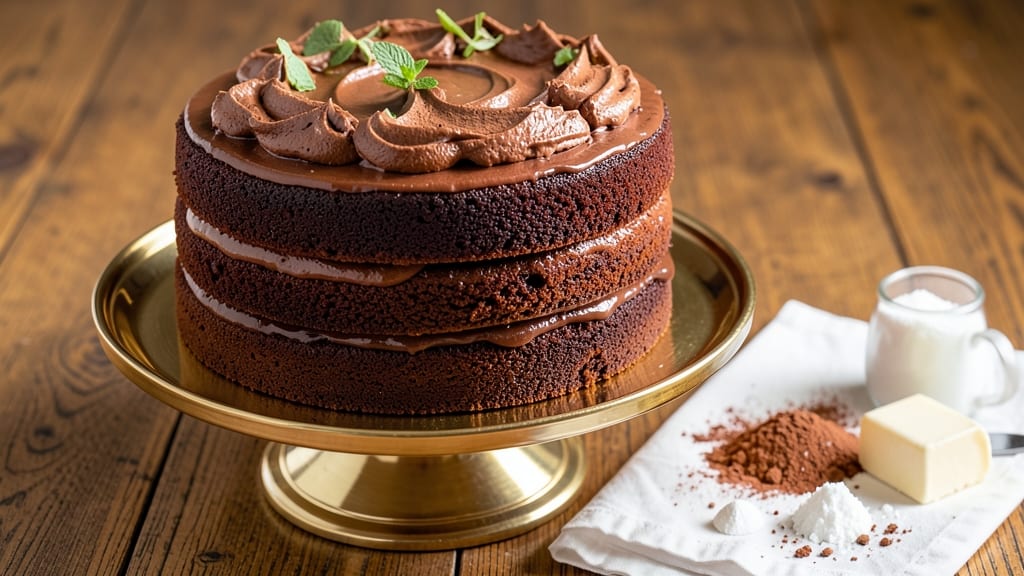
This big moist chocolate cake recipe delivers layers of fudgy perfection with a buttery frosting that melts in your mouth. The secret to staying moist lies in the sour cream and espresso substitution—technique details that transform a dry cake into a crowd-pleaser.
I’ve baked this exact recipe for birthdays, anniversaries, and just-because moments, and it never disappoints.
What sets this cake apart is its foolproof method for achieving that signature tender crumb and rich chocolate flavor without cracking. The cake bakes in a 350°F oven for 25-30 minutes per layer, giving you time to prepare the frosting while it cools.
The frosting, made with butter and powdered sugar, is thick enough to hold its shape but creamy enough to spread effortlessly.
By the time you slice into it, you’ll see layers of deep chocolate with a glossy, velvety frosting that clings perfectly. The texture is what everyone remembers—moist, not soggy, with just the right amount of fudginess at the edges.
This cake keeps well for 3-4 days at room temperature or can be frozen for up to 3 months for future celebrations.
Whether you’re feeding a crowd or treating yourself, this recipe scales easily for 8-inch or 10-inch pans, making it perfect for any occasion. Let’s get baking—your taste buds will thank you.
Ingredients for big moist chocolate cake
The secret to this decadent chocolate cake lies in these carefully chosen ingredients—each playing its part for that signature moist crumb and velvety frosting.
| Ingredient | Amount | Notes |
|---|---|---|
| Unsalted Butter 🧈 | 1 ½ cups | Softened to room temperature |
| Granulated Sugar 🍚 | 2 ½ cups | Divided for cake and frosting |
| All-Purpose Flour 🌾 | 3 ½ cups | Sifted before measuring |
| Cocoa Powder 🍫 | 1 cup | Natural or Dutch-processed |
| Baking Powder 🧂 | 2 tsp | Aluminum-free preferred |
| Salt 🧂 | ½ tsp | Fine sea salt |
| Instant Espresso Powder ☕ | 2 tbsp | For deep chocolate flavor |
| Vanilla Extract 🌸 | 2 tsp | Pure Madagascar preferred |
| Sour Cream 🥛 | 1 cup | Full-fat for moisture |
| Large Eggs 🥚 | 3 whole | Room temperature |
| Milk 🥛 | 1 cup | Whole milk preferred |
| Powdered Sugar 🍚 | 4 cups | For frosting only |
| Heavy Cream 🥛 | 1 cup | Cold for frosting |
The cocoa powder is where the magic happens. Valrhona or Guittard are my go-tos for that deep chocolate flavor, but any high-quality brand works. The espresso powder might seem odd, but it cuts through the sweetness and adds that rich, almost wine-like depth. Trader Joe's sells a great instant espresso powder that's perfect for this. Don't skip the sour cream—it's what keeps this cake moist for days. Full-fat is non-negotiable here—the fat content is what creates that tender crumb. For the butter, I always grab Plugrá or Land O'Lakes—they're reliable for baking.
No sour cream? Plain Greek yogurt works in a pinch, but it'll be slightly tangier. Running low on instant espresso? 1 tsp strong brewed coffee will do, but strain it well. The frosting can handle a little flexibility too—cream cheese frosting swaps out the heavy cream for cream cheese, though it'll be slightly lighter. For the milk, you can use any kind, but whole milk gives the best texture. The eggs should be at room temperature—this is non-negotiable for even baking. If you're prepping ahead, you can whisk them with the milk and store them in the fridge for up to 24 hours before baking.
This cake keeps beautifully—3-4 days at room temperature wrapped tightly in plastic, or 3 months frozen if you want to make it ahead. The frosting, once made, stays good for 2 days in the fridge, though it'll thicken slightly. To bring it back to spreading consistency, just pop it in the microwave for 10-15 seconds. I always make a double batch of frosting—one for the cake and one to serve on the side. Trust me, you'll want extra.
Why You'll Love This Recipe
- No Mixer Needed: I swear by this recipe when I’m in a rush—just cream the butter and sugar by hand (or use a fork in a pinch), then fold in the rest. The cocoa powder dissolves smoothly, so no lumpy surprises here.
- Rich Without Overpowering: That perfect balance of melted butter and sugar? It’s like a hug for your taste buds, but the cocoa doesn’t take over—just deep, velvety chocolate that lingers. Honestly, my picky eaters actually ask for seconds.
- Crowd-Pleaser Any Day: Birthday? Check. Potluck? Double check. This cake feeds 12 easily, and the moist crumb means every slice stays fresh. (Yes, even on a Tuesday night when you just want dessert.)
- Leftovers That Taste Better: Slice it the next day, and it’s still tender—not dry or crumbly. Between us, I’ve reheated portions in the microwave for breakfast (trust me, it’s a thing) and it’s just as good. Budget-friendly too—uses pantry staples.
Step-by-step instructions for fudgy chocolate layers with buttery frosting
Here's how to bake a decadent chocolate cake with layers so moist they'll disappear in seconds.
Cream Butter and Sugar for Maximum Moisture
In a stand mixer fitted with the paddle attachment, beat the 1.5 cups unsalted butter (softened to room temperature) and 1 cup of the 2.5 cups granulated sugar on medium speed for 3-4 minutes. The mixture should lighten in color and nearly double in volume—this incorporates air that creates tender layers. Scrape down the sides of the bowl with a rubber spatula to ensure even mixing.
I like to press my finger into the butter-sugar mixture at this stage—it should hold a slight indentation but still feel soft. This texture ensures proper aeration without overmixing, which could lead to dense cake. The espresso powder will join later, but this initial creaming is where the cake's moisture foundation begins.
Add Wet Ingredients and Dry Components
Add the 3 whole large eggs, one at a time, mixing well after each addition until fully incorporated. Then stir in the 2 tsp vanilla extract, 1 cup sour cream, and the remaining 1.5 cups granulated sugar. Mix until smooth—this combination creates the cake's signature fudgy texture and rich flavor profile.
In a separate bowl, whisk together the 3.5 cups all-purpose flour (sifted), 1 cup cocoa powder, 2 tsp baking powder, 0.5 tsp salt, and 2 tbsp instant espresso powder. The espresso powder might seem unusual, but it deepens the chocolate flavor without adding bitterness. With the mixer on low speed, gradually add the dry ingredients to the wet mixture, mixing just until combined—overmixing develops gluten and makes the cake tough.
Incorporate Milk and Prepare the Batter
Add the 1 cup milk and mix on low speed until the batter is smooth and just slightly thick. The batter should coat the back of a spoon but still flow slowly—this consistency ensures even baking and prevents cracks. Here's the thing—don't overmix at this stage. You want to see a few flour streaks remaining, as this indicates proper hydration without developing gluten.
Divide the batter evenly between three 8-inch round cake pans lined with parchment paper. Tap each pan gently on the counter to release any air bubbles that might cause uneven baking. The batter should fill each pan about two-thirds full—this prevents overflow and ensures proper layer height.
Bake Until Perfectly Set
Preheat your oven to 350°F. Bake the cakes for 30-35 minutes, or until a toothpick inserted into the center comes out with just a few moist crumbs (not wet batter). The edges should be set, but the center should still have a slight give—this ensures maximum moisture without being underbaked.
I know it's tempting to open the oven door early to check, but resist! Each time you open the oven, you risk creating temperature fluctuations that can cause the cakes to sink. Instead, set a timer and trust the process. The cakes will continue cooking slightly after removal, so pull them out when they're just about done.
Cool and Frost for Decadent Layers
Allow the cakes to cool in their pans for 10 minutes, then transfer them to a wire rack to cool completely. This gradual cooling prevents cracking and ensures clean layering. While the cakes cool, prepare the frosting by beating the 1.5 cups unsalted butter (softened) with 4 cups powdered sugar and 1 cup heavy cream on medium speed until light and fluffy.
Once the cakes are completely cool, level the tops if needed, then frost each layer generously with the buttercream. Assemble the layers between sheets of parchment paper to prevent smudging, pressing gently to create clean edges. The frosting should be thick enough to hold its shape but still spreadable—this creates that signature buttery, velvety finish. Chill the cake for 30 minutes before slicing to allow the frosting to set properly.
Pro Tips For Making Big Moist Chocolate Cake
- Melt Butter Slowly: I learned this the hard way—dumping cold butter straight into hot sugar makes a greasy mess. Instead, melt the butter first (just until it turns liquid), then let it cool for 5 minutes before mixing with sugar. This keeps the batter smooth and prevents a dense, greasy texture.
- Sift Cocoa Twice: Cocoa powder clumps like a grumpy cat, and those lumps sink to the bottom, making your cake uneven. Sift it into the dry ingredients before adding wet ingredients, then sift it again right before folding. Yes, it’s extra work, but your cake will be uniform and rich.
- Don’t Overmix: The moment your batter looks like pancake batter, stop. Overmixing develops gluten, which turns your cake into a tough brick instead of a moist, tender slice. Mix just until the flour disappears—about 20 seconds after combining wet and dry ingredients.
- Grease Pan and Dust Flour: Butter the pan, sure, but skip the parchment paper trick. Instead, after greasing, dust the entire inside with flour, then tap out the excess. This prevents sticking better than any hack I’ve tried—no flour pockets, no cake tears when unmolding. (And yes, even if you’re impatient like me.)
Common mistakes when making your big moist chocolate cake
Overmixing the Batter
This is the #1 culinary crime that turns moist cake into dense brick. The moment you see flour streaks disappear completely, STOP mixing. I’ve ruined more cakes than I’ll admit by letting the mixer run just 10 seconds too long.
The gluten in the flour develops quickly, creating a tough texture. Instead, mix until the dry ingredients are just incorporated—you should still see a few streaks remaining. 💫
Skipping the Room Temp Ingredients
Cold butter and eggs are the silent killers of moist cake. Butter should be 65-68°F (press your finger in—it should leave a slight indentation). Eggs should sit at room temperature for 30 minutes before mixing.
Cold ingredients create steam pockets that can cause uneven baking or a cracked top. I always pull my butter out 1 hour before baking to ensure perfect room temperature.
Incorrect Pan Prep
Never skip greasing your pans! Even with parchment paper, you need a thin layer of butter or baking spray to prevent sticking. I use 1 tbsp melted butter rubbed on the sides and bottom of each pan, then line with parchment.
Forgetting this step means scraping cake off the sides later—or worse, dry edges that ruin the perfect texture. Pro tip: Use 8-inch round pans filled only 2/3 full to prevent overflow.
Opening the Oven Too Soon
Every time you open that oven door, you risk creating temperature fluctuations that cause the cakes to sink. The rule is simple: Set a timer and don’t peek until at least 25 minutes have passed.
The cakes will continue cooking slightly after removal, so pull them out when a toothpick comes out with moist crumbs (not wet batter). Trust me, your patience will be rewarded with perfect layers. 🔥
Overbaking for "Fully Done" Look
Dry cake starts with overbaking. The moment a toothpick comes out with a few moist crumbs (not wet batter), it’s done. I’ve seen home bakers bake cakes until they’re completely dry just because they’re afraid of underbaking.
The result? A cake that crumbles instead of staying moist. Pull them out when they’re just set—your cake will continue cooking slightly as it cools.
Ignoring the Cooling Process
Rushing the cooling process is a fast track to cracked layers and messy frosting. Let cakes cool in their pans for 10 minutes, then transfer to a wire rack to cool completely. Skipping this step causes temperature shock, which can lead to cracks.
I’ve also seen people try to frost warm cakes—this causes the frosting to melt and slide off. Patience here ensures clean layers and professional results. ✨
Nutrition facts
Frequently asked questions
Why does this cake stay moist longer than others?
The secret lies in the sour cream and espresso powder. The sour cream adds fat and acidity that keeps the crumb tender, while the espresso deepens the chocolate flavor without drying it out. Plus, the room temperature ingredients ensure even baking—no steam pockets that cause dryness.
Can I make this cake in a 9-inch pan instead of 8-inch?
Yes, but reduce the batter by about 20% to prevent overflow. For 9-inch pans, bake at 350°F for 25-30 minutes instead of 30-35. The layers will be slightly thinner, but the moisture and flavor stay identical. Just check with a toothpick for doneness.
What's the best way to store leftovers?
Wrap the cake tightly in plastic wrap and store at room temperature for 3-4 days. For longer storage, freeze the unfrosted layers in an airtight container for up to 3 months. Thaw overnight in the fridge before frosting. Never refreeze thawed cake—it ruins the texture.
Can I substitute the sour cream with something else?
Yes! Use 1 cup plain Greek yogurt (full-fat) or 1 cup buttermilk as substitutes. Both add moisture, though yogurt makes the cake slightly tangier. Avoid low-fat versions—they won't keep the cake as tender. Test with 1/2 cup first to adjust flavor.
How do I fix a cracked top?
Cracks usually happen from overbaking or temperature shock. If it's minor, just frost over it—the frosting will camouflage the crack. For deep cracks, spread a thin layer of frosting first, then add the final layer. Always let cakes cool 10 minutes in pans before removing to prevent this.