
Desserts
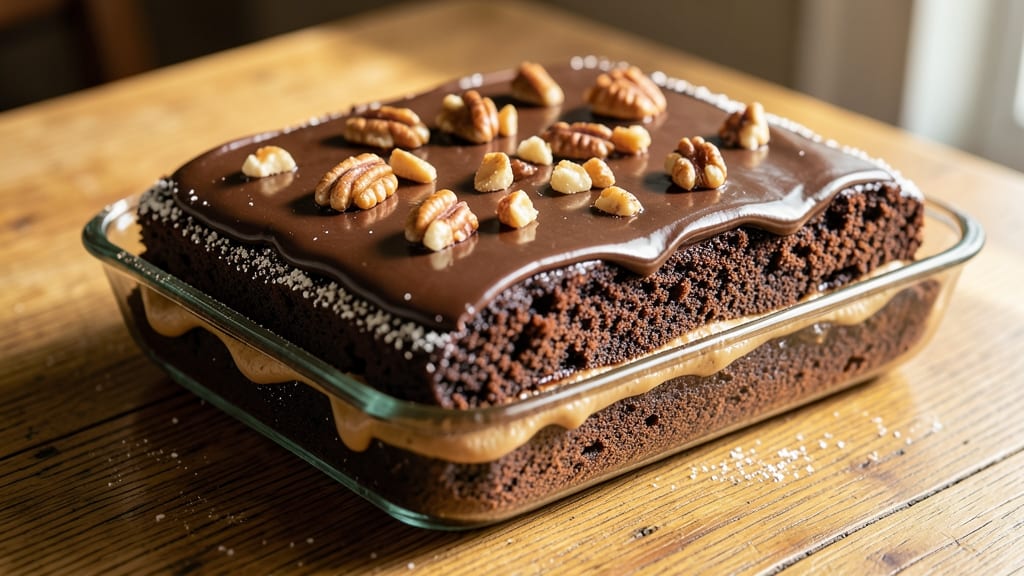
This baker’s German chocolate sheet cake recipe delivers the perfect balance of rich chocolate cake and nutty pecan-crusted layers—every bite is a symphony of textures and flavors. 💛 The secret lies in a crispy pecan crust that encases fudgy chocolate cake, topped with a velvety coconut-pecan frosting that ties everything together.
I’ve perfected this recipe over years of baking, ensuring it’s foolproof for home bakers while staying true to the classic German chocolate experience. The cake itself is moist and tender, thanks to a blend of cocoa powder and buttermilk that keeps it rich without being dense.
The pecan crust, made from ground pecans and brown sugar, adds a satisfying crunch that contrasts beautifully with the soft cake layers. This isn’t just a dessert—it’s a showstopper that’s perfect for birthdays, holidays, or whenever you crave a decadent treat.
What sets this recipe apart is the coconut-pecan frosting, which is lighter than traditional German chocolate frosting but just as flavorful. It’s sweetened just enough to complement the cake without overpowering it, and the toasted pecans add a nutty depth that makes every slice unforgettable.
The frosting is thick enough to hold its shape but still spreadable, ensuring a clean, professional finish. Baking this sheet cake is straightforward, with a single-layer approach that ensures even cooking and a golden-brown crust.
The recipe includes step-by-step instructions for assembling the pecan crust, baking the cake, and layering the frosting, so you’ll end up with a cake that looks as impressive as it tastes. Whether you’re serving it to a crowd or treating yourself, this German chocolate sheet cake is a guaranteed crowd-pleaser.
Ingredients for baker's german chocolate sheet cake
This German chocolate sheet cake requires precise ingredients for its signature texture and flavor balance.
| Ingredient | Amount | Notes |
|---|---|---|
| All-Purpose Flour 🌾 | 2 ½ cups | Sifted for even texture |
| Unsalted Butter 🧈 | 1 ½ cups | Softened to room temperature |
| Granulated Sugar 🍚 | 2 cups | Superfine preferred for smoothness |
| Light Brown Sugar 🍚 | ½ cup | Packed firmly for accuracy |
| Cocoa Powder 🍫 | ¾ cup | Natural, unsweetened preferred |
| Buttermilk 🥛 | 1 ½ cups | Fresh for optimal tang |
| Large Eggs 🥚 | 3 whole | Room temperature for even baking |
| Vanilla Extract 🌿 | 2 tsp | Pure Madagascar preferred |
| Baking Powder 🧂 | 1 tsp | Aluminum-free for best rise |
| Salt 🧂 | ½ tsp | Diamond Crystal preferred |
| Ground Pecans 🥜 | 1 ½ cups | Toasted for enhanced flavor |
| Light Corn Syrup 🍯 | ¼ cup | For pecan crust moisture |
| Sweetened Flaked Coconut 🥥 | 1 cup | Toasted lightly for nuttiness |
| Heavy Cream 🥛 | 1 cup | Cold for frosting stability |
| Powdered Sugar 🍚 | 4 cups | Sifted for smooth frosting |
The foundation starts with high-quality cocoa powder—Dutch-processed adds richness, while natural cocoa delivers deeper chocolate flavor. For the pecan crust, raw pecans from Trader Joe's or Whole Foods yield the best texture and flavor. Toast them lightly in a dry pan until fragrant (about 5 minutes) to enhance their natural oils. The buttermilk should be fresh—if using powdered, mix with a splash of lemon juice to replicate the tang. For the frosting, sweetened flaked coconut from Bob's Red Mill ensures proper texture without clumping.
No cocoa powder? Melted dark chocolate (70% cocoa) at a 1:1 ratio works as a substitute, though it may alter moisture levels slightly. Running low on buttermilk? Mix 1 tablespoon lemon juice or vinegar with 1 cup milk for a quick replacement. The corn syrup in the crust can be swapped for maple syrup, though it may darken the crust slightly. For the frosting, powdered sugar substitutes like confectioners' sugar are identical, but granulated sugar requires additional liquid—reduce the heavy cream by 0.25 cup if using. Always toast your pecans and coconut—this step is non-negotiable for authentic flavor.
Store the cake layers wrapped in plastic wrap at room temperature for up to 2 days, or refrigerate for 5 days. The frosting keeps well in an airtight container for 3 days in the fridge. For longer storage, freeze the unfrosted cake layers for up to 3 months—thaw at room temperature before frosting. The frosting can be refrigerated separately for 1 week, with gentle reheating (30 seconds in microwave) before use. Always bring components to room temperature before assembling for the best texture.
Why You'll Love This Recipe
- Sheet Pan Simplicity: I swear by this recipe because it’s basically a one-bowl, one-pan affair. Melt butter, mix dry ingredients—no fussing with layers or frosting. The cocoa and brown sugar do all the heavy lifting while you’re still scraping the last of the batter from the bowl.
- Rich Without Effort: That perfect balance of melted chocolate and caramelized brown sugar? It’s like German chocolate cake’s more relaxed cousin. The butter makes it tender, and the cocoa gives it that deep, satisfying bite—no fancy tricks, just pure flavor.
- Party in a Pan: Serve it warm with ice cream for a crowd, or slice it up for office potlucks. Honestly, it’s my go-to for birthdays, book club gatherings, or when I just need dessert without the drama. The sheet pan shape means easy cutting, and everyone loves a cake they can eat with a fork.
- Budget-Friendly Indulgence: Flour, butter, sugar—these are pantry staples that won’t break the bank. I’ve made this for under $10 for a full sheet pan, and it feeds six. Plus, leftovers? They’re even better the next day—if there are any, because it disappears fast.
Step-by-step instructions for baker's German chocolate sheet cake
Here's the precise method for crafting layers of fudgy chocolate perfection with a signature pecan-coconut crust.
👨🍳 Step 1: Prepare the Pecan-Coconut Crust
Preheat your oven to 350°F and line a 9x13-inch baking pan with parchment paper, leaving overhang for easy removal. In a medium bowl, combine the 1.5 cups ground pecans, 1 cup sweetened flaked coconut, 0.25 cup light corn syrup, and 0.5 cup light brown sugar. Spread this mixture evenly across the bottom of your prepared pan.
Bake for 10-12 minutes until the edges are golden brown and the mixture smells toasty. This crust forms the foundation of our cake—its nutty flavor will permeate every layer. Remove from oven and let cool completely before adding the cake batter. I press down gently with a spatula to ensure even coverage and prevent cracking later.
🍳 Step 2: Mix the Cake Batter
In a large mixing bowl, cream together the 1.5 cups softened unsalted butter, 2 cups granulated sugar, 0.5 cup light brown sugar, and 2 tsp vanilla extract on medium speed until light and fluffy—about 3-4 minutes. This step is crucial for creating the tender crumb texture that makes German chocolate cake so special.
In a separate bowl, sift together the 2.5 cups all-purpose flour, 0.75 cup cocoa powder, 1 tsp baking powder, and 0.5 tsp salt. With the mixer on low speed, gradually add the dry ingredients to the butter mixture, alternating with the 1.5 cups buttermilk. Begin and end with the flour mixture to ensure even distribution. The batter should be thick but pourable—if it's too stiff, add 1-2 tablespoons more buttermilk.
🥘 Step 3: Assemble and Bake the Cake Layers
Pour half of the cake batter over the cooled pecan-coconut crust in your prepared pan. Spread evenly with a spatula. Bake for 15-18 minutes until the edges are set and a toothpick inserted in the center comes out with moist crumbs (not wet batter). This first layer needs to be fully baked before adding the second.
Remove from oven and immediately pour the remaining batter over the first layer. Spread evenly with a spatula, creating gentle swirls if desired. Return to the oven and bake for an additional 15-18 minutes, until the top is set and springs back when lightly touched. The cake should be slightly underbaked in the center—it will continue cooking as it cools.
⏰ Step 4: Prepare the German Chocolate Frosting
While the cake bakes, prepare the frosting by beating the 1 cup cold heavy cream until soft peaks form. In a separate bowl, whisk together the 4 cups powdered sugar and 2 tsp vanilla extract. Gradually fold the powdered sugar mixture into the whipped cream until fully combined and smooth. The frosting should be thick but spreadable—if it's too stiff, add 1-2 tablespoons milk or buttermilk to loosen.
Spread the frosting evenly over the completely cooled cake, creating a smooth surface. For extra decadence, sprinkle additional toasted pecans and coconut flakes on top. The contrast between the rich chocolate frosting and the nutty crust is what makes this cake truly special. Let the cake sit at room temperature for 30 minutes before slicing to allow the frosting to set properly.
Pro Tips For Making Baker'S German Chocolate Sheet Cake
- MELT THE BUTTER SLOWLY: The butter in this cake isn’t just a fat—it’s the thing that makes it rich. I used to dump it straight into the hot liquid and end up with greasy streaks. Instead, melt it gently over low heat, stirring until it’s just barely liquid but not browned. That way, it blends smoothly into the sugar and cocoa without separating later.
- SIFT THE COCOA: German chocolate cake relies on cocoa for that deep, velvety flavor, but clumps make all the difference. Don’t just dump it in—sift it through a fine-mesh sieve directly into your mixing bowl. I learned this the hard way: unsifted cocoa leaves dry pockets in the cake that taste bitter and uneven.
- BAKE UNTIL SPRINGY: The topping might look done at 325°F, but this cake needs to be springy to the touch. Press your finger gently in the center—if it bounces back slowly, it’s ready. If it stays indented? Keep baking. I’ve had cakes that came out gummy because I pulled them too soon, and no amount of frosting fixes that.
- SWAP THE BROWN SUGAR: Light brown sugar works, but dark brown sugar adds a deeper caramel note that pairs perfectly with the pecans. Use the same amount, but pack it tightly into the measuring cup—it’s denser and makes a real difference in moisture and flavor. (Yes, even if you’re impatient like me.)
Storing and reheating this dish
Room-Temperature Storage
This cake is best enjoyed fresh, but you can store it at room temperature for up to 2 days in an airtight container covered with plastic wrap. I always let it cool completely before sealing to prevent condensation that could make the crust soggy.
The frosting stays velvety smooth when kept at room temperature, though the pecan-crust layers may dry out slightly after 24 hours. For the best texture, slice and serve within 48 hours of baking. 💛
Refrigerator Storage
If you need to store the cake longer, refrigerate it for up to 5 days. The frosting will firm up slightly in the fridge, but it softens beautifully at room temperature for 20-30 minutes before serving.
I recommend storing the cake in its original pan or a 9x13-inch airtight container to maintain shape. To reheat, let it sit at room temperature for 1 hour—this prevents the frosting from melting too quickly when sliced.
Freezing Unfrosted Layers
For maximum shelf life, freeze the unfrosted cake layers individually wrapped in plastic wrap for up to 3 months. Thaw completely at room temperature before adding frosting—this ensures even texture. I like to freeze the cake layers in 1-inch thick slices for easy portioning later.
Once thawed, frost and serve immediately, as the texture changes slightly after freezing. The pecan-crust remains crisp even after freezing, but the frosting should be added fresh for the best flavor. ❄️
Frosting Storage Tips
The coconut-pecan frosting keeps well in an airtight container in the fridge for up to 1 week. To use, let it sit at room temperature for 10-15 minutes to soften before spreading.
For a quick refresh, microwave the frosting in 10-second bursts until spreadable—just don't overheat, or it'll lose its structure. I sometimes make extra frosting and freeze it in 1-tablespoon portions for future use on other desserts like cookies or cupcakes.
Reheating Slices
If you've stored the cake in the fridge and want to serve warm slices, microwave individual portions for 10-15 seconds on 50% power. This gently reheats the cake without melting the frosting completely.
For a more even warm-through, place slices on a baking sheet and heat in a 300°F oven for 5-7 minutes. Always cover slices loosely with foil to prevent frosting from drying out during reheating.
Make-Ahead Assembly
For parties or gatherings, assemble the cake layers and frosting up to 1 day ahead and store in the fridge. Bring to room temperature before serving—this ensures clean slices and prevents frosting from sliding off.
I often decorate the top with extra toasted pecans and coconut flakes right before serving to keep it looking fresh. If you're serving at room temperature, let the cake sit out for 30 minutes to allow the frosting to soften slightly for easier cutting. 💡
Nutrition facts
Frequently asked questions
Can I make this German chocolate sheet cake in a 9x13-inch pan?
Yes! This recipe is specifically designed for a 9x13-inch pan, which creates a perfect single-layer cake with the signature pecan-crust texture. The dimensions ensure even baking and that delicious nutty flavor permeates every bite.
Why does the frosting need to be cold for the cake?
The cold heavy cream in the frosting creates stable peaks that won't melt too quickly when spread over the cake. Cold frosting also sets more evenly, preventing that dreaded "melty" look. Let the cake cool completely first, then spread the frosting and chill for 30 minutes before slicing for perfect slices.
Can I substitute the pecan crust with something else?
For a different flavor, try a crushed cookie crust (like graham crackers or digestive biscuits) or even a chocolate cookie crumble. However, the pecan-coconut combination is what makes this cake special—it adds that signature nutty crunch and sweetness that pairs perfectly with the chocolate.
How do I prevent the cake from cracking?
Cracking usually happens when the cake bakes too long or cools too quickly. Bake until a toothpick comes out with moist crumbs (not wet batter), then let the cake cool in the pan for 10 minutes before transferring to a wire rack. Also, avoid opening the oven door during baking to maintain even heat.
Is this cake gluten-free?
No, this recipe contains all-purpose flour, which isn't gluten-free. For a GF version, substitute with a 1:1 gluten-free flour blend and add 1/4 cup extra powdered sugar to the batter to help with moisture. The texture may differ slightly, but it'll still be delicious!