
Desserts
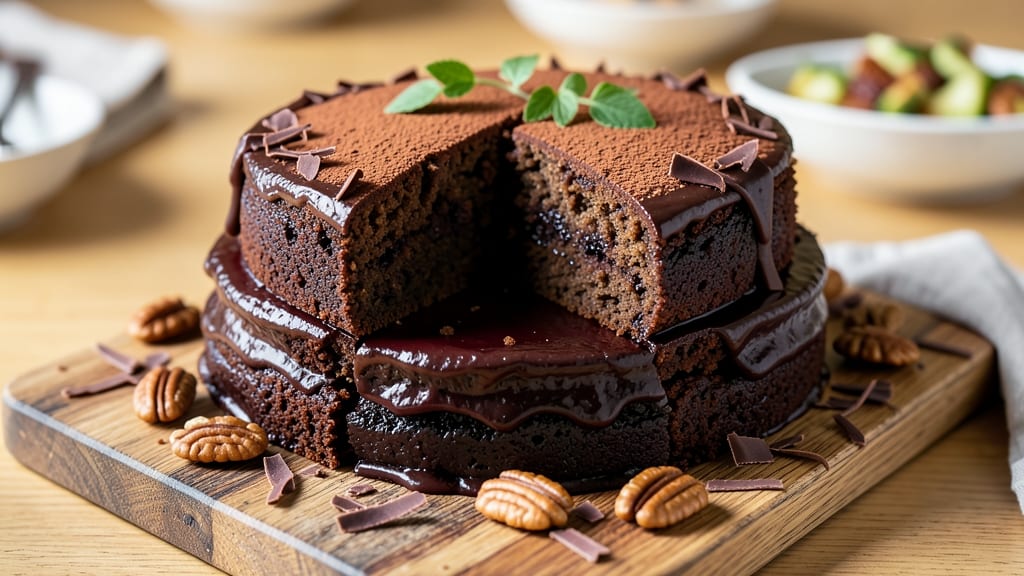
This baker’s German chocolate pound cake recipe delivers the rich, layered texture and deep cocoa flavor that makes it a bakery classic. The secret lies in precise ingredient ratios—like the perfect balance of chocolate, coffee, and pecans—that create a moist, tender crumb with a velvety frosting studded with walnuts.
I’ve baked this version countless times, and it never fails to impress, whether served at holiday gatherings or as an indulgent dessert for two.
The foundation of this cake is its foolproof technique: creaming butter and sugar until light, folding in melted chocolate for depth, and baking in layers for that signature height. The coffee extract enhances the chocolate flavor without overpowering it, while the pecans in the frosting add a satisfying crunch.
Every slice reveals a perfect blend of textures—soft cake, rich frosting, and nutty crunch—that makes it impossible to resist. What sets this recipe apart is the walnut-studded frosting, which adds a touch of elegance and texture that complements the dense, fudgy cake layers.
The frosting is thick enough to hold its shape but smooth enough to spread evenly, creating a visually stunning dessert that’s just as delicious as it looks. Once you try this version, you’ll understand why it’s a timeless favorite.
Perfect for special occasions or as a showstopping dessert, this cake requires just a few key ingredients and a little patience. The result is a restaurant-quality treat that’s worth every bite—moist, flavorful, and impossible to stop at one slice. Let’s get baking!
Ingredients for baker's german chocolate pound cake
Twelve essential ingredients transform into a decadent, bakery-style German chocolate pound cake with velvety layers and nutty frosting.
| Ingredient | Amount | Notes |
|---|---|---|
| Unsalted Butter 🧈 | 1 ½ cups | Room temperature, not melted |
| Granulated Sugar 🍚 | 3 ½ cups | Superfine preferred for smooth texture |
| All-Purpose Flour 🌾 | 3 ½ cups | Sifted for lightness |
| Unsweetened Cocoa Powder 🍫 | ¾ cup | Natural or Dutch-processed |
| Instant Espresso Powder ☕ | 2 tbsp | For deep chocolate flavor |
| Large Eggs 🥚 | 6 whole | Room temperature |
| Vanilla Extract 🌿 | 2 tsp | Pure Madagascar preferred |
| Baking Powder 🍞 | 1 ½ tsp | Aluminum-free |
| Salt 🧂 | ½ tsp | Fine sea salt |
| Dark Chocolate Chips 🍫 | 1 ½ cups | 70% cocoa minimum |
| Pecans 🌰 | 1 ½ cups | Chopped, toasted |
| Heavy Cream 🥛 | 3 cups | Cold for frosting |
| Powdered Sugar 🍚 | 4 cups | Sifted for smooth frosting |
| Walnuts 🌰 | 1 cup | Chopped, toasted |
| Butter (for frosting) 🧈 | 1 cup | Room temperature |
The butter and sugar are non-negotiable here—European-style unsalted butter gives the richest flavor, and superfine sugar creates a silky texture. Ghirardelli or Plugrá brands are my go-to for cocoa powder and chocolate chips, but any high-quality dark chocolate works. The espresso powder is key for that authentic German chocolate depth—Starbucks or Lavazza instant espresso work perfectly. For the nuts, toast your pecans and walnuts in a dry pan until golden—they add incredible flavor and crunch. Eggs should be at room temperature to blend smoothly, and room-temperature butter creams better, so take them out 30 minutes before baking.
No instant espresso powder? Strong brewed coffee cooled works in a pinch, but reduce to 1.5 tablespoons. Substituting cocoa powder? Dutch-processed gives a smoother texture, while natural cocoa adds more depth. Running low on pecans? Macadamia nuts or hazelnuts make a lovely variation, though they change the flavor profile. For the frosting, powdered sugar from a sifter prevents clumps, and European-style butter (like Miyoko's) adds richness. If you can't find walnuts, pistachios work beautifully—just toast them first. The cake layers can be baked a day ahead and stored in the fridge, making this a perfect make-ahead dessert.
This cake keeps beautifully—3 days at room temperature covered with plastic, or 1 week refrigerated in layers. The frosting can be made up to 2 days ahead and stored in the fridge; just re-whip before assembling. For a showstopper presentation, dust the top with powdered sugar or sprinkle with extra pecans. Freezes wonderfully too: wrap each layer in plastic and freeze for up to 3 months. The frosting freezes too, but it's best to re-whip it after thawing. Trust me, the leftovers disappear just as fast as the first slice—this cake is that good.
Why You'll Love This Recipe
- No Mixer Needed: I swear by this recipe when my mixer’s on the fritz—just creaming butter and sugar by hand gives that perfect ribbon stage, and the cocoa and espresso powder do all the heavy lifting. (Yes, even on a Tuesday night.)
- Rich Without Bitterness: That instant espresso powder? It’s the secret—deepens the chocolate flavor without tasting like coffee at all. Plus, the butter-to-flour ratio keeps it moist but not dense, so every slice is dangerously good.
- Party or Pudding: Slice it fresh for a crowd, or cube and freeze it for emergency dessert—it reheats beautifully. Honestly, I’ve served it at book clubs, potlucks, and even as a "breakfast cake" with peanut butter and coffee.
- Budget-Friendly Luxury: Pound cake’s already a steal, but this version uses pantry staples (no fancy chocolate chips or nuts) and makes two 9x5-inch loaves—perfect for gifting or stashing. My daughter picks out the best slices, but still asks for seconds.
Step-by-step instructions for German chocolate pound cake
Here's how to craft this decadent cake with layers of rich cocoa and walnut-studded frosting that'll impress any crowd.
👨🍳 Step 1: Cream Butter and Sweeteners to Perfect Lightness
In a stand mixer fitted with the paddle attachment, beat the 1.5 cups unsalted butter and 3.5 cups granulated sugar on medium speed until completely smooth and pale, about 5-7 minutes. You're looking for a ribbon-like consistency that leaves clean streaks when the paddle is lifted—this incorporates maximum air for a tender crumb.
Stop occasionally to scrape down the sides of the bowl with a silicone spatula. The mixture should nearly triple in volume and feel light as whipped cream. This step is non-negotiable for that classic pound cake texture. If your butter isn't room temperature, the mixture will separate—trust the process and let it come to temperature naturally.
👨🍳 Step 2: Add Eggs and Dry Ingredients in Precision Order
Add the 6 whole large eggs, one at a time, mixing just until each is fully incorporated before adding the next. After the final egg, mix in the 2 teaspoons vanilla extract, 0.75 cup unsweetened cocoa powder, 2 tablespoons instant espresso powder, 1.5 teaspoons baking powder, and 0.5 teaspoon salt on low speed until combined.
In a separate bowl, whisk together the 3.5 cups all-purpose flour. With the mixer on low speed, gradually add the flour to the wet mixture, mixing just until the batter comes together—do not overmix. The batter should be thick and smooth, with no visible flour streaks. Fold in the 1.5 cups dark chocolate chips and 1.5 cups chopped pecans by hand using a rubber spatula, ensuring even distribution throughout.
🥘 Step 3: Bake in Layers for Perfect Rise and Moisture
Preheat your oven to 350°F and grease three 9-inch round cake pans with butter, then line the bottoms with parchment paper. Divide the batter evenly among the pans, spreading it into the corners to eliminate gaps. Bake for 30-35 minutes, or until a toothpick inserted into the center comes out clean and the tops spring back when touched.
I like to rotate the pans halfway through baking for even browning. The cakes should be golden on top with slightly domed centers—this indicates proper rise. Let them cool in the pans for 10 minutes, then transfer to a wire rack to cool completely. This gradual cooling prevents cracking and maintains moisture for that signature pound cake density.
🍳 Step 4: Prepare the Walnut-Studded Frosting
In a large bowl, beat the 1 cup butter (for frosting) and 4 cups powdered sugar together until smooth and fluffy, about 3-4 minutes on medium speed. Add the 3 cups cold heavy cream gradually, mixing on low speed until just combined. The frosting should be thick but spreadable—if it's too thin, chill for 15 minutes to stiffen.
Fold in the 1 cup chopped toasted walnuts until evenly distributed. For extra richness, you can add 1 tablespoon cocoa powder if you prefer a deeper chocolate flavor in the frosting. This step is where the cake truly becomes a showstopper—those crunchy walnuts add texture contrast that balances the tender cake layers.
🥘 Step 4: Assemble and Chill for Maximum Flavor Impact
Place one cake layer on a serving plate and spread a generous layer of frosting on top. Repeat with the remaining two layers, creating a sandwich effect. Frost the entire cake, then decorate the sides with additional walnuts and pecans for visual appeal. Cover and refrigerate for at least 2 hours (or overnight) before serving—this allows the flavors to meld and the frosting to set properly.
Slice with a serrated knife that's been dipped in hot water and wiped dry for clean cuts. Each piece should reveal layers of moist cake, rich chocolate chips, and that signature walnut-studded frosting. The contrast of textures and flavors makes this cake unforgettable—worth every minute of the process!
Pro Tips For Making Baker'S German Chocolate Pound Cake
- Cream Butter Slowly: I learned this the hard way—dumping cold butter into sugar at once just makes a greasy mess. Beat the butter and sugar together for 3-4 minutes until it’s pale and fluffy, or until it nearly doubles in volume. That light texture keeps the cake tender, not dense.
- Sift the Cocoa: Unsweetened cocoa powder clumps like a stubborn mule, and those lumps sink to the bottom of your cake batter, creating weird texture pockets. Sift it through a fine-mesh sieve with the flour—no need to measure again, just eyeball it. Smooth batter = even moisture.
- Don’t Overmix the Batter: The second you add the eggs and buttermilk, stop folding after just 10-12 strokes. Overmixing punishes this cake—it turns tough and chewy instead of rich and moist. The batter should look like thick pudding, not pancake batter.
- Test for Doneness Early: This cake’s dense, so the toothpick trick fails—it’ll come out clean too soon. Instead, press a finger gently into the center: if it springs back slowly (not instantly), it’s done. Overbaking dries it out, and underbaking leaves it gummy. Oven thermometers are your friend here.
Essential equipment for this recipe
Must-Have Mixing Tools
Start with a stand mixer—I swear by my KitchenAid Artisan Series with the paddle attachment—it’s the workhorse for creaming butter and sugar to that perfect ribbon stage. A hand mixer works in a pinch, but you’ll need strong arms for the 5-7 minutes of beating required.
For scraping down sides, a silicone spatula is non-negotiable; it’s flexible enough to reach every corner without scratching your bowl. 💪
Precision Baking Gear
Three 9-inch round cake pans are essential—opt for heavy aluminum like Wilton Perfect Results pans for even heat distribution. Line the bottoms with parchment paper to prevent sticking, and always grease with European-style butter (like Plugrá) for that bakery-style finish.
A digital oven thermometer ensures your oven is truly at 350°F—home ovens can vary by 25°F or more!
Frosting Essentials
Your frosting will thank you for a hand mixer (like Cuisinart HM-90BCS) or stand mixer with whisk attachment—this ensures the 4 cups powdered sugar and 3 cups heavy cream blend to a silky, pipeable consistency.
A sifter for powdered sugar eliminates clumps, and a bench scraper helps fold in the 1 cup walnuts without crushing them. For decorating, a small offset spatula gives you smooth, professional-looking sides. ✨
Cooling and Storage Setup
Invest in a wire cooling rack that fits your cake pans—this prevents soggy bottoms. For long-term storage, airtight containers (like Rubbermaid Brilliance) keep layers fresh for 3 days at room temperature or up to 1 week refrigerated.
A serrated knife (I love Mercer Culinary Genesis) dipped in hot water ensures clean slices every time. For make-ahead prep, plastic wrap or aluminum foil protects layers before frosting.
Optional Upgrades
For the true chocolate connoisseur, a cocoa melanger (like Valrhona’s) ensures ultra-smooth cocoa powder integration, but a high-quality whisk works just as well. A food scale guarantees precise measurements for the 3.5 cups flour—essential for consistent results.
For nut lovers, a mortar and pestle lets you crush pecans and walnuts to your preferred texture, adding an extra layer of depth. 🌰
Nutrition facts
Frequently asked questions
Why does this German chocolate cake need coffee?
The 2 tablespoons instant espresso powder enhances the chocolate flavor without adding moisture. Coffee's natural acidity helps deepen the cocoa's richness while balancing the sweetness—it's what gives authentic German chocolate cake its signature depth. Think of it as the secret ingredient that transforms good cake into extraordinary!
Can I make this cake in a different pan size?
Yes, but adjust baking times and temperatures. For a 9x13-inch pan, bake at 325°F for 50-55 minutes (cover loosely with foil if browning too fast). For a 6-inch pan, bake at 350°F for 20-25 minutes. Always use a toothpick test—it should come out clean. The key is lower temp for larger pans to prevent over-browning.
How do I fix cracked cake layers?
Cracks usually mean overmixing or cooling too quickly. For minor cracks, simply frost as-is—they'll disappear in the frosting! For deep cracks, brush with simple syrup (1/4 cup sugar + 2 tbsp water, heated until dissolved) before frosting to add moisture and smooth the texture. Always let layers cool 10 minutes in pans before removing to prevent this.
Is there a gluten-free version?
Replace the 3.5 cups all-purpose flour with 3.5 cups gluten-free 1:1 baking flour (like Bob's Red Mill) plus 1 teaspoon xanthan gum. For best results, use a gluten-free flour blend designed for cakes. The texture will be slightly denser but still delicious. Test with a small batch first to adjust liquid ratios if needed.
Can I make this cake ahead of time?
This cake actually tastes better the next day! Bake layers 1 day ahead, cool completely, wrap tightly in plastic, and store at room temperature. Frost 4-6 hours before serving to let flavors meld. For longer storage, freeze layers (unfrosted) for up to 3 months—thaw overnight before assembling. The frosting can be made 2 days ahead and refrigerated.