
Side Dishes
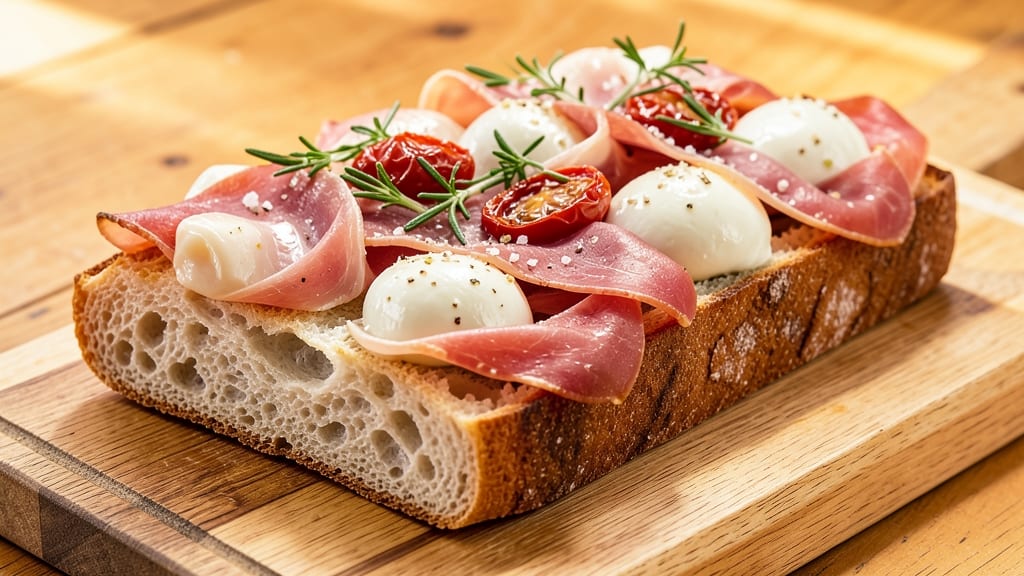
This antipasto bread loaf recipe transforms a simple loaf into a showstopping centerpiece with crispy herb crown and rivers of melted cheese.
The secret lies in baking a sturdy ciabatta base, then layering it with prosciutto, mozzarella, and sun-dried tomatoes before finishing with a golden, herby crust that crackles with every bite.
After years of perfecting the technique, I've developed a method that ensures the cheese melts into gooey rivers while the bread remains perfectly crisp at the edges.
The magic happens in three phases: baking the bread until it's sturdy enough to support all those toppings, assembling the antipasto layers in a way that creates dramatic cheese rivers when sliced, and finishing with a golden herb crown that adds both texture and aroma.
Unlike store-bought versions, this recipe delivers restaurant-quality results with a perfect balance of textures—crispy, creamy, and chewy all in one bite. The ciabatta base absorbs flavors beautifully while providing enough structure to hold everything together.
What you'll end up with is a bread loaf that looks like it belongs on an Italian bistro table, complete with golden crust, melted cheese rivers, and all the classic antipasto flavors in every bite.
The prosciutto adds salty depth, the mozzarella creates those signature cheese rivers, and the sun-dried tomatoes bring concentrated tomato sweetness. This is the kind of dish that makes dinner parties feel special without requiring hours of prep.
The best part? This recipe scales beautifully for gatherings or makes a satisfying single serving. Serve it warm with a spicy aioli drizzle for dipping, or let it cool slightly for clean slicing.
The combination of textures and flavors makes every bite irresistible, proving that homemade antipasto bread can be just as impressive as anything you'd find in Italy.
Ingredients for antipasto bread loaf
Sturdy ciabatta base meets Italian antipasto flavors in this showstopping loaf.
| Ingredient | Amount | Notes |
|---|---|---|
| Ciabatta Bread Dough 🍞 | 1 package | Store-bought or homemade, sturdy texture |
| Prosciutto 🥓 | 6 oz | Thinly sliced, high-quality preferred |
| Fresh Mozzarella 🧀 | 8 oz | Milky, soft variety for melting |
| Sun-Dried Tomatoes 🍅 | ½ cup | Oil-packed, chopped into strips |
| Fresh Rosemary 🌿 | ¼ cup | Chopped, stems removed |
| Fresh Thyme 🌿 | 2 tbsps | Leaves only, finely chopped |
| Extra-Virgin Olive Oil 🫒 | ¼ cup | For brushing and drizzling |
| Garlic Cloves 🧄 | 3 cloves | Minced for herb crown |
| All-Purpose Flour 🌾 | ½ cup | For dusting work surface |
| Sea Salt 🧂 | 1 ½ tsp | Fine grain for seasoning |
| Black Pepper 🌶️ | ½ tsp | Freshly ground for finishing |
| Egg Wash 🥚 | 1 whole | 1 egg beaten with 1 tbsp water |
The ciabatta dough is your foundation—look for a sturdy, artisan-style loaf at Whole Foods or Trader Joe's if making it from scratch feels like too much. For prosciutto, Oscar Mayer or D'Este brands deliver that classic salty depth. Fresh mozzarella is non-negotiable here; the milky, soft variety melts into those signature rivers. If you're using store-bought dough, check the ingredients—some contain milk, which can interfere with the crispy crust. The sun-dried tomatoes? Ocean Spray oil-packed ones are my go-to—they're sweet and concentrated. For the herbs, fresh is always better, but dried thyme at half the amount works in a pinch.
No prosciutto? Thinly sliced salami or pancetta gives you that salty umami kick. Short on fresh mozzarella? Low-moisture shredded mozzarella works, but you'll need to pat it dry first. The sun-dried tomatoes can be sun-dried tomato paste if you're in a hurry—just thin it with a little olive oil. For the herb crown, dried rosemary at one-third the amount is fine, but fresh gives you that aromatic punch. The olive oil matters here—use something fruity and peppery, like California Olive Ranch. If you're making this ahead, assemble the layers but skip the herb crown until just before baking—it's best fresh.
Assembled loaf keeps 2 days in the fridge, wrapped tightly in plastic. The herb crown loses crispness after that, so I always bake it fresh. For make-ahead prep, bake the base without toppings, then store in a cool, dry place for 3 days. When ready to assemble, just add the toppings and bake again for 10 minutes. Leftovers reheat beautifully—wrap in foil and warm in a 350°F oven for 5-7 minutes. The cheese rivers will still be gooey, and the crust will stay crispy if you're not overdoing the reheat time.
Why You'll Love This Recipe
- No-Knead Magic: I swear by this dough—just mix, let it rise, and forget about it. The ciabatta’s airy texture holds up perfectly to the prosciutto’s salty bite without falling apart.
- Salty-Sweet Bite: That first slice? Crispy crust gives way to gooey mozzarella, sun-dried tomatoes packed with oil, and rosemary so fresh it tastes like a Tuscan vacation. Honestly, I’ll take this over a fancy charcuterie board any day.
- Weeknight Hero: Slice it thin for sandwiches, cube it for salads, or serve it warm with marinara—it’s my go-to when I’m too tired to plan dinner. (Yes, even on a Tuesday night.)
- Leftovers? Better: Make a double batch and refrigerate it. The flavors deepen overnight, and those extra slices reheat beautifully in the toaster. My wallet thanks me too—prosciutto stretches further than you’d think.
Step-by-step instructions for antipasto bread loaf
Transform simple ciabatta dough into a showstopping antipasto loaf with golden herb crown and gooey cheese rivers.
Shape the Dough and Prepare the Fillings
On a lightly floured surface dusted with the 0.5 cup all-purpose flour, gently roll out the 1 package ciabatta bread dough into a 12x8-inch rectangle about ½-inch thick. I press down firmly but evenly to maintain a consistent thickness—this prevents uneven baking later.
Create three parallel wells running the length of the dough, about 2 inches apart. In the center well, place 4 oz of the 6 oz prosciutto folded into a tight roll. In the remaining wells, distribute 4 oz fresh mozzarella cut into strips and ¼ cup of the 0.5 cup sun-dried tomatoes. Fold the dough sides inward to encase the fillings completely, sealing tightly.
For the herb crown, mix the 0.25 cup fresh rosemary, 2 tbsps fresh thyme, 3 minced garlic cloves, 1.5 tsp sea salt, and 0.5 tsp black pepper in a small bowl. Brush the dough surface with 2 tbsp of the 0.25 cup extra-virgin olive oil to help the herbs adhere.
Assemble and Proof the Loaf
Place the shaped loaf seam-side down on a parchment-lined baking sheet. Press the herb mixture firmly over the top, creating a thick, even layer. This crown will crisp beautifully during baking—don't be shy with the herbs. Cover loosely with plastic wrap and let proof at room temperature for 1 hour until nearly doubled in size.
While proofing, prepare the remaining fillings: cut the remaining 2 oz prosciutto into thin strips and the remaining 4 oz fresh mozzarella into small cubes. Tuck these into the sides of the loaf at the 45-minute mark of proofing, pressing gently to create visible "rivers" that will melt dramatically during baking.
Bake to Golden Perfection
Preheat oven to 375°F. Brush the loaf generously with the remaining 0.2 tbsp extra-virgin olive oil, then brush with the 1 whole egg wash. Bake for 25-30 minutes until the herb crown turns deep golden brown and the internal temperature reaches 190°F—this ensures the mozzarella melts completely without curdling.
For that signature crisp, increase heat to broil for the last 2-3 minutes, watching closely to prevent burning. The herb crown should be crunchy while the cheese rivers remain molten. If the top browns too quickly, tent with foil for the final minute.
Rest and Serve Warm
Remove from oven and let rest for 10 minutes before slicing. This resting period allows the fillings to set slightly, preventing cheese from oozing out when you cut. The loaf should yield to gentle pressure with a sharp knife, revealing rivers of melted mozzarella and crispy herb crown.
Slice into ½-inch thick portions and serve immediately. The contrast of crispy herb crown, salty prosciutto, and creamy mozzarella creates the perfect antipasto experience. Pair with a simple arugula salad and extra olive oil for dipping.
Pro Tips For Making Antipasto Bread Loaf
- Prep Prosciutto First: Thin the prosciutto to 1/8-inch slices before layering—it cooks faster and stays crisp, not rubbery. I used to skip this and ended up with chewy, sad bits that turned into a soggy mess.
- Salt the Dough Twice: Sprinkle half the salt in the dough initially, then add the rest when shaping the loaf. The second round guarantees flavor all the way through, especially if you’re using low-sodium prosciutto.
- Press Mozzarella Dry: Pat the fresh mozzarella with paper towels to remove excess water before slicing—it prevents the bread from turning gummy. I learned this the hard way when my loaf emerged like a sad, sticky brick.
- Roast Tomatoes First: Toss sun-dried tomatoes with olive oil and roast them at 375°F for 5 minutes before layering. The concentrated oil makes them burst with flavor, and they crisp up beautifully in the loaf. (Yes, even if you’re in a hurry—it’s worth the 5 minutes.)
Pro cooking tips for this recipe
Dough Prep Secrets
For the best texture, use sturdy ciabatta dough that's slightly underproofed—this prevents collapse when adding toppings. If using store-bought, check the ingredients for milk powder, which can make the crust too soft.
I recommend Whole Foods artisan ciabatta or making a quick version with 2 cups bread flour, 1 tsp yeast, and 1 tsp salt mixed with 1 cup warm water. Let it rest 10 minutes after kneading for better elasticity. 🌟
Cheese River Technique
The key to dramatic cheese rivers is arranging mozzarella in visible strips or cubes before baking. Pat fresh mozzarella dry with paper towels first—this prevents excess moisture that can make the crust soggy.
I like to create a "well" in the dough and press the cheese into place, then fold the dough over it. For extra gooeyness, add a thin layer of ricotta under the mozzarella—it melts faster and creates a creamy base. 🧀
Herb Crown Mastery
Don't just sprinkle herbs—press them firmly into the dough surface with your fingers to create a thick, even layer. I mix 2 tbsp chopped rosemary with 1 tbsp olive oil and spread it like icing before adding the remaining herbs.
For extra flavor, add 1 tsp lemon zest to the herb mixture. The crown should be ½-inch thick before baking—this ensures maximum crispiness. Brush with egg wash only after pressing the herbs down. ✨
Proofing Like a Pro
Proofing is where the magic happens—your loaf should nearly double in size but not overproof. Cover loosely with plastic wrap and proof at 75°F for 1 hour (use your oven's light bulb if needed). At the 45-minute mark, add the remaining toppings and press gently to create visible "rivers."
If your kitchen is cold, proof for 15-20 minutes longer—the dough should spring back slowly when pressed. 🌡️
Broiling for Crisp
Broiling in the final minutes is non-negotiable for that signature crispy herb crown. Increase heat to broil for just 2-3 minutes, watching like a hawk to prevent burning. The crown should turn deep golden brown while the cheese inside remains molten.
If it browns too quickly, tent with foil for the last minute. I like to finish with a sprinkle of flaky sea salt right after removing from the oven. 🔥
Resting for Clean Slices
Never skip the 10-minute rest after baking—this lets the fillings set slightly so they don't ooze out when you slice. Use a sharp serrated knife and cut at a 45-degree angle for the most dramatic presentation.
For extra flair, drizzle with olive oil and a pinch of red pepper flakes before serving. The contrast of crispy, creamy, and chewy textures makes every bite unforgettable. 💫
Nutrition facts
Frequently asked questions
Can I use store-bought ciabatta instead of making dough from scratch?
Look for a sturdy, artisan-style ciabatta loaf from stores like Whole Foods or Trader Joe's. Choose one with minimal ingredients—avoid versions with milk powder, which can make the crust too soft to support all the toppings. For best results, use a loaf that's slightly underproofed so it doesn't collapse when adding the fillings.
How do I prevent the mozzarella from making the bread soggy?
Pat the fresh mozzarella thoroughly dry with paper towels before adding it to the dough. For extra insurance, arrange the cheese in visible strips or cubes rather than spreading it evenly. This creates pockets of air that help the bread stay crisp. You can also add a thin layer of ricotta under the mozzarella—it melts faster and creates a creamy base without adding moisture.
What's the best way to make this recipe ahead of time?
Assemble the loaf with all toppings (except the herb crown) and refrigerate for up to 2 days. When ready to bake, add the herb crown and bake as directed. For make-ahead prep, bake the base without toppings, store in a cool place for 3 days, then add fillings and bake again for 10 minutes. The herb crown is best added fresh before the final bake to maintain crispiness.
Can I substitute any of the antipasto ingredients?
Certainly! Swap prosciutto for thinly sliced salami or pancetta for similar salty depth. Use low-moisture shredded mozzarella if fresh isn't available, but pat it dry first. For sun-dried tomatoes, use oil-packed ones or sun-dried tomato paste thinned with olive oil. The herb crown can use dried rosemary at one-third the amount, though fresh gives the best flavor. The key is maintaining that balance of salty, creamy, and herby flavors.
How do I get the perfect crispy herb crown?
Press the herb mixture firmly into the dough surface to create a thick, even layer (about ½-inch thick). Brush with olive oil first to help adhesion, then add the herbs. For extra flavor, mix in 1 tsp lemon zest. Broil for the last 2-3 minutes at high heat to achieve that deep golden brown color while keeping the cheese molten inside. Finish with a sprinkle of flaky sea salt right after removing from the oven.