
Side Dishes
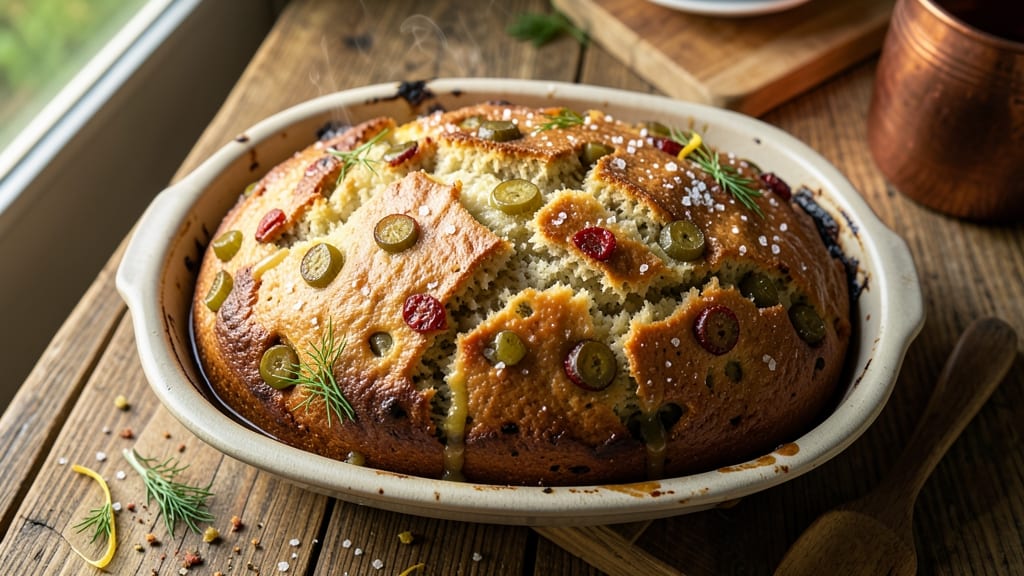
This Amish dill pickle bread recipe transforms a classic loaf into something boldly tangy and unexpectedly delicious. The secret lies in infusing the dough with finely chopped pickles, creating a savory-sweet harmony that pairs perfectly with butter or soup.
I developed this version after years of perfecting Amish-style breads, ensuring every slice delivers that signature crusty exterior and tender crumb. What sets this bread apart is the pickle integration—chopped pickles baked directly into the dough, then finished with a tangy glaze that enhances their zesty flavor.
The dough itself is a simple yeast-based recipe, but the pickle infusion elevates it to a whole new level of complexity. No artificial additives here, just real ingredients and old-world techniques.
By the time it emerges from the oven, you’ll have a loaf with a golden, crackling crust and a moist interior speckled with tiny pickle bits.
The aroma alone is enough to draw everyone to the table, and each bite delivers that perfect balance of tangy, savory, and slightly sweet notes. This is bread that stands out as both comforting and exciting. Perfect for sandwiches, soups, or simply slathered with butter.
Let’s get started on this crusty, tangy masterpiece that’s sure to become a family favorite.
Ingredients for amish dill pickle bread
Four cups flour, a splash of milk, and the magic of chopped pickles create this tangy loaf.
| Ingredient | Amount | Notes |
|---|---|---|
| All-Purpose Flour 🌾 | 4 cups | Sifted for light texture |
| Active Dry Yeast 🍞 | 1 tbsp | Or 2¼ tsp for accuracy |
| Granulated Sugar 🍚 | 1 tbsp | Feeds yeast for rise |
| Salt 🧂 | 1 tsp | Kosher or sea salt |
| Unsalted Butter 🧈 | ½ cup | Softened, not melted |
| Whole Milk 🥛 | 1 cup | Warm for better mixing |
| Dill Pickles 🥒 | 1 cup | Finely chopped, juices included |
| Dill Pickle Juice 💧 | ¼ cup | From jarred pickles |
| Honey 🍯 | 2 tbsp | For glaze sweetness |
| Apple Cider Vinegar 🍶 | 1 tbsp | Enhances tanginess |
| Cornmeal 🌽 | ¼ cup | For dusting baking sheet |
The pickles are the star—look for small, crunchy dill pickles at the grocery store, not the giant ones. Heinz or Vlasic work great, but anything with that bright green color and tangy bite is perfect. Chop them super fine so they distribute evenly in the dough. The pickle juice? Don’t skip it—it’s packed with flavor and helps keep the dough moist. If you’re feeling fancy, grab a jar of Bubbies or Claussen pickles for extra zing. Fresh dill? Toss in a teaspoon if you’ve got it, but it’s not required.
No dill pickles? Substitute with finely chopped green olives—they’ll give a similar briny kick, though not quite the same tang. Short on milk? Warm water with a splash of vinegar works in a pinch, but milk keeps the bread tender. The honey in the glaze can be swapped for maple syrup if you prefer, and if you’re avoiding sugar entirely, use agave nectar or date syrup. The vinegar is key for that authentic tang—don’t use white vinegar unless you’re okay with a sharper flavor. For the dough, if you can’t find active dry yeast, instant yeast works at the same amount.
This dough needs time to rise—plan for at least 1.5 hours in a warm spot. Once baked, the bread stays fresh for 3 days wrapped in a towel, but it’s best within the first day. For extra flavor, brush the warm loaf with a little more pickle juice mixed with melted butter. Freezes beautifully for up to 3 months—just thaw at room temp before slicing. I like to slice it thick for sandwiches, but you can cut it thinner if you prefer toast.
Why You'll Love This Recipe
- No-Knead Magic: I swear by this recipe when I’m too tired to fuss—just mix the dough, let it rise overnight, and bake straight from the fridge. That’s it. The yeast does all the work while I sleep.
- Pickle-Packed Punch: Honestly, the tangy dill pickle juice in the dough? It’s the star. That bright, briny flavor cuts through the buttery richness, giving you a loaf that’s crispy outside, soft inside, and impossible to resist.
- Breakfast to Brunch: This bread is my secret weapon for lazy mornings—toast it with jam, serve it with eggs, or even use slices to make open-faced sandwiches. (Yes, even on a Tuesday night.) The versatility keeps it exciting week after week.
- Budget-Friendly Stretch: Between us, this recipe uses pantry staples—flour, yeast, butter—and a splash of pickle juice you might already have. A single batch feeds my family for days, and the leftovers? Perfect for sandwiches or French toast. Zero waste, all flavor.
Step-by-step instructions for Amish dill pickle bread
Here's how to make this tangy, crusty bread that's perfect for sandwiches or just snacking.
Activate the Yeast and Mix the Dough
In a small bowl, combine the 1 cup warm whole milk, 1 tbsp granulated sugar, and 1 tbsp active dry yeast. Let it sit for 5-10 minutes until it becomes foamy and bubbly. This tells you the yeast is alive and ready to work its magic.
In a large bowl, whisk together the 4 cups all-purpose flour and 1 tsp salt. Add the yeast mixture and mix until combined. Then, cut in the ½ cup softened unsalted butter using a pastry cutter or your fingers until the dough comes together. It'll be sticky, but that's normal—this bread is all about that tangy moisture.
Incorporate the Pickle Flavor
Finely chop the 1 cup dill pickles (including the juices) and stir them into the dough along with the ¼ cup dill pickle juice and 1 tbsp apple cider vinegar. The vinegar enhances the tang, and the pickle juice keeps the dough moist. Mix until everything is evenly distributed—you should see little flecks of green throughout.
Turn the dough out onto a lightly floured surface and knead for 5-7 minutes until smooth and elastic. It won't be as firm as regular bread dough because of the pickles, but that's what gives it that unique texture. If it's too sticky, wet your hands slightly to help handle it.
Let the Dough Rise
Place the dough in a greased bowl, cover it with a damp towel, and let it rise in a warm place for 1-1½ hours, or until it has doubled in size. The warmth helps the yeast work faster, and the towel keeps it from drying out. You'll know it's ready when the dough puffs up and leaves an indent when you press it gently with a finger.
While the dough rises, preheat your oven to 375°F and line a baking sheet with parchment paper. Sprinkle the ¼ cup cornmeal evenly on the sheet—this prevents sticking and adds a nice crunch to the bottom of the bread.
Shape and Bake
Punch down the risen dough to release any air bubbles, then shape it into a loaf on the prepared baking sheet. Brush the top with a little water and sprinkle with a pinch of salt for extra flavor. Bake for 30-35 minutes until the bread is golden brown and sounds hollow when tapped on the bottom.
For the finishing touch, brush the warm bread with the 2 tbsp honey while it's still in the oven. This adds a subtle sweetness that balances the tangy pickle flavor. Let it cool on a wire rack for 10 minutes before slicing—this ensures it stays moist inside.
Serve and Enjoy
Slice the bread while it's still slightly warm for the best texture. The crust should be crispy, and the inside should be soft with pockets of tangy pickle flavor. Serve it fresh with butter or jam, or use it for sandwiches—it's perfect for holding up to fillings without getting soggy.
This bread keeps well for 3 days at room temperature or can be frozen for up to 3 months. The flavor actually improves as it sits, so make a double batch if you can—it disappears fast!
Pro Tips For Making Amish Dill Pickle Bread
- Weigh Your Butter: I learned this the hard way—measuring butter by volume leads to dense, greasy bread. Use a kitchen scale for the ½ cup (1 stick) of unsalted butter; 113 grams is the magic number. The difference in texture is night and day, especially when you’re mixing in that tangy pickle juice later.
- Proof the Yeast Slowly: This isn’t a race. After dissolving the yeast in warm water (110°F, not scalding), let it sit for 10 minutes before adding flour. If it’s bubbly but sluggish, give it another 5 minutes—underproofed yeast means a flat, sad loaf. (Yes, even if you’re impatient like me.)
- Skip the Overmixing: Once you add the flour, mix just until combined—about 30 seconds. Overworking the dough develops gluten, and you’ll end up with a chewy, dense loaf instead of the light, airy texture this bread needs. Feel for resistance, then stop.
- Use Cold Pickle Juice: Save a splash of the actual pickle juice (about ¼ cup) for the dough, but chill it first. Cold liquid slows fermentation, giving you better control over the rise time. I was skeptical until I tried it—the flavor stays bright, and the bread doesn’t collapse mid-bake.
Make-ahead tips for this amish dill pickle bread
Dough Prep Ahead
Mix your dough the night before and store it in an airtight container in the fridge. The cold slows fermentation, giving you more control over the rise. When ready to bake, let it sit at room temperature for 1 hour before shaping—this prevents over-proofing.
I always prep my dough in the evening so it’s ready to bake in the morning. 🌙
Pickle Prep Shortcut
Chop your pickles ahead of time and store them in the fridge with their juice in a small container. This saves 10 minutes of prep day-of and keeps the flavor bright.
If you’re really busy, use pre-sliced pickles from the deli section—they’re just as effective. Just drain them well before mixing into the dough. 🥒
Freezer-Friendly Loaves
Shape your bread, wrap it tightly in plastic wrap, then place it in a freezer bag with all the air squeezed out. Label with the date—it stays fresh for 3 months.
To bake from frozen, add 5-10 minutes to your baking time and cover loosely with foil for the first half. The crust will still be golden and crispy. ❄️
Glaze Prep Trick
Make your honey-vinegar glaze ahead and store it in a small jar in the fridge. Just shake it before brushing on warm bread. For extra tang, add 1 tsp pickle juice to the glaze—it intensifies the flavor.
I keep a jar of this glaze ready for any bread I bake, especially when I’m short on time. 🍯
Batch Baking Tips
Double the recipe and bake two loaves at once. Use two baking sheets and rotate them halfway through for even browning. The second loaf will be ready 5 minutes after the first—perfect for feeding a crowd. Store extras wrapped in a clean kitchen towel to keep them soft. 🍞
Reviving Stale Bread
If your bread dries out, brush it with pickle juice mixed with melted butter and warm it in a 350°F oven for 5-7 minutes. The moisture revives the crumb, and the tangy flavor makes it taste fresh again. This trick works wonders for leftover slices too. 🔥
Nutrition facts
Frequently asked questions
Why does this bread have such a strong pickle flavor?
The tangy kick comes from two key ingredients: finely chopped pickles baked directly into the dough and the pickle juice mixed in for moisture. The apple cider vinegar also enhances the zesty profile, creating that signature Amish-style tang without overpowering the bread. Think of it as a savory-sweet balance!
Can I make this bread without a stand mixer?
This dough is designed to be mixed by hand. After combining the wet and dry ingredients, simply use a wooden spoon or your fingers to incorporate the ½ cup softened butter until the dough comes together. The pickles make it slightly sticky, so wet your hands if needed. A 5-7 minute knead on a floured surface will do the trick.
What's the best way to store leftovers?
Wrap the cooled loaf tightly in a clean kitchen towel or beeswax wrap to maintain moisture. It stays fresh for 3 days at room temperature. For longer storage, freeze sliced bread in a freezer bag for up to 3 months. To revive stale slices, warm them in a 350°F oven for 5 minutes with a brush of pickle juice butter.
Is this bread gluten-free?
Unfortunately, no—the recipe uses all-purpose flour for the signature texture. For a gluten-free version, substitute with a 1:1 gluten-free flour blend (like Bob's Red Mill) and add ½ tsp xanthan gum to mimic the structure. Note the crumb will be denser, and the crust may not be as crispy. The pickle flavor will still shine through!
How can I make this bread extra crispy?
For a crackling crust, bake the shaped loaf on a preheated baking stone or steel instead of a sheet pan. Brush the dough with an egg wash before baking, and sprinkle with coarse sea salt for texture. Bake 5 minutes longer at 375°F until deep golden brown. Let it cool completely before slicing—this prevents the crust from softening.