
Side Dishes
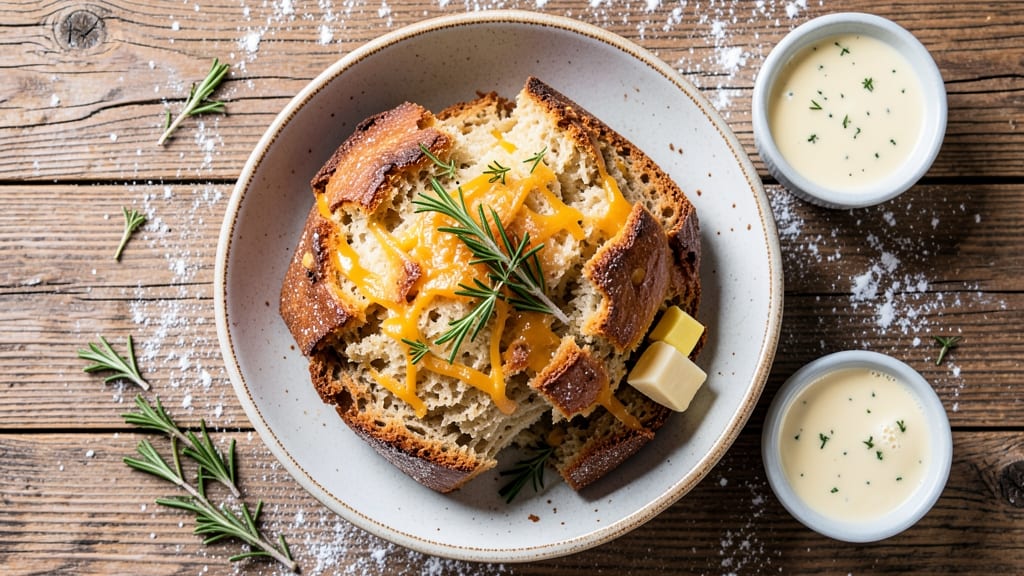
This American soda bread recipe delivers a rustic, buttermilk-infused crust that requires no kneading and bakes up perfectly tender inside. The secret lies in the traditional combination of baking soda and buttermilk, which creates that signature tangy flavor and airy texture without yeast.
I've perfected this version over years of testing, ensuring it's foolproof for both beginners and experienced bakers alike.
The beauty of soda bread is its simplicity—just five ingredients come together in minutes, yet the results are impressive. The no-knead method means no heavy-duty mixing or waiting for dough to rise, making it ideal for weeknight dinners or holiday gatherings.
The crust develops a golden, slightly crispy exterior while staying soft and moist inside, with just the right amount of tang from the buttermilk.
What makes this recipe truly special is its versatility. You can enjoy it plain as a side, or add-ins like cheese, herbs, or even sweet variations with raisins or honey.
The bread pairs perfectly with soups, stews, or as a hearty accompaniment to any meal. Once you try this version, you'll never go back to store-bought again.
Ready in just 30 minutes, this soda bread is the perfect way to elevate any table with minimal effort. The crust stays fresh for days when stored properly, making it a great make-ahead option for busy schedules.
Let's get started on creating your own batch of this classic American staple.
Ingredients for american soda bread
Five simple ingredients for rustic bread that tastes homemade. No yeast, no kneading, just pure buttermilk magic.
| Ingredient | Amount | Notes |
|---|---|---|
| All-Purpose Flour 🌾 | 4 cups | Unbleached preferred for best texture |
| Buttermilk 🥛 | 1 ½ cups | Full-fat for best flavor |
| Baking Soda 🧂 | 1 tbsp | Freshly opened for potency |
| Salt 🧂 | 1 tsp | Diamond Crystal preferred |
| Unsalted Butter 🧈 | ½ cup | Cold, cubed for easy mixing |
| Shredded Sharp Cheddar Cheese 🧀 | 1 cup | Optional add-in for savory version |
| Fresh Rosemary 🌿 | 2 tbsp | Chopped finely for aroma |
| Honey 🍯 | 2 tbsp | For sweet variation |
The flour is your foundation—King Arthur or Bob's Red Mill are my go-tos for that perfect crumb. Buttermilk needs to be full-fat for that signature tang (low-fat just won't cut it). Grab Land O'Lakes or Organic Valley at any grocery store—they keep well in the fridge for up to 2 weeks. Baking soda loses potency over time, so check the expiration date. If it's been sitting in your pantry for months, grab a fresh box. The butter should be cold—take it out of the fridge 10 minutes before mixing.
No buttermilk? Mix 1 tbsp lemon juice or vinegar into 1 cup milk and let sit for 5 minutes. Want extra flavor? Swap the rosemary for thyme or savory—both work beautifully. The honey can be subbed with maple syrup if you prefer. Cheese optional but recommended—sharp cheddar melts perfectly. For a sweet version, add raisins or chocolate chips instead. The key is keeping everything cold until the last minute.
Shape the dough gently—don't overwork it. The bread keeps best in a cotton bread bag at room temp for 2-3 days. For longer storage, slice and freeze portions—3 months in an airtight bag. Toasting revives stale slices perfectly. I always make a double batch—one for the table, one for freezing. The crust reheats beautifully in a 350°F oven for 5 minutes if you want it warm.
Why You'll Love This Recipe
- No-Fuss Mixing: I swear by this dough—just flour, buttermilk, and a pinch of baking soda. Honestly, the only "work" is stirring until it comes together, and even then, it’s more like folding than anything fancy.
- Tangy Butter Magic: That buttermilk cut with a cube of cold butter? The crust gets this golden crackle, and every bite has that rich, slightly tangy crunch. It’s the kind of bread that makes you reach for seconds without even thinking.
- Weeknight Hero: I make a loaf on Sundays, slice it up, and it lasts me all week for toast, sandwiches, or even breakfast. No need for fancy bread—this does it all, and it’s cheaper than buying a bag at the store.
- Pantry Staple Power: Between us, this recipe uses things you already have. Flour, buttermilk, butter—no weird ingredients, no last-minute grocery runs. It’s the kind of bread that proves you don’t need a lot to make something that feels like a hug.
Instructions for buttermilk-infused soda bread
This no-knead method delivers a tender crumb and golden crust every time—no fancy skills required.
Mix the Wet and Dry Ingredients
In a large bowl, whisk together the 1.5 cups buttermilk, 2 tablespoons honey, and 2 tablespoons chopped fresh rosemary until fully combined. The rosemary should be finely minced so it distributes evenly throughout the dough. Set this mixture aside while you prepare the dry ingredients.
In a separate bowl, combine the 4 cups all-purpose flour, 1 tablespoon baking soda, and 1 teaspoon salt. Use a whisk to break up any lumps in the flour—this ensures your bread rises evenly. If you're using the optional 1 cup shredded sharp cheddar cheese, add it to the dry ingredients now and stir to coat the cheese pieces lightly with flour. This prevents clumping when the cheese melts later.
Cut in the Cold Butter
Add the ½ cup cold, cubed unsalted butter to the dry ingredients. Using a pastry cutter or your fingers, work the butter into the flour mixture until it resembles coarse crumbs with pea-sized butter pieces scattered throughout. The butter should stay cold and firm—this creates flaky layers in the finished bread. If the mixture feels too sticky, chill it for 10 minutes before proceeding.
Make a well in the center of the bowl and pour in the buttermilk mixture. Gently stir with a wooden spoon until just combined—you want to avoid overmixing. The dough will be shaggy and sticky, but that’s exactly what you want for soda bread. Stop mixing as soon as the flour is moistened; overworking develops gluten and makes the bread dense.
Shape and Score the Loaf
Turn the dough onto a lightly floured surface and shape it into a round loaf about 1 inch thick. For a rustic look, gently press your fingers into the top to create a slight dimple in the center. Place the dough on a parchment-lined baking sheet and let it rest for 10 minutes while you preheat your oven to 375°F. This short rest helps the dough relax slightly before baking.
Use a sharp knife to score the top of the loaf in a crosshatch pattern, cutting about ¼ inch deep. This isn’t just for looks—it allows the bread to expand as it bakes, preventing cracks and giving you that classic soda bread texture. The crosshatch also creates those beautiful, crispy crust edges.
Bake Until Golden and Hollow-Sounding
Bake the loaf for 45-50 minutes until the top is deep golden brown and the internal temperature reaches 200°F when measured with an instant-read thermometer. You’ll know it’s done when the bread sounds hollow when tapped on the bottom—this indicates the crumb has fully developed. If the top browns too quickly, tent the loaf loosely with aluminum foil after 30 minutes to prevent over-browning.
For extra crispiness, transfer the loaf to a wire rack and let it cool for at least 15 minutes before slicing. The crust will firm up as it cools, making it easier to slice cleanly. The interior should be tender with a slight chew, and the aroma should be rich with buttermilk and rosemary. Serve warm with butter or jam for that classic American soda bread experience.
Pro Tips For Making American Soda Bread
- Mix Butter In Last: I learned this the hard way—adding cold butter cubes to the flour first creates pockets that never melt right, leaving you with a dense loaf. Instead, cut the butter into small chunks (about 1/2-inch pieces), then fold them into the wet buttermilk mixture just before shaping. The heat of the oven will work its magic, giving you that classic tender crumb.
- Measure Buttermilk Precisely: Buttermilk’s acidity is the bread’s secret weapon, but too much or too little throws everything off. Use a scale or a proper measuring cup—not the "eyeball it" method. If your buttermilk looks thin (like milk with a hint of tang), add 1 teaspoon of lemon juice per cup to mimic the right balance. Trust me, your bread’s rise depends on it.
- Skip Overmixing the Dough: The moment you start folding that dough, stop when it just comes together. Overworking it develops gluten, and soda bread turns into a brick. Wet your hands slightly to handle the sticky dough without squeezing it to death—gentle turns and a few quick presses are all it takes. Yes, it’ll look shaggy, but that’s how you get the light, airy texture.
- Bake on High Heat First: Crank your oven to 425°F (220°C) for the first 10 minutes—this isn’t the time to be shy. A hot start helps the baking soda activate fast, giving you that signature crust before the center sets. After that, drop it to 375°F (190°C) to let the middle cook through evenly. I know, I know—it’s tempting to play it safe, but this is the thing that matters most for that golden, crisp exterior.
Creative variations of this american soda bread
Classic Savory Cheese
This version takes the original recipe to hearty new heights by adding 1 cup shredded sharp cheddar to the dry ingredients. The cheese melts beautifully during baking, creating pockets of gooey goodness that contrast perfectly with the tangy buttermilk.
I like to use Cabot Clothbound Cheddar for its bold flavor—it holds up well to the baking process without turning rubbery. 🧀
For an extra boost, sprinkle ½ teaspoon smoked paprika into the dry ingredients before mixing. This adds a subtle smokiness that pairs wonderfully with the cheddar. Serve this version with chili or a hearty beef stew for maximum comfort.
Sweet Honey-Raisin
Transform your soda bread into a dessert-worthy treat by swapping the rosemary for 1 teaspoon vanilla extract and adding ½ cup raisins to the wet ingredients. The honey already in the recipe caramelizes beautifully during baking, creating a sticky, golden crust.
I recommend using golden raisins for a softer texture that contrasts with the bread's chew.
For extra richness, fold in 2 tablespoons chopped walnuts with the raisins. The nuts add crunch and balance the sweetness. This version is perfect with a dollop of whipped cream or as a side to vanilla ice cream. 🍯
Herb-Infused Variations
Swap out the rosemary for different fresh herbs to create unique flavor profiles. Thyme adds an earthy depth that works beautifully with the buttermilk, while savory brings a slightly peppery note.
For a Mediterranean twist, add 1 tablespoon chopped fresh oregano along with ½ teaspoon dried basil to the wet ingredients.
If you love garlic, finely mince 2 garlic cloves and mix them into the wet ingredients. The garlic infuses the dough without overpowering it, creating a savory loaf that pairs perfectly with soups or roasted vegetables. 🌿
Gluten-Free Adaptation
For a gluten-free version, replace the all-purpose flour with a 1:1 gluten-free flour blend like Bob's Red Mill 1-to-1 Gluten-Free Baking Flour. You may need to add ½ teaspoon xanthan gum to help bind the dough.
Keep the buttermilk and baking soda amounts the same, but reduce the salt to ½ teaspoon—gluten-free breads can sometimes taste saltier.
Shape the dough gently into a round loaf and bake at 375°F for 50-55 minutes, tenting with foil if the top browns too quickly. The texture will be slightly denser than traditional soda bread but still tender. This version works well with any of the add-ins mentioned above. 💪
Whole Wheat Boost
For a nuttier, more robust flavor, replace 1 cup of the all-purpose flour with whole wheat flour. The whole wheat adds fiber and a slightly denser texture, but the bread remains tender. I recommend King Arthur Whole Wheat Flour for its mild flavor and consistent results.
To balance the denser texture, increase the butter to ⅔ cup and add 1 extra tablespoon of honey to the wet ingredients. This version pairs exceptionally well with spiced apples or as a side to grilled meats. 🌾
Nutrition facts
Frequently asked questions
Why does American soda bread need buttermilk?
The buttermilk provides both moisture and acidity, which activates the baking soda for lift. The tangy flavor also creates that signature taste you love in traditional soda bread.
Can I make soda bread without buttermilk?
Yes! Mix 1 tablespoon lemon juice or vinegar with 1 cup milk and let sit for 5 minutes to make a substitute. The acidity is what matters most for activating the baking soda. For best flavor, use full-fat milk.
What's the best way to store leftover soda bread?
Keep it wrapped in a cotton bread bag at room temperature for 2-3 days. For longer storage, slice and freeze portions in an airtight bag for up to 3 months. Toasting revives stale slices perfectly!
Why did my soda bread turn out dense?
Overmixing develops too much gluten, making the bread dense. Mix just until combined—stop when the flour is moistened. Also ensure your baking soda is fresh (old baking soda loses potency). Cold butter is key too!
Can I add other ingredients besides cheese or rosemary?
Try savory for peppery notes, golden raisins for sweetness, or even chopped walnuts. Just don't exceed 1 cup of add-ins total to maintain the bread's texture.