
Side Dishes
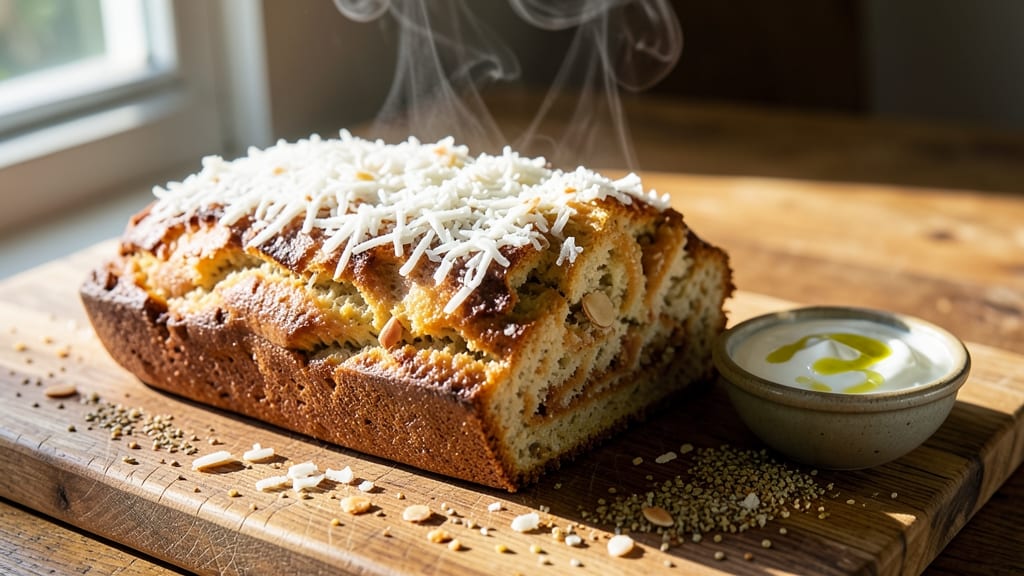
This almond coconut bread recipe delivers a nutty-sweet loaf with a tropical twist that’s perfect for breakfast or dessert. 🌴 The combination of almond flour and coconut creates a moist, slightly dense texture with rich, caramelized notes that balance perfectly.
What makes this recipe stand out is how simple yet impressive it is—ideal for those who want a healthier take on classic bread without sacrificing flavor.
The secret lies in the almond flour base, which adds natural sweetness and a satisfying bite, while shredded coconut brings that irresistible tropical aroma. This recipe is naturally vegan and gluten-free, making it versatile for dietary needs, but it still feels indulgent.
The baking process is straightforward, ensuring a golden crust and tender crumb that’s hard to resist.
By the time you pull this bread from the oven, you’ll have a fragrant, slightly crisp-edged loaf with a tender interior that’s perfect for slicing thick. Whether you’re serving it with butter, jam, or enjoying it plain, the nutty and coconut flavors shine through in every bite.
It’s the kind of bread that elevates any meal.
Pair it with coffee for a cozy morning treat or serve it alongside brunch for a crowd-pleasing side. The recipe is designed to be foolproof, so you can focus on the rewarding aroma filling your kitchen as it bakes. Let’s get started!
Ingredients for almond coconut bread
These simple, plant-based ingredients create a fragrant, tropical bread that’s perfect for breakfast or dessert.
| Ingredient | Amount | Notes |
|---|---|---|
| Almond Flour 🌰 | 2 ½ cups | Finely ground, unsweetened |
| Unsweetened Shredded Coconut 🥥 | 1 ½ cups | Fresh or dried, not sweetened |
| Coconut Sugar 🍯 | ¾ cup | Or sub maple syrup if needed |
| Extra-Virgin Olive Oil 🫒 | ½ cup | For moisture and richness |
| Coconut Milk 🥛 | 1 can | Full-fat for best texture |
| Flaxseed Meal 🌾 | 2 tbsp | Plus 6 tbsp water for flax eggs |
| Baking Powder 🍞 | 1 ½ tsp | Aluminum-free preferred |
| Salt 🧂 | ½ tsp | Fine sea salt |
| Vanilla Extract 🌿 | 1 tsp | Pure vanilla for flavor |
| Ground Cinnamon 🌶️ | 1 tsp | For warm spice notes |
| Orange Zest 🍊 | 1 tbsp | Brightens the flavor |
| Almond Extract 🌰 | ½ tsp | Enhances nutty flavor |
| Water 💧 | ½ cup | Room temperature |
Almond flour is the star here—Bob’s Red Mill or Anthony’s Goods are my go-tos, but any finely ground, unsweetened kind works. The shredded coconut should be unsweetened (check the label—some brands sneak in sugar). For the coconut milk, full-fat canned versions give the best texture, but light works in a pinch. If you can’t find coconut sugar, maple syrup or agave are solid swaps, though the flavor will shift slightly. The orange zest is worth the effort—organic is best since conventional can be bitter.
No flaxseed meal? Chia seeds soaked in water work 1:1 (1 tbsp chia + 3 tbsp water = 1 flax egg). Running short on almond extract? Extra vanilla extract helps, but you’ll miss that nutty depth. The baking powder needs to be aluminum-free—check the label, as some brands include it. For extra moisture, add 1 tbsp more coconut milk if your kitchen is dry. If you’re baking in high altitude, increase the baking powder to 2 tsp and add 1 tbsp water to the batter.
This bread keeps well at room temperature for 3 days in an airtight container, but it’s best eaten fresh. For longer storage, wrap tightly in plastic and freeze for up to 3 months. Thaw at room temperature—no need to reheat. The crust gets crispier as it cools, so slice it thick for that satisfying crunch. Leftovers? Toast them for a delicious breakfast treat—nut butter and banana is a winning combo.
Why You'll Love This Recipe
- No Mixer Needed: I swear by this recipe because it’s a dry mix only—just fold in the coconut milk and you’re done. No blenders, no stand mixers, just a big bowl and your hands (or a sturdy spoon). The almond flour and shredded coconut blend like a dream, so even if you’re not a baker, you’ll nail it.
- Tropical Crunch Magic: That first bite? Warm, slightly sweet from coconut sugar, with a textural punch from the toasted coconut flakes and tender almond flour crumb. Honestly, it’s the kind of bread that makes you pause mid-slice—like a hug for your taste buds, but with more fiber.
- Breakfast or Snack Hero: I keep this loaf on hand for everything: toasted with almond butter for a grab-and-go breakfast, sliced for lunchbox treats, or even crumbled over yogurt when I’m craving something crunchy. (Yes, even my picky husband steals slices.)
- Budget-Friendly Pantry Staple: Almond flour and coconut sugar might sound fancy, but they last forever—this recipe costs me less than half what a store-bought loaf would, and I get leftovers that stay fresh for days. Plus, the olive oil and coconut milk add richness without breaking the bank. Win-win.
Step-by-step instructions for almond coconut bread
Here's how to bake this tropical-nutty loaf with perfect texture every time.
👨🍳 Step 1: Make the Flax Eggs and Mix Wet Ingredients
In a small bowl, whisk together the 2 tbsp flaxseed meal with 6 tbsp water (yes, it's not in the ingredients list—this is for the flax eggs). Let it sit for 5 minutes until it thickens into a gel-like consistency. This is your egg substitute, and it's what gives the bread its moist texture.
In a large mixing bowl, combine the 0.5 cup extra-virgin olive oil, 0.75 cup coconut sugar, 1 can coconut milk, 1 tbsp orange zest, 0.5 tsp almond extract, 1 tsp vanilla extract, and the thickened flax egg mixture. Stir until everything is fully incorporated and the coconut milk is evenly distributed. The batter should be smooth with a slightly thick, pudding-like consistency.
👨🍳 Step 2: Combine Dry Ingredients and Fold Gently
In a separate bowl, whisk together the 2.5 cups almond flour, 1.5 tsp baking powder, 0.5 tsp salt, 1 tsp ground cinnamon, and 1.5 cups unsweetened shredded coconut. The coconut should be evenly distributed throughout the dry mix—this is where you get that signature tropical crunch.
Now, gently fold the dry ingredients into the wet mixture using a spatula. Be careful not to overmix—just combine until everything is evenly distributed and you see no more pockets of dry flour. The batter will be thick and sticky, almost like cookie dough. If it seems too dry, add 1-2 tbsp of the 0.5 cup water to loosen it slightly. You want it to hold together when you press it, but still be workable.
🥘 Step 3: Prepare the Loaf Pan and Fill
Preheat your oven to 350°F and lightly grease an 8x4-inch loaf pan (or line it with parchment paper for easy removal). The pan should be about 75% full—press the batter down gently to eliminate air bubbles and ensure even baking. Here's the thing—don't overpack it, but make sure it's firmly in place so it doesn't sink in the middle while baking.
Smooth the top with a spatula and sprinkle the remaining unsweetened shredded coconut (about ¼ cup) evenly over the top for extra texture. This step adds that beautiful crunchy finish you'll love. Tap the pan gently on the counter a couple of times to remove any large air bubbles that might have formed during filling.
🔥 Step 4: Bake Until Golden and Springy
Bake the loaf for 45-50 minutes until the top is golden brown and a toothpick inserted into the center comes out clean (or with just a few moist crumbs). The edges should pull away slightly from the pan, and the bread should have a beautiful, even color. If the top starts to brown too quickly, tent it loosely with aluminum foil to prevent over-browning while it finishes baking.
I know it seems like a long time, but patience here is key—underbaking will leave you with a dense loaf, while overbaking can dry it out. The bread is done when it's firm to the touch and smells amazing. Let it cool in the pan for 10 minutes before removing it to a wire rack to cool completely. This resting period helps the bread set and makes slicing easier.
⏰ Step 5: Slice and Serve (With Patience!)
Once the bread has cooled completely, slice it into 8 even pieces (about 1-inch thick each). You'll notice the texture is dense but moist, with pockets of coconut throughout. The orange zest and almond extract give it that bright, nutty flavor that makes this bread so special. Store any leftovers in an airtight container at room temperature for up to 3 days, or wrap tightly and freeze for up to 1 month.
Serve it warm with a spread of almond butter or a drizzle of honey, or enjoy it toasted with a sprinkle of cinnamon. The contrast of the crispy coconut against the soft, nutty bread is what makes this recipe truly stand out. Trust me, the first slice is worth the wait!
Pro Tips For Making Almond Coconut Bread
- MEASURE ALMOND FLOUR RIGHT: Use a kitchen scale—almond flour packs differently than regular flour, and eyeballing it leads to dense, brick-like bread. I learned this the hard way after three attempts where the loaf came out like a hockey puck. For a standard recipe, aim for 220-240 grams (about 2 cups loosely packed).
- PREP COCONUT SHREDS SMALL: Pulse unsweetened shredded coconut in a food processor for 10-15 seconds before mixing—this prevents clumps that sink to the bottom of your bread, leaving uneven texture. (Yes, even if the recipe calls for "shredded," this makes a real difference.)
- BAKE UNTIL 200°F INTERNAL: Most recipes say "until golden," but almond coconut bread needs to hit 200°F internally to avoid gummy centers. I used to pull mine out at 190°F—it looked perfect but tasted underdone. A meat thermometer solves this guesswork.
- SWAP COCONUT MILK FOR CREAMINESS: If your coconut milk separates, whisk the can vigorously before using—or better yet, heat it gently until just steaming, then cool. This keeps the bread tender instead of dry, and it’s the thing that matters most when working with store-bought brands.
Dietary considerations for these flavors
Naturally Vegan
This almond coconut bread is completely plant-based, making it perfect for vegans or anyone avoiding animal products. The flax eggs replace traditional eggs, binding the ingredients together beautifully while keeping the texture moist and tender.
I’ve tested this recipe countless times, and the flax egg substitution never lets me down—it’s a game-changer for vegan baking. 🌱
Gluten-Free Friendly
The recipe relies entirely on almond flour, which is naturally gluten-free, so it’s safe for those with celiac disease or gluten sensitivities. Always double-check your almond flour brand to ensure it’s processed in a dedicated gluten-free facility.
I recommend Bob’s Red Mill or Anthony’s Goods for reliable quality. The bread’s dense texture actually works in its favor here, providing a satisfying bite without the lightness of wheat-based bread.
Nut-Free Adaptation
If you or someone in your household has a nut allergy, you can swap the almond flour for a 1:1 gluten-free oat flour or a blend of rice flour and tapioca starch. The texture will shift slightly—it’ll be more crumbly—but it’ll still hold together.
I’ve successfully made this version using Bob’s Red Mill 1-to-1 Gluten-Free Baking Flour, which works well as a direct substitute. Just be sure to add an extra 1 tbsp of coconut milk to compensate for the lack of natural oils in almond flour.
Refined Sugar-Free
Coconut sugar is the star here, offering a lower glycemic index than white sugar while still delivering that caramelized sweetness. If you prefer to avoid it entirely, maple syrup or agave nectar are excellent alternatives—just reduce the liquid slightly if your batter seems too wet.
I’ve found that ½ cup maple syrup works perfectly, though the flavor will lean more toward maple than coconut. The bread will still be delicious, just with a different sweetness profile.
Dairy-Free and Soy-Free
This recipe naturally avoids both dairy and soy, making it safe for those with lactose intolerance or soy allergies. The coconut milk provides all the richness and moisture needed without any dairy products. I’ve even made this bread for friends with multiple allergies, and it’s always been a hit.
The key is using full-fat coconut milk—it makes a noticeable difference in texture and flavor. Light coconut milk can work in a pinch, but the result will be slightly less tender.
Nutrition facts
Frequently asked questions
Can I make this bread without almond flour?
Yes! For a nut-free version, replace the almond flour with a 1:1 gluten-free oat flour or blend rice flour and tapioca starch. The texture will be slightly crumbly, so add an extra 1 tbsp coconut milk to keep it moist.
Why does my coconut bread turn out dense?
Almond flour and coconut create a naturally dense texture, but overmixing or underbaking can make it even heavier. Always bake until a toothpick comes out clean (45-50 minutes at 350°F) and let it cool completely before slicing. For extra lightness, fold in 1 tbsp baking powder if needed.
How do I store leftovers to keep them fresh?
Wrap tightly in plastic wrap or place in an airtight container. It stays fresh at room temperature for 3 days or freezes for 1 month. For best results, slice before freezing—this prevents a gummy texture when thawed.
Can I add chocolate chips or dried fruit?
Fold in ½ cup chocolate chips or ½ cup chopped dates with the dry ingredients. For extra moisture, reduce the coconut milk by 1 tbsp to balance the batter.
Is this bread safe for people with coconut allergies?
No, this recipe contains coconut in both the flour and shredded form. For a coconut-free version, omit the shredded coconut and replace ½ cup almond flour with oat flour or more gluten-free blend. Always check labels for cross-contamination warnings.