
Side Dishes
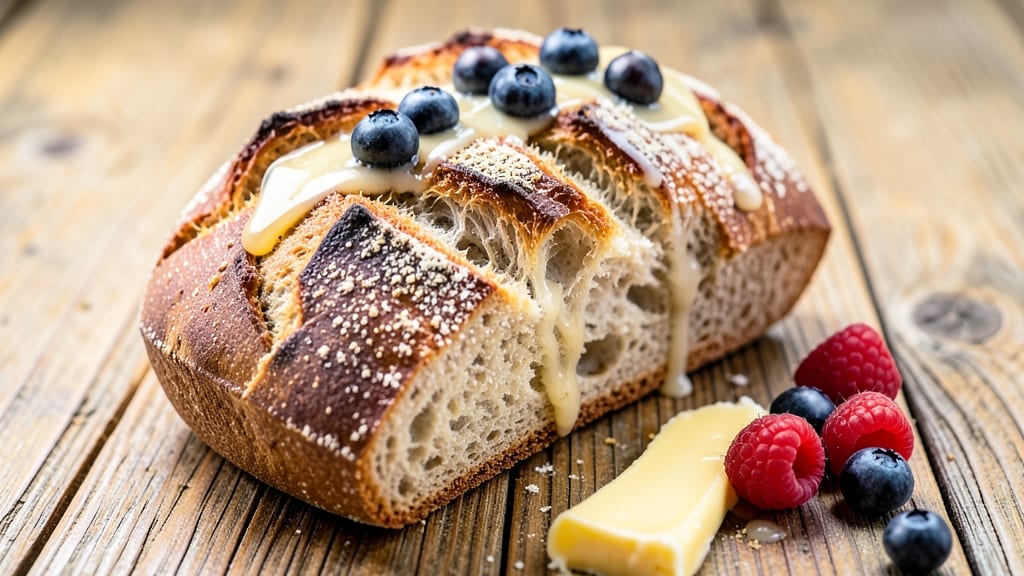
This Alaskan sourdough bread recipe brings the rugged beauty of the Last Frontier to your kitchen—where wild berries swirl through tangy crust and hearty dough rises against the cold. 🌲 The secret lies in adapting traditional sourdough techniques to Alaska’s unique climate, using local ingredients like cloudberries or lingonberries for that signature Alaskan twist.
Unlike standard sourdough, this version accounts for slower fermentation in cooler temperatures, ensuring a perfectly crusty exterior and airy interior even when your kitchen isn’t as warm as a Juneau summer.
The process starts with a robust sourdough starter, fed and nurtured to thrive in colder conditions—think of it as training your dough to handle Alaska’s chill. From there, the dough incorporates wild berries and a touch of rye flour for depth, then ferments longer to develop that signature tang.
The Dutch oven method creates that coveted crispy crust, while strategic scoring ensures even baking. This isn’t just bread; it’s a labor of love that tastes like the Alaskan wilderness meets your kitchen table.
What you’ll end up with is a loaf that’s crusty, tangy, and studded with bursts of wild berry sweetness—perfect for toast, sandwiches, or simply breaking into warm slices with butter. The berries stay vibrant and juicy, while the crust holds up to Alaskan winds (or your hunger).
Whether you’re baking for a family gathering or treating yourself to homemade bread, this recipe delivers restaurant-quality results with a touch of frontier spirit.
Pro tip: For high-altitude or particularly cold kitchens, extend fermentation times slightly and preheat your Dutch oven for an extra 10 minutes. Store the bread in a cool, dark place for up to 5 days, or freeze for longer shelf life. Ready to master this Alaskan classic? Let’s get started.
Ingredients for alaskan sourdough bread
Four loaves of Alaskan wildness—tangy, berry-swirled, and built to handle your cold kitchen.
| Ingredient | Amount | Notes |
|---|---|---|
| Active Sourdough Starter 🍞 | 1 cup | Fed and bubbly (100% hydration) |
| All-Purpose Flour 🌾 | 3 ½ cups | Plus 1 tbsp for dusting |
| Rye Flour 🌾 | ½ cup | For tangy depth (dark rye preferred) |
| Wild Blueberries 🫐 | 1 cup | Fresh or frozen (lingonberries work too) |
| Granulated Sugar 🍚 | ¼ cup | Balances berry tartness |
| Unsalted Butter 🧈 | ¼ cup | Cold, cubed (European-style preferred) |
| Instant Yeast 🍞 | ¼ tsp | For extra rise in cool climates |
| Salt 🧂 | 1 ½ tsp | Diamond Crystal preferred |
| Whole Milk 🥛 | ½ cup | Warmed to room temperature |
| Honey 🍯 | 1 tbsp | Local Alaskan honey if possible |
| Cornmeal 🌽 | ¼ cup | For dusting Dutch oven |
The sourdough starter is your secret weapon here. Feed it daily for 5 days before baking to build resilience for Alaska's chill—think of it as winterizing your dough. For the berries, wild blueberries or lingonberries are ideal (frozen works, just don't thaw them), but any tart berry will do. The rye flour adds that signature Alaskan depth—dark rye from a bulk bin has the most flavor. If you're in a pinch, sub with whole wheat, but the flavor won't be quite the same. For the butter, European-style brands like Plugrá or Kerrygold melt beautifully and add richness that regular butter can't match.
No wild berries? Cranberries or tart cherries work in a pinch, but they'll be less vibrant. Short on rye flour? Substitute with extra whole wheat, but reduce by 2 tbsp to keep the dough from getting too dense. The honey can be swapped for maple syrup if you're avoiding it, but it'll change the flavor profile slightly. For the milk, any whole milk works, but avoid skim—you need that fat for a tender crumb. If you're baking at high altitude, increase the flour by 2 tbsp to compensate for the thinner air. And trust me on the extra yeast—it helps the dough rise properly in cooler kitchens.
This dough is a beast—it needs time. Ferment overnight in the fridge for the best flavor, then let it come to room temp before shaping. The bread keeps best in a cool, dark place for 5 days, but if you're not going to eat it that fast, freeze it for up to 3 months. To reheat, wrap in foil and warm in a 350°F oven for 10 minutes. The crust gets crunchier as it sits, so slice it fresh if you're serving it to guests. And if you make extra? Toast it with butter and Alaskan honey—trust me, you'll want to.
Why You'll Love This Recipe
- Fewer Steps, Same Magic: I swear by this recipe because it skips the fuss—just toss in your starter, fold in the rye for structure, and let the wild blueberries add their tangy pop. No kneading, no waiting hours for proofing; the dough comes together in under 10 minutes, then bakes while you sip coffee.
- Tart-Sweet Crunch: That rye flour gives it a deep, earthy bite, while the wild blueberries burst with bright, jammy sweetness in every slice. Honestly, the first time I bit into a warm piece still sticky with berries, I nearly dropped the loaf—it’s that good.
- Breakfast to Picnic Hero: This bread isn’t just for toast—it’s my go-to for French toast (soak those slices in egg and cinnamon), sandwiches with smoked salmon, or even crumbled over yogurt. Pack a few slices for a hike, and you’ve got a snack that’ll outlast your energy bars.
- Starter Savings: Between us, sourdough starter is the ultimate budget hack—once you’ve got it, you never buy commercial yeast again. A little goes a long way, and the rye flour stretches further than all-purpose, so you’re basically making gold with pantry staples. Plus, leftovers? Toast them, freeze them, or turn them into croutons—no waste here.
Step-by-step instructions for Alaskan sourdough bread with wild berry swirl
Here's how to create a rustic loaf with a tangy crust and sweet berry surprises.
👨🍳 Step 1: Prepare the Berry Swirl and Mix the Dough
In a small bowl, combine the 1 cup wild blueberries, 0.25 cup granulated sugar, and 1 tbsp honey. Toss gently to coat the berries—this helps them release flavor during baking. Set aside. I like to let them sit for 5 minutes so the sugar starts drawing out their juices.
In a large mixing bowl, whisk together the 3.5 cups all-purpose flour, 0.5 cup rye flour, 1.5 tsp salt, and 0.25 tsp instant yeast. In a separate bowl, mix the 0.5 cup warm whole milk with the 1 cup active sourdough starter until smooth. This starter should be bubbly and active—if it's sluggish, give it another 10 minutes to wake up.
Create a well in the dry ingredients and pour in the milk-starter mixture. Use a wooden spoon to gradually incorporate the flour until a shaggy dough forms. Then add the 0.25 cup cold cubed butter and work it in using your hands—this keeps the butter cold enough to create flaky layers later. The dough will be sticky, but don't add extra flour yet.
🥘 Step 2: Knead and Shape the Dough
Turn the dough onto a lightly floured surface and knead for 8-10 minutes until smooth and elastic. I press down with the heel of my hand and fold the dough over itself, rotating 90 degrees each time. The dough should spring back when poked—this tells me it's developed enough gluten for good structure.
Divide the dough into 4 equal pieces (about 8 ounces each) and roll each into a 12-inch rope. Coil each rope into a loose spiral, leaving a 2-inch gap in the center. This creates space for the berry filling to expand beautifully during baking. Place the shaped dough on a parchment-lined baking sheet.
Cover the dough loosely with a damp towel and let it rise at room temperature for 1-2 hours until it's puffed about 50% larger. The rye flour helps create that characteristic tangy flavor we love in Alaskan sourdough. If your kitchen is cold, place the bowl near a warm spot to encourage rising.
🔥 Step 3: Bake with Cornmeal Crust and Berry Surprise
Preheat your oven to 425°F and place a Dutch oven on the middle rack to heat for 30 minutes. While it heats, brush the tops of your dough spirals with a little water and sprinkle generously with 0.25 cup cornmeal. This creates that beautiful crispy crust we're after.
Carefully transfer one dough spiral to the hot Dutch oven, berry-side down. Spoon ¼ of the berry mixture into the center of each spiral, then carefully fold the dough over to encase the berries. The heat will make the berries pop and create those gorgeous swirl patterns. Bake for 25-30 minutes until the crust is deep golden brown and sounds hollow when tapped.
Remove the bread from the Dutch oven and transfer to a wire rack. Let it cool for 15 minutes before slicing—this prevents the berries from bleeding everywhere. The interior should be tender with pockets of jammy blueberries, while the crust remains crisp and slightly tangy from that rye flour.
⏰ Step 4: Rest and Serve for Maximum Flavor
For the best texture, let the bread cool completely on the rack before slicing. This allows the gluten to fully relax and the flavors to meld. I know it's tempting to dig in right away, but patience here makes all the difference—each slice will be perfectly balanced between the chewy sourdough and sweet berry bursts.
Slice the bread into ½-inch thick pieces and serve warm with a smear of that same Alaskan honey or a pat of cultured butter. The contrast between the tangy crust, sweet berries, and rich dough makes every bite a celebration of Alaska's flavors. Store leftovers wrapped in a cotton towel to keep them fresh for 3-4 days.
Pro Tips For Making Alaskan Sourdough Bread
- Preheat Dutch Oven: DESCRIPTION: Get that oven to 475°F (245°C) and let it scream for at least 30 minutes before baking—yes, even if you’re eager to pop the bread in. I learned this the hard way when my first batch emerged with a sad, limp crust instead of that coveted Alaskan-style blister. The extra heat jumpstarts the oven spring, and the Dutch oven’s lid will create the steam bath you need for that chewy interior.
- Toast the Rye First: DESCRIPTION: Lightly toast your rye flour in a dry skillet over medium heat for 2–3 minutes until it smells nutty and deepens in color. This step cuts through the rye’s bitterness and prevents your dough from tasting like overworked cardboard. (Pro tip: Use the same skillet you’ll later use for the Dutch oven—less cleanup.)
- Don’t Overmix the Berries: DESCRIPTION: Toss those wild blueberries with just 1 tablespoon of sugar and a pinch of flour before folding them into the dough—no need to mash or puree them. Overhandling releases too much juice, which can make your bread gummy instead of sweetly studded. Think of it like scattering jewels, not making jam.
- Proof Until It Jiggles: DESCRIPTION: Your dough is ready when it passes the poke test and the sides spring back slowly—like a sluggish rebound, not a quick snap. Cold Alaskan kitchens slow fermentation, so give it an extra 30–60 minutes if your home is chilly. Patience here means the difference between a dense loaf and one with that signature Alaskan airiness.
Essential equipment for perfect results
Dutch Oven Essentials
Your Dutch oven is the star of this recipe—it creates that signature crispy crust while trapping steam for an airy interior. I recommend a 5-6 quart enameled cast iron like the Lodge 5.5 Quart Dutch Oven for even heat distribution.
Preheat it for 30 minutes before baking to ensure proper temperature transfer. The enameled coating prevents rust and makes cleanup easier, which is a game-changer after baking four loaves. 🔥
Mixing Tools
A wooden dough whisk and stainless steel mixing bowls are must-haves for this recipe. The whisk helps dissolve the sourdough starter smoothly, while the bowls prevent the sticky dough from sticking to plastic. I use OXO Good Grips bowls—they’re sturdy and easy to clean.
For kneading, a well-floured surface (I prefer a marble slab) gives you the traction needed to handle the sticky dough without adding extra flour.
Scaling and Measuring
Precision matters with sourdough, so invest in a digital kitchen scale for accurate measurements. I use the OXO Good Grips scale—it’s affordable and reliable. For dry ingredients, measure flour by weight (450g for all-purpose flour) rather than volume to avoid packing issues.
A fine-mesh tamper helps press down flour in measuring cups for consistency. For the berry mixture, a small rubber spatula ensures every berry gets coated in sugar.
Fermentation Tools
A glass mixing bowl with a tight-fitting lid is ideal for fermentation—it allows you to see the dough rise while keeping it protected. I use a Pyrex bowl because it’s heat-resistant and easy to clean.
For cold climates, a proofing box (or even a cooler with a light bulb) helps maintain a consistent 75-80°F environment, which is crucial for proper fermentation. If you don’t have one, place the bowl near the oven with the light on for warmth.
Scoring and Baking
A sharp lame or razor blade is essential for scoring the dough before baking. This creates steam and prevents cracks while adding a professional touch. I use a West Bend lame—it’s affordable and stays sharp. For baking, a wire cooling rack is a must to prevent soggy bottoms.
Place it on a baking sheet in case of berry drips. A parchment-lined baking sheet also saves cleanup time when shaping the dough spirals.
Storage Solutions
Store your baked loaves in a cotton bread bag or airtight container to maintain freshness. I prefer beeswax wraps for short-term storage—they breathe better than plastic. For long-term storage, a freezer-safe bag with parchment paper between loaves prevents freezer burn.
Label everything with dates to keep track of freshness. A small spray bottle with water helps mist the dough during shaping for a smoother texture. 💫
Nutrition facts
Frequently asked questions
Why does this recipe use both sourdough starter AND instant yeast?
The sourdough starter builds complex flavors over time, while the instant yeast helps the dough rise properly in Alaska's cooler kitchens. The combination ensures both excellent flavor development and reliable rising, even when your kitchen might only reach 65°F instead of the ideal 75°F.
Can I make this bread without a Dutch oven?
Yes, but your crust won't be as crispy. Use a heavy oven-safe pot with a lid instead, or bake on a baking sheet for 5-10 minutes longer at 450°F. For best results, place a metal bowl of water in the oven to create steam during the first 20 minutes of baking.
How do I know when my sourdough starter is ready for this recipe?
Your starter should be bubbly, doubled in size within 4-6 hours after feeding, and have a slightly tangy aroma. For Alaska's climate, feed it daily for 5 days before baking to strengthen its resilience to cold temperatures.
What if the berries bleed too much during baking?
This is normal with tart berries! To minimize bleeding, toss the berries with sugar and let them sit for 5 minutes before mixing into the dough. For extra control, place a small piece of parchment paper under each dough spiral before baking to catch any juice.
Can I substitute the wild berries with something else?
Try lingonberries, cranberries, or even chopped dried apricots for a different flavor profile. Just reduce any added liquid by 1 tbsp if using dried fruit, as it absorbs moisture during baking. The key is maintaining that sweet-tart contrast with the tangy sourdough.