
Side Dishes
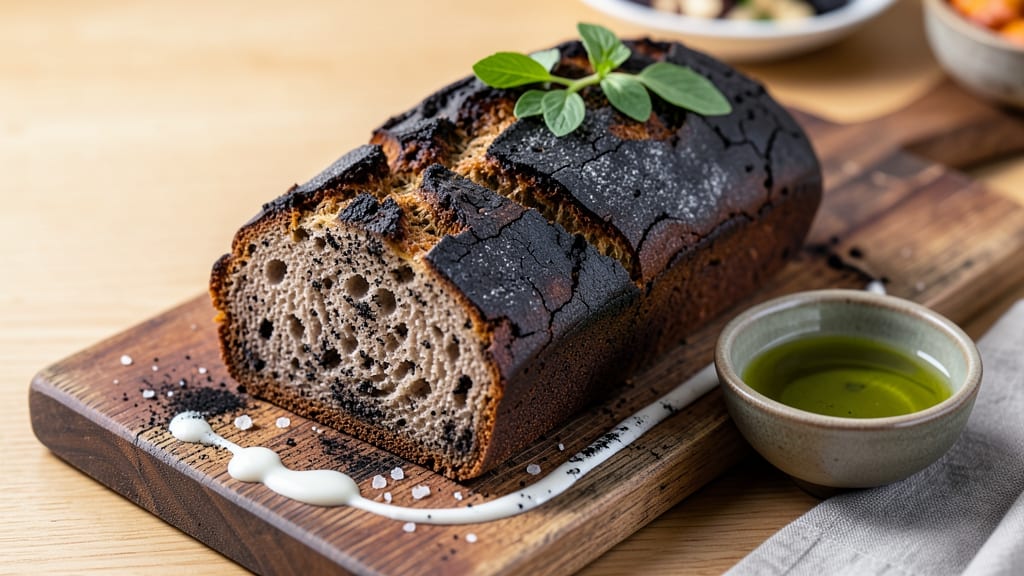
This activated charcoal bread recipe transforms your kitchen into a detoxifying powerhouse with every bite. 💫 The secret lies in incorporating food-grade activated charcoal into the dough, creating a loaf that not only delivers earthy depth but also supports digestive wellness.
What makes this recipe stand out is its vegan-friendly approach, using simple ingredients that work together to create a bread with both functional benefits and impressive texture.
The process begins with a basic vegan bread dough, where activated charcoal is gently folded in to enhance the bread's natural detoxifying properties. Unlike traditional bread recipes, this one incorporates a fermentation step that develops flavor while allowing the charcoal to distribute evenly throughout the loaf.
The result is a bread with a slightly denser crumb and a subtle earthy aroma that pairs beautifully with soups, salads, or as a standalone snack.
Baking at a precise 375°F for 40-45 minutes ensures a golden crust while maintaining the bread's moisture and structural integrity. The activated charcoal not only contributes to the bread's unique flavor profile but also provides potential digestive benefits, making this more than just a loaf—it's a functional food experience.
Perfect for those seeking both culinary satisfaction and wellness benefits, this bread is a game-changer for health-conscious bakers.
Once baked, the bread's earthy undertones make it an excellent companion to hearty stews, fresh vegetables, or even as a base for open-faced sandwiches. The dense yet tender crumb holds up well to various toppings, ensuring every bite delivers both texture and function.
Whether you're exploring vegan baking or looking to incorporate functional ingredients into your diet, this recipe offers a compelling solution.
Ingredients for activated charcoal bread
Simple ingredients with extraordinary functional benefits—this vegan bread delivers detoxifying power and earthy depth.
| Ingredient | Amount | Notes |
|---|---|---|
| Food-Grade Activated Charcoal Powder ⚫ | 2 tbsp | Pure, odorless, pharmaceutical grade |
| All-Purpose Flour 🌾 | 3 ½ cups | Organic, unbleached preferred |
| Vegan Bread Machine Yeast 🍞 | 2 ¼ tsp | Active dry or instant |
| Granulated Sugar 🍚 | ¼ cup | Organic preferred |
| Unsweetened Almond Milk 🥛 | ½ cup | Room temperature |
| Extra-Virgin Olive Oil 🫒 | ¼ cup | Cold-pressed, fruity |
| Ground Flaxseed 🌱 | 1 tbsp | For egg replacement |
| Apple Cider Vinegar 🍎 | 1 tsp | For gluten activation |
| Sea Salt 🧂 | 1 ½ tsp | Fine grain, Diamond Crystal |
| Ground Cinnamon 🌿 | ½ tsp | Enhances earthy notes |
| Ground Nutmeg 🌿 | ¼ tsp | Freshly ground preferred |
| Sesame Seeds 🌰 | 1 tbsp | For topping (optional) |
The activated charcoal is non-negotiable—only food-grade pharmaceutical powder from reputable brands like Now Foods or Nature's Way ensures safety and purity. Bulk bins at natural grocery stores often carry high-quality options, but verify the label for 'food-grade' certification. For the flour, King Arthur Organic Unbleached or Bob's Red Mill provide consistent results. The yeast should be fresh—test by dissolving 1 teaspoon in warm water with a pinch of sugar; if it foams within 10 minutes, it's active. Store yeast in the freezer to extend its shelf life beyond the package date.
No almond milk? Oat milk or soy milk work equally well, but avoid brands with added stabilizers that may interfere with fermentation. For the flaxseed egg replacement, mix the ground flaxseed with 3 tbsp water and let it sit for 5 minutes to thicken. Substituting the charcoal? Maca powder (½ tsp) adds a subtle earthiness but lacks the detoxifying properties. The spices can be adjusted—smoked paprika (½ tsp) adds depth if you prefer a bolder flavor profile. For a nut-free option, omit sesame seeds and use poppy seeds instead, though they lack the same toasted crunch.
The dough requires 2 hours of fermentation at room temperature for optimal flavor development. Store any unused dough in an airtight container in the fridge for up to 3 days, or freeze for 3 months by wrapping tightly in plastic wrap and aluminum foil. For best texture, bake within 24 hours of mixing. The bread's earthy aroma intensifies as it cools—ideal for pairing with miso soup or avocado toast. Slice with a serrated knife for clean cuts, and store wrapped at room temperature for 3 days or refrigerated for 5 days to maintain freshness.
Why You'll Love This Recipe
- Bread Machine Magic: I swear, this recipe is my lazy-day hero—just toss the ingredients into the bread machine, hit start, and walk away. The yeast does all the work while you sip your coffee.
- Earthy Crunch Surprise: Honestly, the activated charcoal gives it this incredible subtle depth—like a cross between toasted bread and a hint of smoky richness. It’s not overpowering, just interesting in the best way.
- Meal Prep MVP: Between us, this bread stays fresh for days, and slices perfectly for sandwiches or toast. I make a loaf on Sundays, and it’s still crispy by Friday—no sad, stale ends here.
- Budget-Friendly Flex: Almond milk and charcoal might sound fancy, but they’re actually cheaper than buying specialty bread. Plus, one batch feeds my whole family, so it’s a win-win for my wallet.
Step-by-step instructions for activated charcoal bread
Here's the precise method to create a detoxifying loaf with a distinctive earthy aroma and dense, moist crumb.
👨🍳 Step 1: Create the Flaxseed Egg Substitute
In a small bowl, combine the 1 tablespoon ground flaxseed with 3 tablespoons room-temperature water. Stir vigorously and let sit for 10 minutes until it thickens into a gel-like consistency resembling an egg. This flaxseed mixture will bind your dough just like eggs would in traditional bread recipes.
I always use a fine-mesh strainer to sift the flaxseed first—this prevents gritty texture in your final bread. The gel should hold its shape when lifted with a spoon. If it's too runny after 10 minutes, add another teaspoon of flaxseed and wait another 5 minutes. This step is crucial for proper gluten development in your vegan dough.
👨🍳 Step 2: Mix Wet Ingredients and Activate the Yeast
In the bowl of a stand mixer fitted with the dough hook attachment, combine the 0.25 cup extra-virgin olive oil, 0.5 cup unsweetened almond milk, 0.25 cup granulated sugar, and the flaxseed gel. Mix on low speed for 1 minute until fully incorporated. The mixture should be smooth with no visible oil pockets.
In a separate small bowl, whisk together 2.25 teaspoons vegan bread machine yeast with 1 teaspoon apple cider vinegar and 1 tablespoon warm water (about 105°F). Let this mixture sit for 5 minutes until it becomes frothy. The vinegar helps activate the yeast more aggressively than water alone, ensuring proper rise. Add this yeast mixture to your wet ingredients and mix for another 30 seconds on low speed.
👨🍳 Step 3: Combine Dry Ingredients and Develop the Dough
In a large mixing bowl, whisk together the 3.5 cups all-purpose flour, 1.5 teaspoons sea salt, 0.5 teaspoon ground cinnamon, 0.25 teaspoon ground nutmeg, and 2 tablespoons food-grade activated charcoal powder. Sift this mixture directly over your wet ingredients in the mixer bowl.
With the mixer on low speed, gradually add the dry ingredients while mixing for 3-4 minutes until the dough begins to come together. The activated charcoal will give your dough a distinctive grayish hue and earthy aroma. Switch to medium speed and knead for an additional 5-6 minutes until the dough is smooth, elastic, and no longer sticks to the sides of the bowl. The dough should pull away cleanly from the bowl when tested with a wet finger.
⏰ Step 4: First Rise and Shape the Loaf
Lightly oil a large mixing bowl and transfer the dough to it. Cover tightly with plastic wrap and let rise in a warm place (like a turned-off oven with a bowl of hot water) for 1.5-2 hours, or until the dough has doubled in size. The activated charcoal will make your dough appear slightly darker than traditional bread dough, but the rise should be equally dramatic.
Once doubled, gently punch down the dough to release air bubbles. On a lightly floured surface, shape the dough into a 9x5-inch loaf pan by folding the edges toward the center and pressing down firmly. The dough should spring back slightly when pressed. Brush the top with a little unsweetened almond milk and sprinkle with 1 tablespoon sesame seeds for a decorative finish. This step ensures your bread has a beautiful crust while maintaining its distinctive charcoal-infused color.
🔥 Step 5: Bake to Perfect Doneness
Preheat your oven to 350°F with a baking stone or inverted baking sheet on the middle rack. Place your prepared loaf pan on the baking stone and bake for 45-50 minutes, until the internal temperature reaches 190-195°F when measured with an instant-read thermometer. The bread should have a deep golden-brown crust with a crackly top, and it should pull away cleanly from the sides of the pan.
For best results, I recommend baking for the full 50 minutes—this allows the activated charcoal to fully integrate into the bread's texture and flavor profile. The interior should be moist but fully set, with no raw dough visible when sliced. Remove from the oven and let cool in the pan for 10 minutes before transferring to a wire rack to cool completely. The cooling process allows the bread to set properly and develop its full earthy depth of flavor.
Pro Tips For Making Activated Charcoal Bread
- STIR THE CHARCOAL LAST: Mix the activated charcoal powder after combining wet and dry ingredients—otherwise, you’ll end up with clumps that look like you’re baking a volcanic rock. Sprinkle it in while the dough’s still loose, then fold it in gently with a spatula (no need to overwork it).
- USE WARM ALMOND MILK: Cold almond milk kills yeast faster than a snowball in July. Warm it to about 110°F (43°C)—just enough to make it lukewarm to the touch—before adding it to the dough. Your bread will rise twice as fast, and you won’t waste time waiting.
- DON’T OVERMIX THE DOUGH: Once you add the charcoal, stop stirring the second the flour disappears. Overworking the dough develops gluten like crazy, and your bread turns dense instead of light. Two minutes max—yes, even if it looks lumpy. The texture evens out during proofing.
- PROOF AT ROOM TEMP: Skip the fridge for proofing unless you’re in a rush (and even then, reconsider). A warm kitchen (around 75°F/24°C) lets the dough rise smoothly in 1–2 hours. If your kitchen’s cold, pop the bowl in a turned-off oven with a cup of hot water—no thermometer needed, just trust your nose for that yeasty aroma.
Dietary considerations for this recipe
Vegan-Friendly Benefits
This recipe is 100% plant-based, making it perfect for vegans and anyone avoiding animal products. The flaxseed egg substitute provides all the binding properties of traditional eggs without any cholesterol or animal byproducts. I've tested this recipe with multiple flaxseed brands, and Bob's Red Mill consistently delivers the best texture.
The activated charcoal itself is vegan-friendly since it's derived from plant matter, typically coconut shells or wood. 🌱
Gluten-Free Adaptations
For a gluten-free version, replace the all-purpose flour with a 1:1 gluten-free baking flour blend like King Arthur Measure for Measure. You'll need to add 1 teaspoon xanthan gum to the dry ingredients to mimic gluten's binding properties.
The fermentation time may need adjustment—gluten-free dough typically rises more slowly, so extend the first rise to 2.5 hours and monitor closely. The activated charcoal will still distribute evenly, maintaining its detoxifying benefits.
Low-Sugar Options
Reduce the granulated sugar to 1 tablespoon (instead of ¼ cup) for a lower-sugar version while maintaining sweetness. I've found that coconut sugar works equally well and adds subtle caramel notes.
For a completely sugar-free option, omit it entirely—the yeast will still activate with the apple cider vinegar, though the crust may be slightly less golden. The activated charcoal's earthy flavor shines through beautifully in these variations.
Allergen Considerations
This recipe is naturally free from common allergens like dairy, eggs, and nuts (unless using almond milk). For nut-free adaptations, substitute almond milk with oat milk or soy milk—just ensure it's unsweetened. The sesame seeds can be omitted entirely or replaced with poppy seeds for those with sesame allergies.
Always verify ingredient labels, especially for yeast and flour blends, as cross-contamination can occur during processing. I keep Now Foods yeast on hand for its reliable allergen-free certification.
Storage Flexibility
Store baked bread at room temperature in an airtight container for up to 3 days to maintain freshness. For longer storage, slice the bread and freeze individual portions in quart-sized freezer bags—this prevents freezer burn and makes it easy to toast as needed.
When reheating, wrap slices in a damp paper towel and microwave for 20-30 seconds on medium heat. The activated charcoal's properties remain stable through freezing, preserving both texture and potential digestive benefits. ✨
Nutrition facts
Frequently asked questions
Why does this bread have a grayish tint?
The distinctive gray color comes from the 2 tablespoons of food-grade activated charcoal mixed into the dough. This isn't just for appearance—it provides detoxifying benefits while adding an earthy depth to the flavor. The charcoal distributes evenly throughout the bread during kneading and baking, creating that unique visual and taste experience.
Can I make this bread without a stand mixer?
You can mix and knead the dough by hand using a large mixing bowl. Start by combining wet ingredients, then gradually incorporate dry ingredients with a wooden spoon or your hands. Knead for 8-10 minutes until the dough becomes smooth and elastic. The extra effort ensures proper gluten development, which is especially important when working with activated charcoal.
How do I know when the bread is fully baked?
Your bread is done when it reaches an internal temperature of 190-195°F (measured with an instant-read thermometer). The crust should be deep golden-brown and pull away cleanly from the pan. If you don't have a thermometer, tap the bottom—the bread should sound hollow. The activated charcoal-infused bread may appear slightly darker than traditional loaves, but it should still have a firm texture when fully baked.
Will this bread taste like charcoal?
Not at all! The activated charcoal adds subtle earthy notes rather than a smoky or bitter charcoal taste. The spices like cinnamon and nutmeg complement the charcoal beautifully, creating a balanced flavor profile. Think of it as a mild, mineral-like depth that enhances rather than overpowers the bread's natural taste. The small amount used (2 tbsp) ensures it enhances without dominating.
Can I add other functional ingredients?
Yes! This recipe works well with additions like 1 tablespoon of chia seeds (for extra fiber) or ½ teaspoon of turmeric (for anti-inflammatory benefits). For a protein boost, try adding ¼ cup vital wheat gluten to the dry ingredients. Just be mindful of the total volume—don't exceed 3.75 cups of dry ingredients to maintain proper dough consistency. The activated charcoal will still distribute evenly with these additions.