
Side Dishes
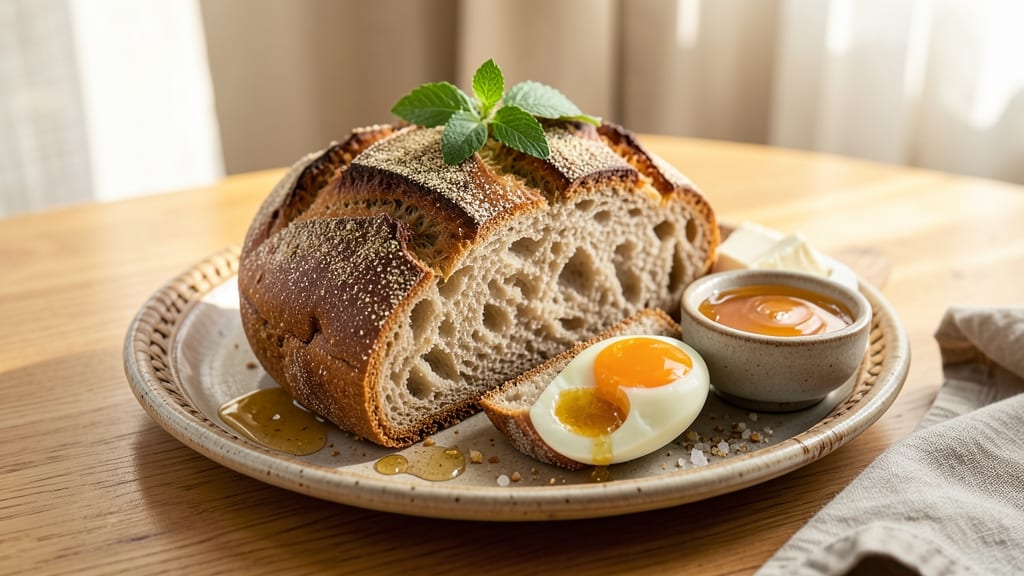
This acacia honey bread recipe delivers layers of golden crust and nutty sweetness that taste like sunshine in every bite. 🌟 The secret lies in blending acacia honey with rich butter and warm spices, creating a loaf that's both comforting and sophisticated.
Perfect for breakfast or as a sweet accompaniment, this bread stands out with its delicate floral notes and tender crumb.
The dough combines simple ingredients—flour, yeast, eggs, and butter—elevated by acacia honey's unique floral flavor. Unlike traditional honey bread, this version incorporates acacia pollen or extract for a refined, aromatic twist.
Shaping the dough into a classic round loaf ensures even baking, while a light egg wash guarantees that signature golden crust.
Baking at 350°F for about 30-35 minutes yields a loaf with a crisp exterior and soft, buttery interior. The acacia honey infuses warmth and depth, balancing the bread's natural sweetness without overpowering it. This recipe is perfect for those who appreciate artisanal baking with a modern, elegant touch.
Serve warm with butter, jam, or as a side to savory dishes. The subtle floral undertones make it ideal for brunch, gifting, or special occasions. Here's how to create this showstopping loaf at home.
Ingredients for acacia bread
Simple ingredients elevated by acacia honey’s floral magic for artisanal golden bread.
| Ingredient | Amount | Notes |
|---|---|---|
| All-Purpose Flour 🌾 | 4 cups | Sifted for best texture |
| Active Dry Yeast 🍞 | 2 ¼ tsp | Freshly opened packet |
| Acacia Honey 🍯 | ½ cup | Pure, unfiltered preferred |
| Unsalted Butter 🧈 | ½ cup | Cold, cubed for dough |
| Large Eggs 🥚 | 2 whole | Room temperature |
| Acacia Pollen or Extract 🌼 | ½ tsp | For floral aroma |
| Granulated Sugar 🍚 | ¼ cup | Balances sweetness |
| Salt 🧂 | 1 tsp | Diamond Crystal preferred |
| Ground Cinnamon 🌿 | ½ tsp | Warm spice note |
| Ground Nutmeg 🌶️ | ¼ tsp | Freshly grated preferred |
| Whole Milk 🥛 | ¼ cup | Warmed slightly |
| Large Egg 🥚 | 1 whole | For egg wash |
| Coarse Sugar 🍚 | 1 tbsp | For topping |
The acacia honey is non-negotiable here—local apiaries or specialty stores carry the best quality. Whole Foods and Trader Joe's often stock it, but check the label for 100% pure acacia. The butter should be cold when added to the dough (trust me on this). For the acacia pollen, health food stores or online suppliers are your best bet—it’s pricey but worth the floral depth. If you can’t find acacia pollen, vanilla extract at half the amount works in a pinch, though it lacks the floral complexity. The flour? King Arthur or Gold Medal brands bake consistently—avoid the cheap store brands that can be too dense.
No acacia honey? Wildflower honey at the same amount mimics the floral notes, but acacia’s delicate sweetness is unique. Substituting acacia pollen? Orange blossom water at 1/4 tsp adds a similar aromatic touch. For the butter, vegan butter works too if you’re avoiding dairy, though the flavor won’t be identical. The cinnamon and nutmeg are classic, but cardamom at 1/4 tsp adds an unexpected twist. If your dough feels too sticky, add 1 tbsp extra flour—this bread forgives minor adjustments. And yes, the egg wash is crucial for that golden crust (don’t skip it!).
This dough is best used within 24 hours for peak freshness, though it keeps 3 days wrapped at room temperature. For longer storage, freeze the shaped loaf (unbaked) for up to 1 month)—thaw overnight in the fridge before baking. The baked loaf reheats beautifully: wrap in foil and warm at 300°F for 10 minutes. I always make two loaves—one for breakfast, one for gifting. Slice it thick for that rustic, artisanal feel, and serve with clotted cream or jam for the full experience.
Why You'll Love This Recipe
- No-Knead Magic: This dough comes together in five minutes—just mix, let it rise, and bake. Honestly, I’ve made bread that took longer to preheat the oven, and this still wins.
- Honeyed Crust Perfection: That acacia honey? It caramelizes into a golden, crackly crust while keeping the inside tender. The butter and eggs give it a rich, almost brioche-like depth—without the fuss of layers.
- Breakfast to Picnic Hero: Toast it for breakfast, pack slices for lunch, or serve warm with jam at a brunch. My kids ask for it more than any other bread, and I’ve even used it to sop up stews—yes, really.
- Budget-Friendly Staple: Uses pantry basics (flour, butter, eggs) but feels like a treat. A single batch lasts my family five days, and the honey’s natural sweetness means I skip pricey spreads. Cheap, but not cheap-tasting.
Step-by-step instructions for acacia honey bread
Master this technique and you'll achieve a loaf with a golden crust and moist, nutty layers infused with acacia's floral notes.
👨🍳 Step 1: Activate the Yeast with Warm Milk and Honey
In a small bowl, combine the 0.25 cup whole milk warmed to 110°F (test with your finger—it should feel warm but not hot) with the 0.5 cup acacia honey and 2.25 tsp active dry yeast. Let it sit for 5-10 minutes until foamy. You'll see bubbles forming and the mixture expanding—this confirms the yeast is active and ready to work.
I always use a clean, grease-free bowl for this step because any residual oils can inhibit yeast activation. If the mixture doesn't bubble after 10 minutes, your yeast may be expired—start fresh with a new packet. The honey here serves a dual purpose: it feeds the yeast while adding that signature floral sweetness to the final loaf.
🥘 Step 2: Mix the Dough Until Windowpane Stage
In a large bowl, whisk together the 4 cups all-purpose flour (sifted), 0.25 cup granulated sugar, 1 tsp salt, 0.5 tsp ground cinnamon, 0.25 tsp ground nutmeg, and 0.5 tsp acacia pollen or extract. Make a well in the center and pour in the yeast mixture along with the 2 whole large eggs at room temperature.
Using a wooden spoon or dough whisk, mix until a shaggy dough forms. Then switch to your hands and knead on a lightly floured surface for 8-10 minutes until the dough becomes smooth and elastic. To test for readiness, perform the windowpane test: stretch a small piece of dough between your fingers until it's thin enough to see light through—it should resemble a windowpane without tearing.
🔥 Step 3: First Rise Until Doubled in Size
Lightly grease a large mixing bowl with a bit of the 0.5 cup unsalted butter, place the dough inside, and cover with a damp kitchen towel. Let it rise in a warm place (like your oven with the light on) for 1-1.5 hours until the dough has doubled in size and feels spongy when pressed gently with one finger.
Here's the thing—don't rush this rise. The dough needs time to develop gluten structure and flavor. If your kitchen is cold, place the bowl on top of your fridge where it's slightly warmer. You'll know it's ready when the dough springs back slowly when poked, not immediately. This slow rise creates that beautiful open crumb structure we're after.
🍳 Step 4: Shape and Second Rise for Texture
Punch down the risen dough to release air, then turn it out onto a lightly floured surface. Divide the dough into 4 equal portions (about 1 cup each) and shape each into a round loaf. Place them in a greased 8x8-inch baking dish, spacing them about 2 inches apart. Cover again and let rise for another 30-45 minutes until they've puffed up noticeably.
For shaping, I like to use the "poke and fold" method: poke the center of each dough ball with your finger, then fold the sides toward the center to create surface tension. This helps prevent the loaves from spreading too much during baking. The second rise ensures those beautiful air pockets that make the bread so tender.
🔪 Step 5: Bake to Golden Perfection
Preheat your oven to 350°F. In a small bowl, whisk together the 1 whole large egg and remaining 0.5 cup unsalted butter melted and cooled slightly, then brush this mixture over the tops of the loaves. Sprinkle each with 1 tbsp coarse sugar divided evenly. Bake for 30-35 minutes until the tops are deep golden brown and the internal temperature reaches 190°F.
Watch for color changes in the last 5 minutes—the sugar topping will caramelize beautifully. If the tops brown too quickly, tent loosely with foil. The bread is done when it sounds hollow when tapped on the bottom and pulls away cleanly from the sides of the pan. Let cool in the pan for 10 minutes before transferring to a wire rack.
Pro Tips For Making Acacia Bread
- Warm the Honey First: Acacia honey is thick—pouring cold honey straight into warm dough makes it clump like glue. Microwave it for 10 seconds or warm it in a bowl over hot water until it flows like syrup. Trust me, your bread won’t turn into a sticky mess.
- Knead Until Silky: This dough needs 8-10 minutes of vigorous kneading by hand (or 5-6 minutes in a stand mixer with a dough hook) until it’s smooth and springs back when poked. I learned the hard way—under-kneaded dough tastes dense, and no amount of baking fixes it.
- Don’t Rush the Proof: Acacia honey slows fermentation, so give the dough double the usual proofing time—look for it to rise until it’s about 50% larger, even if it takes 2-3 hours. Patience here means a lighter, airier crumb, not a brick.
- Brush Butter Cold: Use softened (not melted) butter for brushing—it absorbs better and won’t turn the crust soggy. I used to melt it, and the bread would get greasy instead of golden. Room temp butter is your friend.
Regional styles of this dish
Middle Eastern Style
Inspired by traditional khubz or fatoor, this version swaps acacia honey for date syrup and adds orange blossom water for a fragrant twist. Use 1/4 cup date syrup instead of acacia honey and replace the acacia pollen with 1/2 tsp orange blossom water for an authentic Middle Eastern aroma.
Shape the dough into a long, thin loaf and bake in a clay or cast-iron pan for a rustic touch. Serve warm with za'atar and olive oil for dipping. 🌿
Mediterranean Brioche
For a richer, buttery variation, transform this recipe into a Mediterranean brioche by increasing the butter to 1 cup and adding 1/4 cup sour cream to the dough. Replace the acacia pollen with 1 tsp vanilla extract and reduce the cinnamon to 1/4 tsp.
Shape into a round boules and bake at 325°F for 40 minutes for a softer, more decadent texture. Perfect for breakfast or as a sweet side with fig jam. 🍯
French Fougasse Twist
Turn your acacia bread into a French fougasse by shaping the dough into an oval with slits cut into the top. Brush with 1/4 cup melted butter and sprinkle with flaky sea salt before baking.
Add 1/4 cup chopped pistachios or almonds to the dough for crunch. Bake at 375°F for 25-30 minutes until golden. This version pairs beautifully with herb-infused olive oil for dipping. 🌟
Spiced Mexican Pan Dulce
Give your acacia bread a Mexican pan dulce makeover by adding 1 tsp anise seeds and 1/2 tsp ground cloves to the dough. Shape into small, round loaves and bake in a greased muffin tin for 20-25 minutes at 350°F.
Brush the tops with a mix of 1/4 cup melted butter and 1 tbsp cinnamon sugar after baking. Serve with Mexican hot chocolate for a cozy treat. 🌶️
Italian Panettone-Inspired
For a festive holiday twist, add 1/2 cup dried cherries or candied citrus peel to the dough and shape into a round, dome-shaped loaf. Let it rise in a greased bundt pan for 1.5 hours before baking at 325°F for 45 minutes.
Brush the top with a honey-glaze (mix 1/4 cup acacia honey with 1 tbsp water) after baking. Perfect for Christmas or New Year celebrations! ✨
Nutrition facts
Frequently asked questions
Can I substitute regular honey for acacia honey?
Yes, but the flavor will differ. Use wildflower or clover honey at the same amount for a similar floral note, though acacia honey's delicate sweetness is unique. For a closer match, blend 1/4 cup acacia honey with 1/4 cup regular honey—this preserves some of the floral complexity while making it more accessible.
Why does my dough feel too sticky?
Sticky dough often means the gluten hasn't developed enough or the humidity is high. Add 1-2 tbsp extra flour (1 tbsp at a time) while kneading, or let the dough rest 10 minutes uncovered to absorb excess moisture. If your kitchen is humid, chill the dough for 20 minutes before shaping.
How do I store leftover acacia bread?
Wrap cooled loaves tightly in plastic wrap or place in an airtight container to keep fresh for 3 days at room temperature. For longer storage, freeze baked loaves (sliced or whole) for up to 3 months. To reheat, wrap slices in foil and warm at 300°F for 5-7 minutes or use the microwave for 10-15 seconds.
Can I make this bread without acacia pollen?
Skip the pollen and boost the flavor with 1/2 tsp vanilla extract or 1/4 tsp orange blossom water for a similar aromatic touch. For a nutty depth, add 1/4 cup chopped walnuts or almonds to the dough. The bread will still taste delicious—just with a different profile.
What's the best way to serve this bread?
Warm slices make the perfect pairing for butter, jam, or clotted cream. For a savory twist, serve with charcuterie boards or alongside soups and stews. The floral notes also complement cheese plates—especially with brie or goat cheese. For dessert, drizzle with melted dark chocolate or sprinkle with toasted coconut flakes.