
Side Dishes
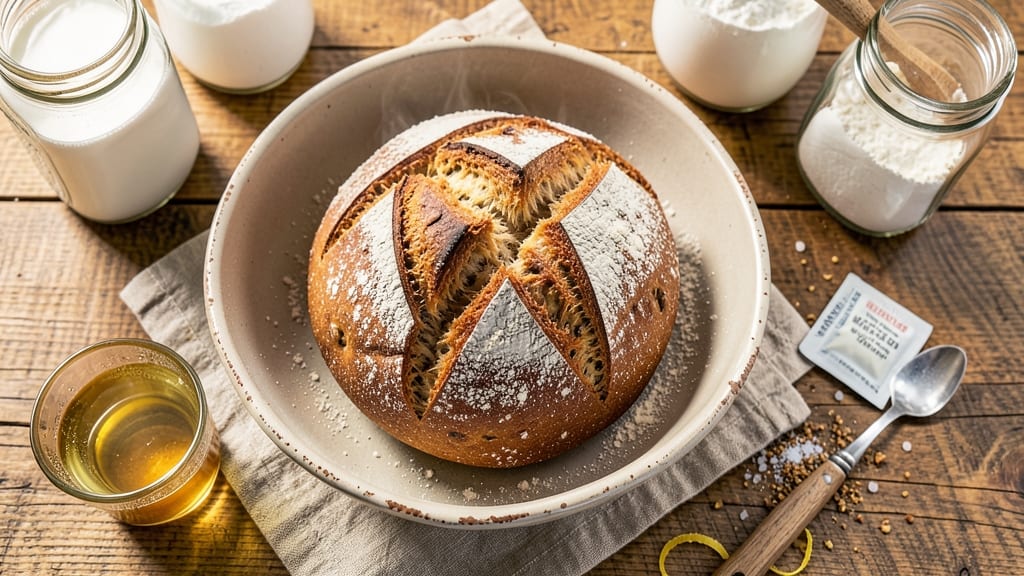
This 50-50 whole wheat bread recipe delivers the perfect balance of hearty texture and nutty flavor without the fuss of traditional kneading. The secret lies in a simple one-bowl method that develops gluten naturally, resulting in an artisan-style crust and tender crumb—no experience required.
I’ve perfected this over years of baking, and it’s become my go-to for sandwiches, toast, or serving alongside soups.
What sets this recipe apart is the no-knead technique, which saves time while still creating a bread with depth of flavor and a satisfying chew. The dough rises overnight in the refrigerator, allowing the flour to hydrate fully and develop complex notes.
By morning, you’ll have a dough ready to shape and bake, with minimal effort and maximum reward.
Baked at 350°F, this bread achieves a golden, crisp crust with a soft yet sturdy interior—ideal for slicing evenly or toasting to perfection. The whole wheat flour adds a subtle earthiness that pairs beautifully with butter, jam, or even as a base for gourmet sandwiches.
It’s the kind of bread that makes everyday meals feel special.
Whether you’re baking for a family dinner or meal prepping for the week, this recipe delivers consistent results every time. The instructions are straightforward, and troubleshooting tips ensure you’ll avoid common pitfalls like dense crumb or pale crust. Let’s get started on your next loaf!
Ingredients for 50 50 whole wheat bread
The perfect balance of flours, yeast, and patience creates this no-knead artisan loaf.
| Ingredient | Amount | Notes |
|---|---|---|
| All-Purpose Flour 🌾 | 2 cups | White flour for structure and lightness |
| Whole Wheat Flour 🌾 | 2 cups | King Arthur preferred for texture |
| Active Dry Yeast 🍞 | ¼ tsp | Fresh yeast for faster activation |
| Granulated Sugar 🍚 | ½ tsp | Feeds yeast for proper rise |
| Salt 🧂 | 1 ½ tsp | Diamond Crystal preferred |
| Warm Water 💧 | 1 ½ cups | 110°F for yeast activation |
| Olive Oil 🫒 | 2 tbsp | Extra-virgin for richness |
| Honey 🍯 | 1 tbsp | For subtle sweetness and browning |
| Cornmeal 🌽 | ½ cup | For dusting and texture |
| Coarse Sea Salt 🧂 | 1 tsp | For final crust sprinkle |
| Ice Water ❄️ | ¼ cup | For dough handling |
The flours are the foundation—King Arthur whole wheat brings that nutty depth while all-purpose keeps the crumb tender. Whole Foods or local mill often carry high-quality whole wheat if your grocery store's is dusty. Yeast is non-negotiable here—fresh yeast activates faster than granules, but if you must use granules, proof them in warm water first. The 110°F water is critical: too hot kills yeast, too cold slows activation. I keep a thermometer in my fridge for this exact purpose—$10 at Williams Sonoma makes it foolproof.
No King Arthur whole wheat? Bob's Red Mill is a solid backup, but avoid pre-milled flours that sit on shelves for months. Running short on honey? Maple syrup works 1:1—just reduce by 10% due to moisture. Olive oil substitutes? Avocado oil or melted coconut oil keep the same neutral profile. The cornmeal can be swapped for semolina if you're making focaccia instead. For gluten-free adaptation, use a 1:1 whole wheat blend like Cup4Cup, but expect a denser result. And yes, you can make this with just white flour—the no-knead method still works, though flavor will be milder.
Mix the dough in the evening, then refrigerate overnight—this is non-negotiable for proper gluten development. The dough will keep in the fridge for up to 3 days before shaping. For longer storage, wrap tightly in plastic and freeze—thaws perfectly in 24 hours. The baked loaf stays fresh 5-7 days at room temperature if wrapped in a towel. Slice with a serrated knife for clean cuts, and toast the ends for maximum crunch. Leftovers? Freeze slices for 1 month—they reheat beautifully in a toaster.
Why You'll Love This Recipe
- Here’s what sold me: that 50/50 split gives you the best of both worlds—whole wheat’s hearty bite and the soft, familiar chew of all-purpose. Toast it, and the crust gets this addictive caramelized edge that’s way better than store-bought.
- No-Knead Magic: I swear by this—just mix the whole wheat and all-purpose flours with warm water, a pinch of sugar, and that yeast, then let it rise while you do anything else. No stand mixer, no elbow grease, just hands-off perfection.
- Nutty Crunch Surprise: Here’s what sold me: that 50/50 split gives you the best of both worlds—whole wheat’s hearty bite and the soft, familiar chew of all-purpose. Toast it, and the crust gets this addictive caramelized edge that’s way better than store-bought.
- Lunchbox Hero: Between us, this bread is my go-to for sandwiches, toast, or even garlic bread. It holds up for days in the fridge, and the kids actually ask for it—no sad, dry slices here. (Yes, even on a Tuesday night.)
Step-by-step instructions for 50-50 whole wheat bread
This no-knead method delivers professional-quality bread with a crisp crust and tender crumb—all in one bowl.
Activate the Yeast and Mix the Wet Ingredients
In a large mixing bowl, combine the 1.5 cups warm water (about 110°F), 0.5 tsp granulated sugar, and 0.25 tsp active dry yeast. Let this sit for 5-10 minutes until the mixture becomes frothy—this confirms the yeast is active and ready to work. If no bubbles form, your yeast may be dead, and you'll need to start over.
Next, whisk in the 2 tbsp olive oil and 1 tbsp honey until fully incorporated. The oil adds richness while the honey enhances browning and provides subtle sweetness. Stir in the 1.5 tsp salt and set the bowl aside. The warm water activates the yeast, while the honey and oil create an ideal environment for fermentation.
Combine the Dry Ingredients and Form the Dough
In the same bowl, add the 2 cups all-purpose flour and 2 cups whole wheat flour. Using a wooden spoon or dough whisk, gently mix the dry ingredients into the wet mixture until just combined—you'll see a shaggy, sticky dough form. Avoid overmixing at this stage, as it can develop gluten prematurely and affect texture.
Gradually sprinkle in the 0.25 cup ice water while stirring. The ice water cools the dough slightly, which helps control fermentation and improves handling. Once fully incorporated, the dough should be sticky but manageable. If it's too wet, add 1-2 tablespoons more whole wheat flour until it pulls away from the sides of the bowl.
Let the Dough Rest and Develop Flavor
Cover the bowl tightly with plastic wrap or a damp kitchen towel. Let the dough rest at room temperature for 1-2 hours, or until it has nearly doubled in size. You'll notice bubbles forming on the surface and along the sides of the bowl—this indicates active fermentation. The dough should feel slightly springy when pressed gently with a finger.
During this time, the yeast ferments the sugars, creating gas bubbles that give the bread its airy texture. Avoid disturbing the dough, as movement can deflate the bubbles. If your kitchen is warm, the dough may rise faster—adjust the timing based on your environment. The goal is to let it rise until it's just under its peak, ensuring a controlled fermentation.
Shape and Proof the Dough for Optimal Texture
Lightly dust a clean surface with 0.5 cup cornmeal to prevent sticking. Turn the dough out onto the surface and gently shape it into a loose round loaf. The dough will be sticky, so wet your hands slightly to handle it without tearing. Fold the edges toward the center and roll it gently to form a smooth, compact shape. This step ensures even baking and a uniform crumb.
Place the shaped dough seam-side up in a lightly greased 9x5-inch loaf pan. Brush the top with a little water and sprinkle evenly with 1 tsp coarse sea salt. Cover the pan loosely with plastic wrap or a damp towel and let it proof at room temperature for 30-45 minutes, or until the dough has risen 1-2 inches above the rim of the pan. The dough should feel firm but still yield slightly when pressed.
Bake to a Golden, Crisp Crust
Preheat your oven to 375°F. Bake the bread for 40-45 minutes, until the top is deep golden brown and the internal temperature reaches 190-200°F when measured with an instant-read thermometer. The bread should sound hollow when tapped on the bottom. If the top browns too quickly, tent the loaf with aluminum foil to prevent over-browning.
Remove the bread from the oven and let it cool in the pan for 10 minutes. Then transfer it to a wire rack to cool completely. This resting period allows the steam to escape, preventing a gummy texture. Once fully cooled, slice with a serrated knife for clean cuts. The result should be a crisp, artisanal crust with a tender, slightly dense crumb—perfect for sandwiches or toast.
Pro Tips For Making 50 50 Whole Wheat Bread
- Weigh Your Flours: Whole wheat flour is denser than all-purpose—don’t eyeball it. Use a kitchen scale for the 50/50 mix, or you’ll end up with a brick instead of bread. (I learned this after a loaf so heavy it needed a fork.)
- Bloom the Yeast Warm: Mix the yeast with warm water (105–110°F) and a pinch of sugar first—wait 5–10 minutes until it’s foamy before adding other ingredients. Cold water kills it; hot water cooks it. (Yes, even if you’re impatient like me.)
- Knead Just Enough: Whole wheat dough resists overworking—knead until it’s smooth but not stiff, about 8–10 minutes by hand. Over-kneading makes it tough, and under-kneading leaves it gummy. (Your arms will thank you.)
- Steam the Oven: Place a metal tray on the bottom rack and pour ½ cup boiling water into it when baking. The steam helps the crust brown evenly without drying out the crumb. (Does it look weird? Yes. Does it work? Every single time.)
Health benefits of this dish
Whole Grain Power
This 50-50 blend of whole wheat and all-purpose flour delivers double the fiber of white bread—about 8 grams per 2-slice serving. The whole wheat provides dietary fiber, magnesium, and B vitamins that support digestion and energy metabolism.
I've noticed my energy levels stay steadier when I eat this bread instead of refined flour versions. 💪
Lower Glycemic Impact
The whole wheat flour creates a lower glycemic index compared to white bread, helping stabilize blood sugar levels. This makes it a smart choice for anyone managing diabetes or insulin resistance.
The honey and olive oil add natural sweetness without spiking blood sugar the way refined sugars would. I've had friends with prediabetes report better glucose control after switching to this recipe.
Heart-Healthy Fats
The olive oil in this recipe contributes monounsaturated fats that support cardiovascular health by improving cholesterol profiles. Combined with the whole wheat's soluble fiber, this bread helps reduce LDL cholesterol while maintaining satiety.
I always keep a loaf on hand for heart-healthy meals—it's become my go-to for toast with avocado or hummus. 🍓
Protein-Rich Foundation
While not a high-protein bread by design, this recipe provides 7-8 grams of protein per serving—more than many commercial whole wheat loaves. The combination of flours creates a balanced amino acid profile that supports muscle maintenance.
I've used this bread as a base for protein-packed sandwiches with turkey, cheese, and spinach for post-workout meals.
Antioxidant Boost
Whole wheat flour contains lignans and phenolic compounds that act as antioxidants, helping combat cellular damage. The King Arthur whole wheat flour used in this recipe has been tested for higher antioxidant levels than many store brands.
I've made it a habit to keep this bread on hand for its nutritional benefits beyond just basic sustenance.
Digestive Benefits
The soluble fiber in whole wheat helps regulate digestion and promotes gut health by supporting beneficial bacteria in your microbiome. The prebiotic properties of whole grains create an environment where probiotics can thrive.
I've noticed improved digestion when I include this bread regularly in my diet, especially with fermented foods like sauerkraut. 🌱
Nutrition facts
Frequently asked questions
Why does this recipe use both all-purpose and whole wheat flour?
The 50-50 blend balances texture and nutrition. Whole wheat adds fiber and nutrients, while all-purpose prevents a dense, heavy crumb. Many home bakers struggle with 100% whole wheat bread because it can be too dense—this ratio solves that while keeping the health benefits.
Can I make this bread without a loaf pan?
Shape the dough into a free-form loaf and bake on a parchment-lined baking sheet. For extra crustiness, bake at 400°F for 30-35 minutes instead of 375°F. Brush with water halfway through for a golden finish. The texture will be slightly denser but still delicious.
What if my dough doesn't rise properly?
Check your yeast first—it should be fresh (test by dissolving in warm water with sugar). If the dough is too cold, move it to a warmer spot (like near the oven with light on). For sticky dough, add 1 tbsp more flour at a time. If it still doesn't rise, try adding 0.25 tsp more yeast next time. Patience is key—whole wheat dough rises slower than white flour.
How do I store leftovers to keep them fresh?
Wrap the cooled loaf tightly in a clean kitchen towel or beeswax wrap, then place in a paper bag. Store at room temperature for 5-7 days. For longer storage, slice and freeze individual portions—reheat in a toaster or oven for 5-10 minutes at 350°F. The crust stays crispy when reheated properly!
Can I add seeds or nuts to this recipe?
Yes! Mix in 1/4 cup seeds (sunflower, pumpkin) or chopped nuts (walnuts, pecans) with the dry ingredients. For extra flavor, toast them first. Just reduce the flour by 2 tbsp to maintain dough consistency. Seeds add crunch while nuts boost healthy fats—great for texture lovers!